Stanhopea wardii
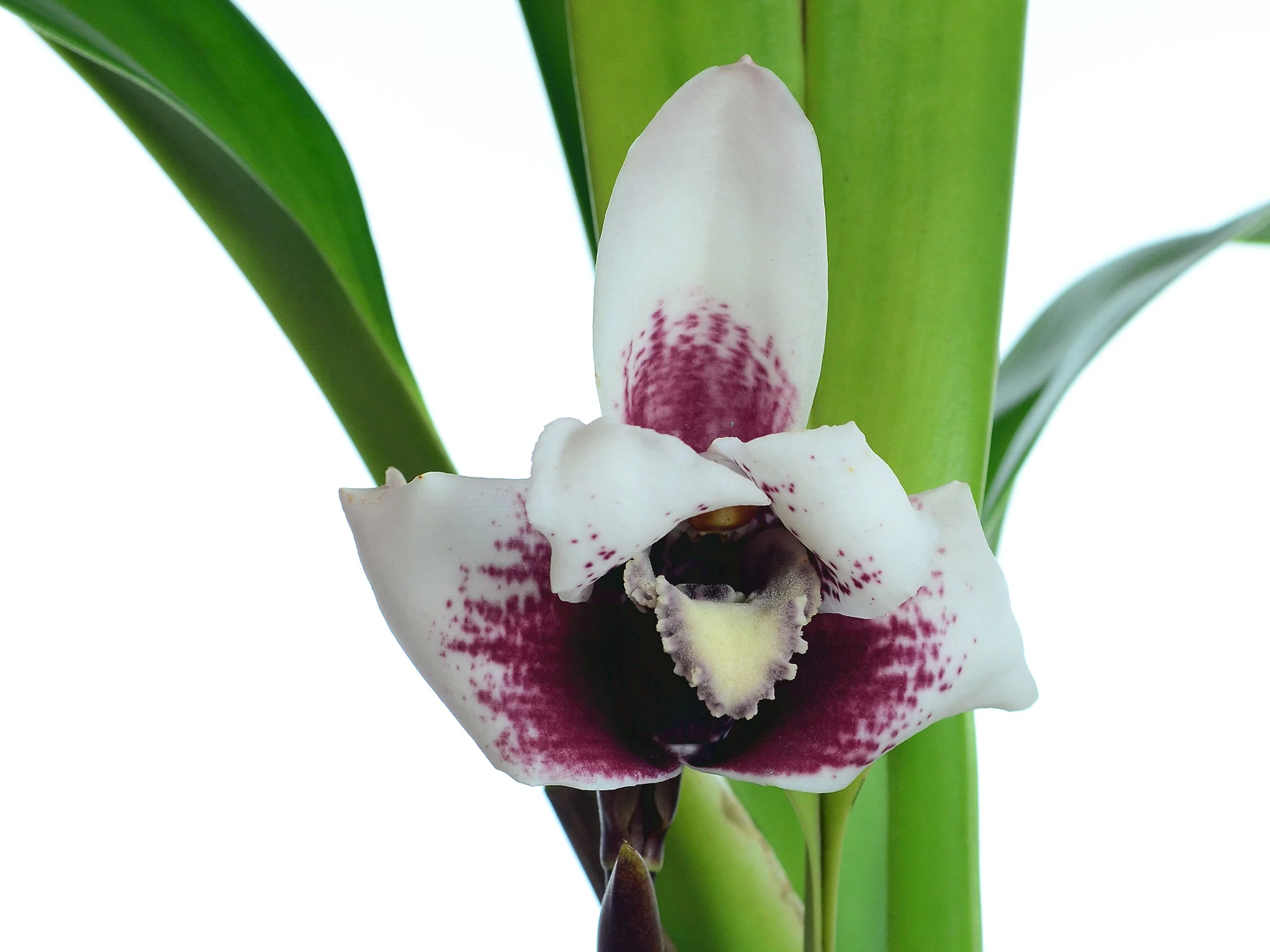
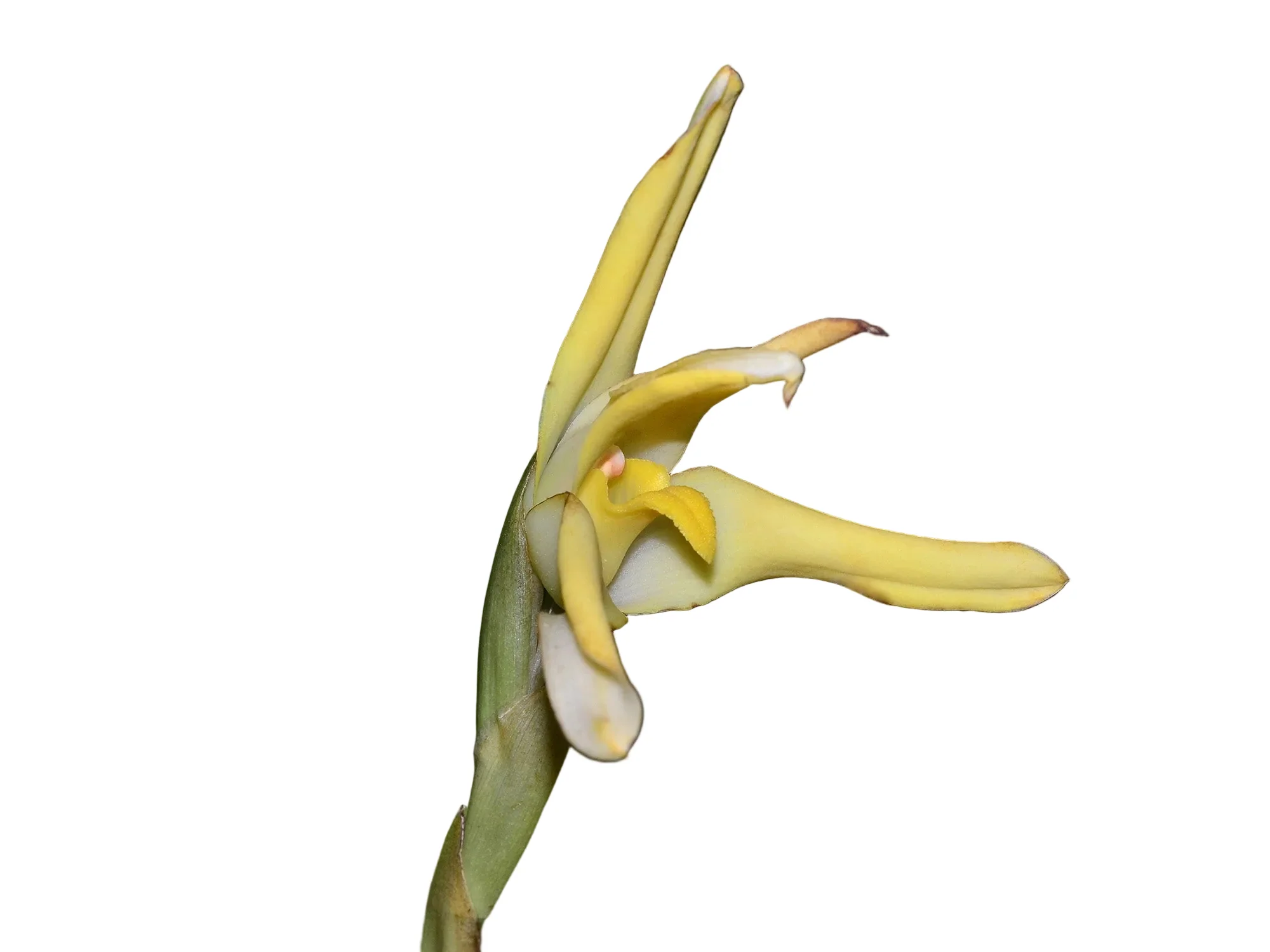
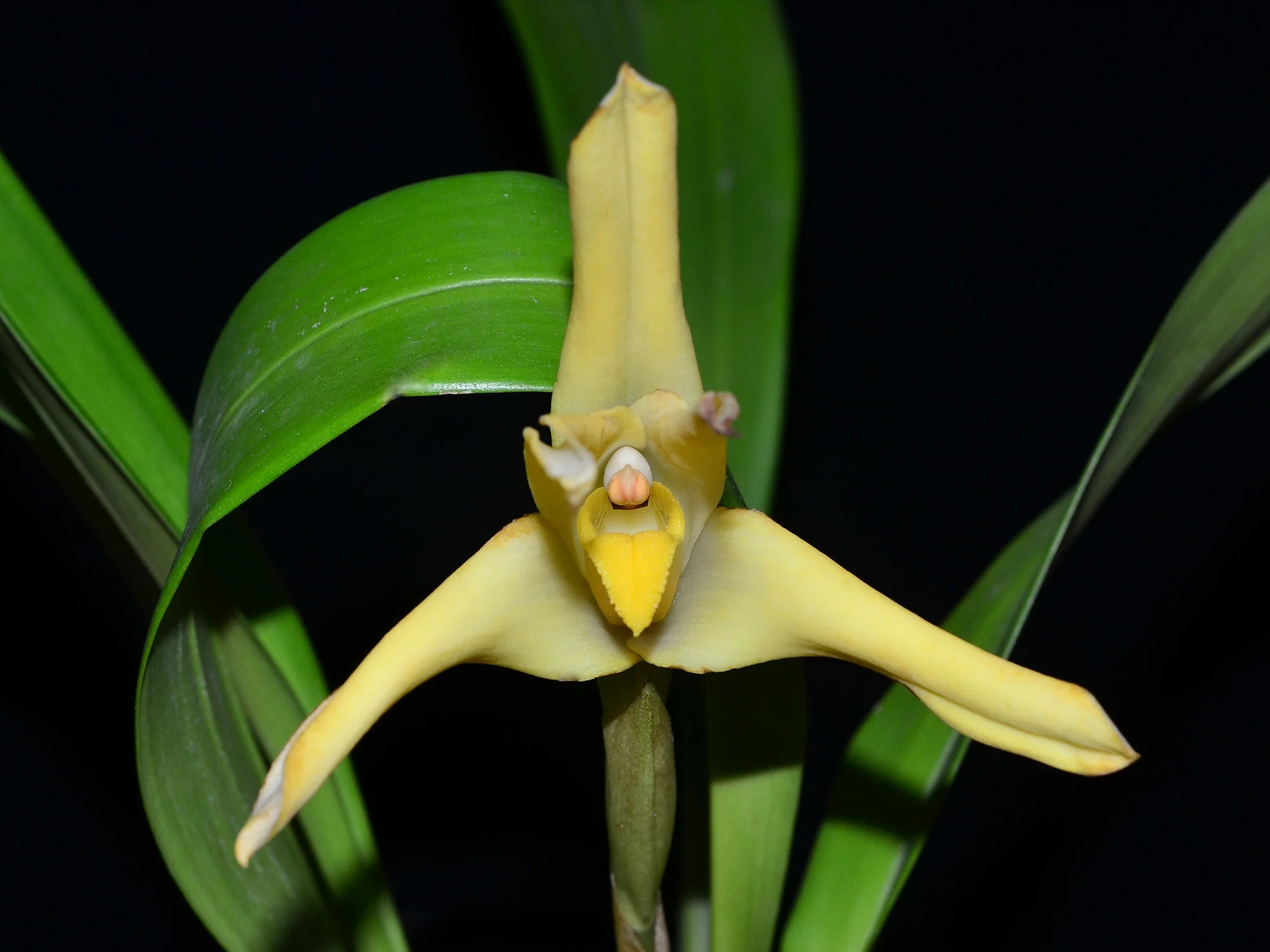
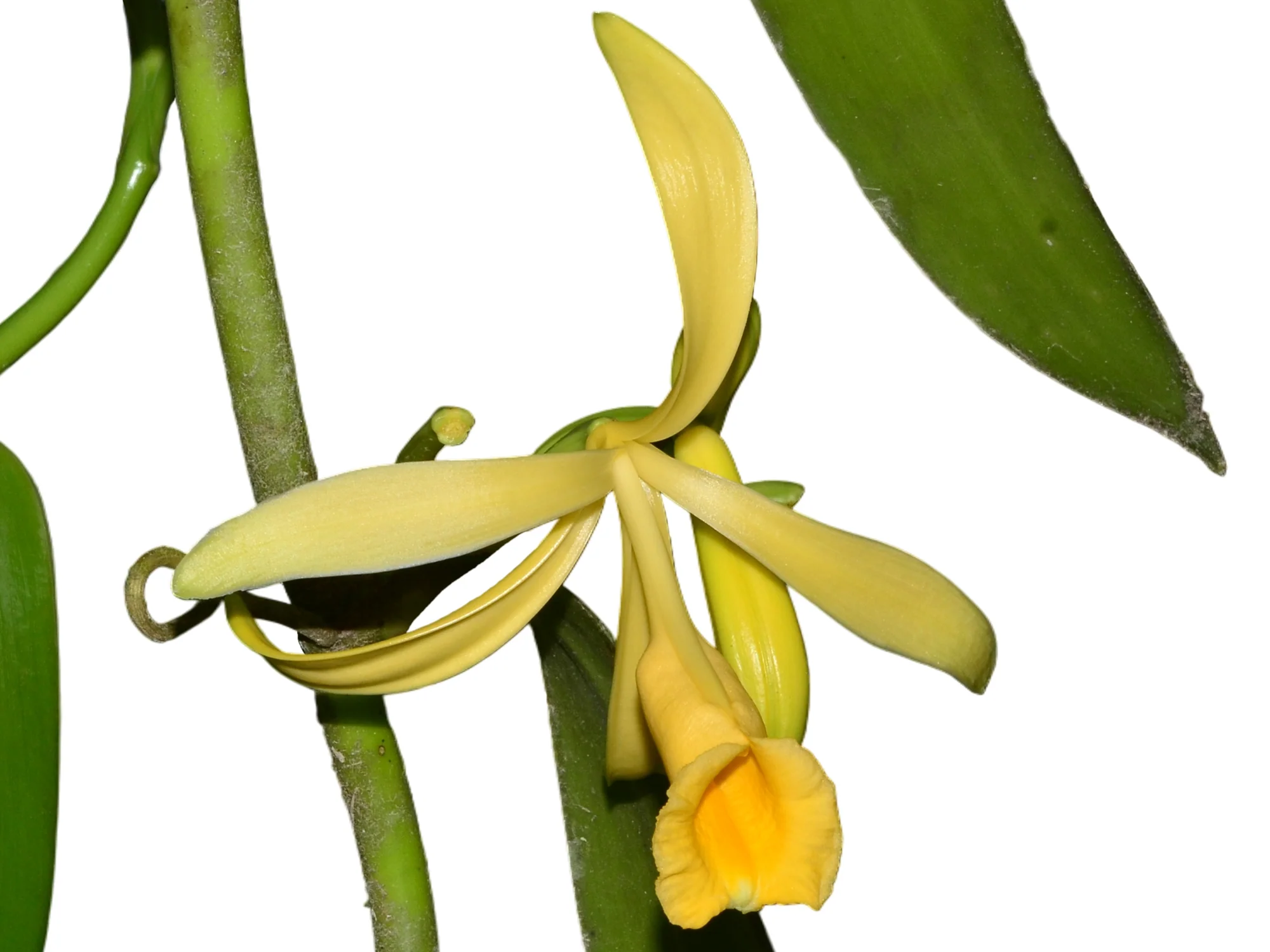
A fragrant epiphyte from the cloud forests of Central America and northern South America, instantly recognizable by its two bold, jet-black ocellate spots on the hypochile — one of the most iconic diagnostic features in the genus — set against densely spotted, golden-yellow sepals and undulating, twisted petals. It grows as a robust plant with large pleated leaves and pendulous inflorescences that emerge from the base of the pseudobulbs.
- Light: Bright indirect light with 40–60% shade cloth; avoid harsh direct sun, which can scorch the large pleated leaves.
- Temperature: 60–82°F (16–28°C); an Intermediate to Warm grower with a minimum tolerance around 55°F (13°C).
- Humidity: 60–80%; tolerates moderate humidity but benefits from good air movement around the foliage.
- Watering: Water generously during active growth, allowing the medium to dry slightly between waterings; reduce watering during cooler rest periods.
Additional Notes
Must be grown in an open basket or slatted container to allow the pendulous inflorescences to emerge downward through the bottom. Use a coarse, well-draining bark mix. Plants are shipped bare root and well-established.
A fragrant epiphyte from the cloud forests of Central America and northern South America, instantly recognizable by its two bold, jet-black ocellate spots on the hypochile — one of the most iconic diagnostic features in the genus — set against densely spotted, golden-yellow sepals and undulating, twisted petals. It grows as a robust plant with large pleated leaves and pendulous inflorescences that emerge from the base of the pseudobulbs.
- Light: Bright indirect light with 40–60% shade cloth; avoid harsh direct sun, which can scorch the large pleated leaves.
- Temperature: 60–82°F (16–28°C); an Intermediate to Warm grower with a minimum tolerance around 55°F (13°C).
- Humidity: 60–80%; tolerates moderate humidity but benefits from good air movement around the foliage.
- Watering: Water generously during active growth, allowing the medium to dry slightly between waterings; reduce watering during cooler rest periods.
Additional Notes
Must be grown in an open basket or slatted container to allow the pendulous inflorescences to emerge downward through the bottom. Use a coarse, well-draining bark mix. Plants are shipped bare root and well-established.
Description
A fragrant epiphyte from the cloud forests of Central America and northern South America, instantly recognizable by its two bold, jet-black ocellate spots on the hypochile — one of the most iconic diagnostic features in the genus — set against densely spotted, golden-yellow sepals and undulating, twisted petals. It grows as a robust plant with large pleated leaves and pendulous inflorescences that emerge from the base of the pseudobulbs.
- Light: Bright indirect light with 40–60% shade cloth; avoid harsh direct sun, which can scorch the large pleated leaves.
- Temperature: 60–82°F (16–28°C); an Intermediate to Warm grower with a minimum tolerance around 55°F (13°C).
- Humidity: 60–80%; tolerates moderate humidity but benefits from good air movement around the foliage.
- Watering: Water generously during active growth, allowing the medium to dry slightly between waterings; reduce watering during cooler rest periods.
Additional Notes
Must be grown in an open basket or slatted container to allow the pendulous inflorescences to emerge downward through the bottom. Use a coarse, well-draining bark mix. Plants are shipped bare root and well-established.