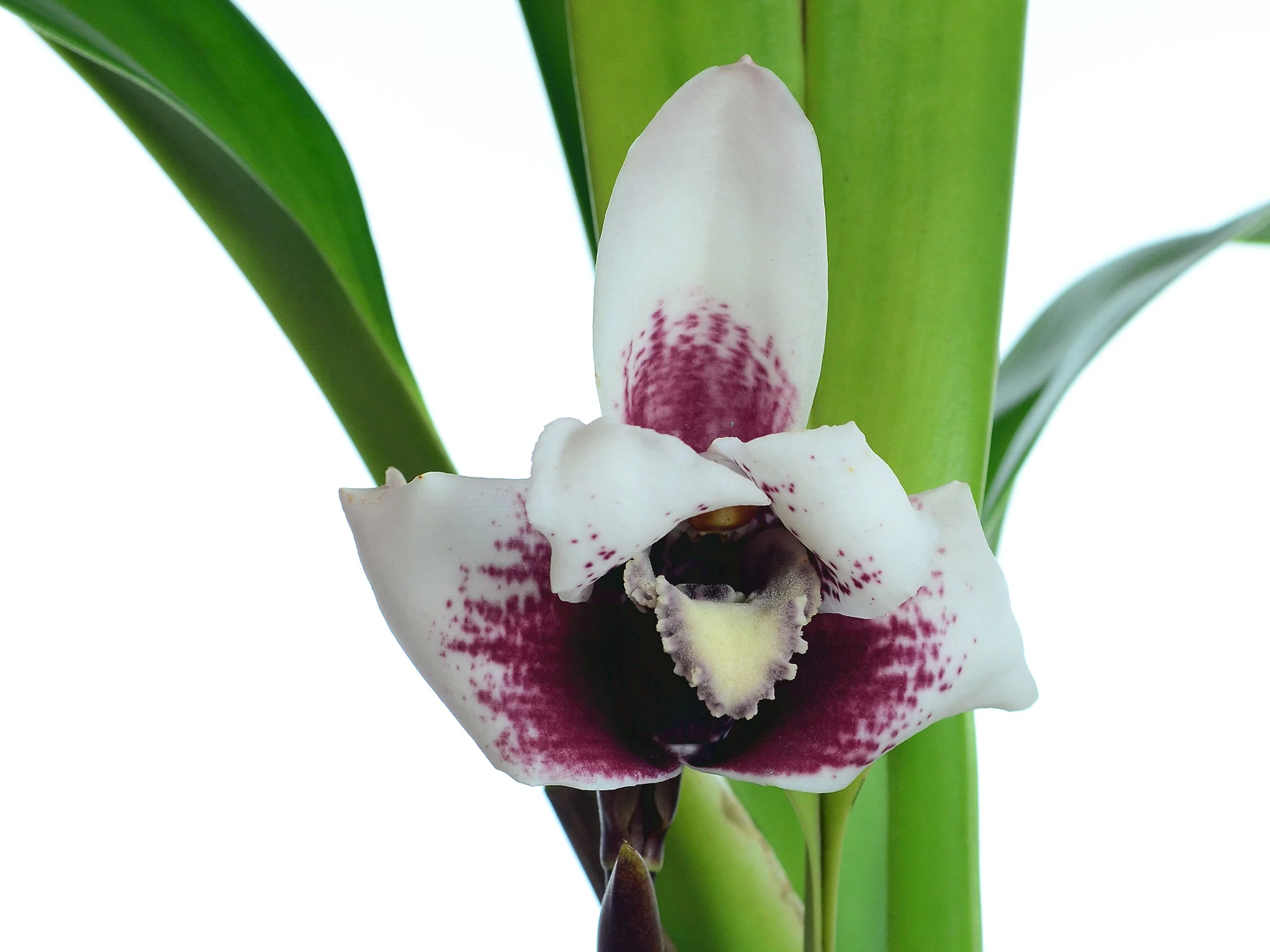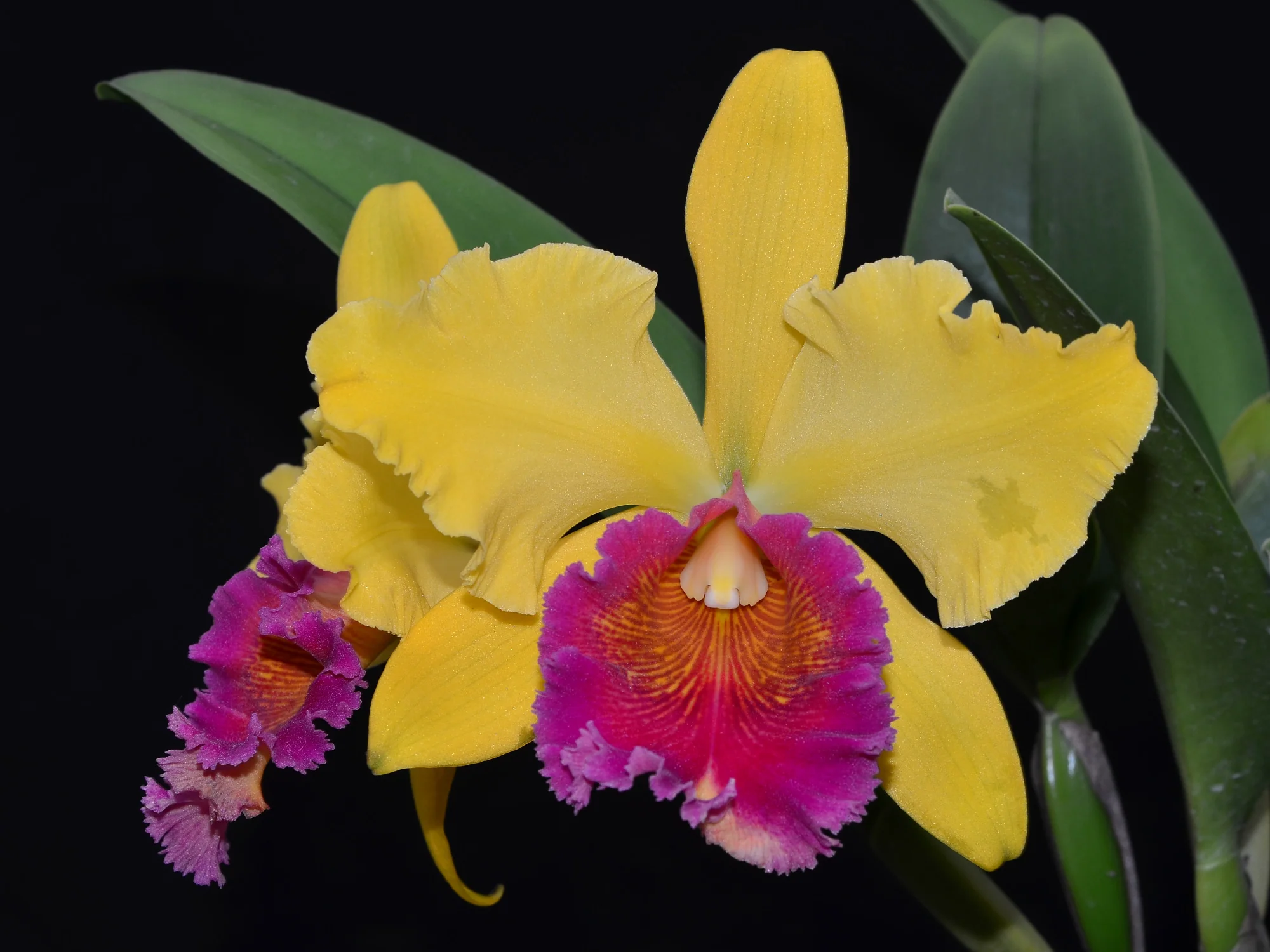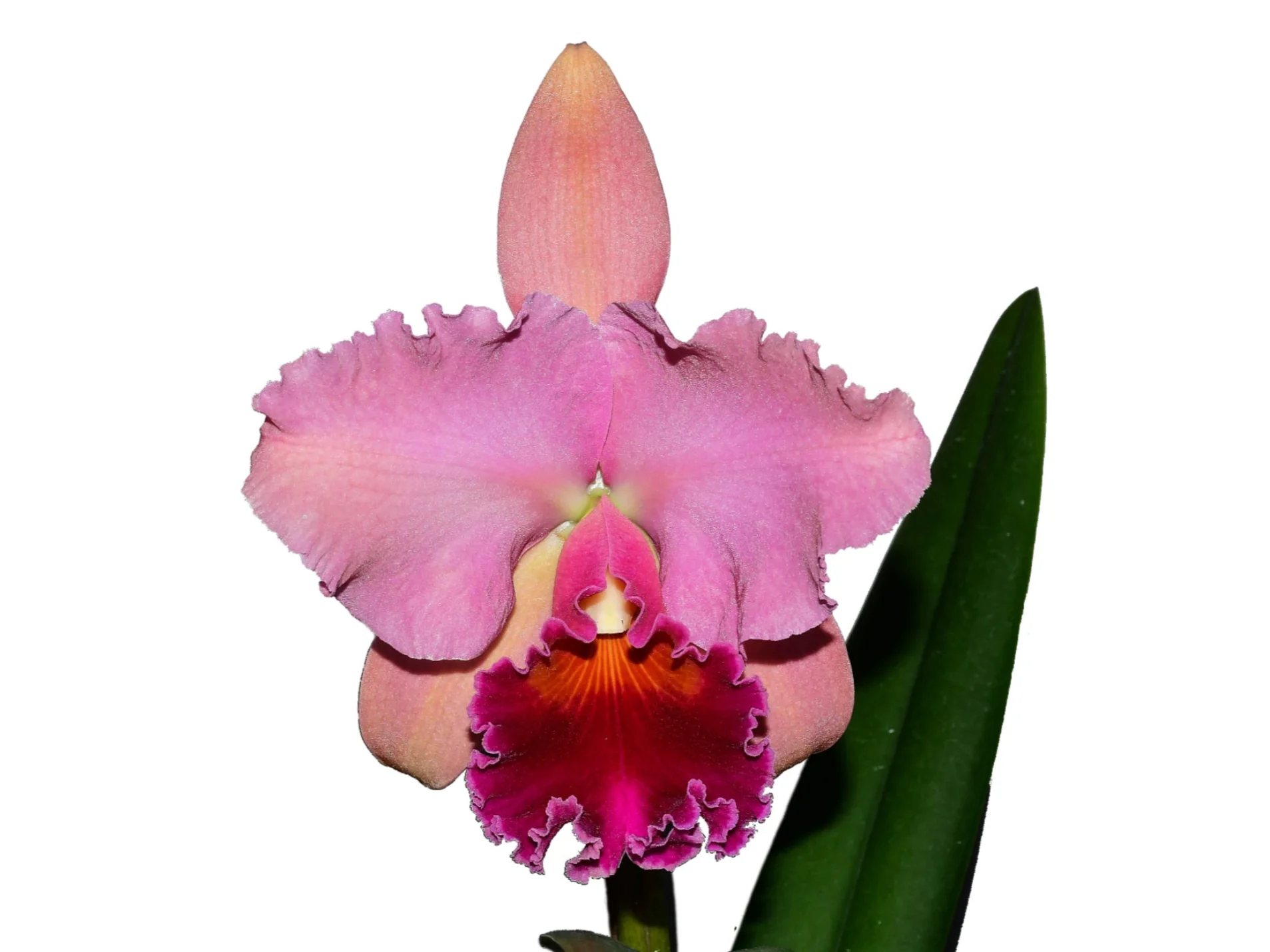
Rhyncholaeliocattleya Caesar's Head 'Carolina Autumn'
Rhyncholaeliocattleya Caesar's Head 'carolina Autumn Culture
- Light: As with many Cattleyas, this hybrid thrives in bright, indirect light. It needs sufficient light to flower well, but direct midday sun can scorch the leaves. The leaves should be a medium green.
- Temperature: Aim for daytime temperatures between 18-27°C (65-80°F) and a nighttime drop of about 10-15°C (18-27°F).
- Humidity: Appreciate humidity levels between 50-70%. You can increase humidity using a humidifier, pebble tray, or by grouping plants together. Good air circulation is also important to prevent fungal diseases.
-
Watering: Cattleyas have pseudobulbs that store water and nutrients, so they are more tolerant of under-watering than overwatering. Water thoroughly when the media is dry to the touch, and then allow all excess water to drain away.
Additional notes:
- Potting: Repotting is generally necessary every 1-2 years, or when the potting mix breaks down or the plant outgrows its pot. The best time to repot is usually after flowering or when new growth begins.
- Fragrance: Be patient and provide the right conditions, and you will likely be rewarded with stunning and often powerfully fragrant blooms, a hallmark of many Rlc. hybrids. The specific scent will vary depending on the parentage but is often sweet and floral.
Rhyncholaeliocattleya Caesar's Head 'carolina Autumn Culture
- Light: As with many Cattleyas, this hybrid thrives in bright, indirect light. It needs sufficient light to flower well, but direct midday sun can scorch the leaves. The leaves should be a medium green.
- Temperature: Aim for daytime temperatures between 18-27°C (65-80°F) and a nighttime drop of about 10-15°C (18-27°F).
- Humidity: Appreciate humidity levels between 50-70%. You can increase humidity using a humidifier, pebble tray, or by grouping plants together. Good air circulation is also important to prevent fungal diseases.
-
Watering: Cattleyas have pseudobulbs that store water and nutrients, so they are more tolerant of under-watering than overwatering. Water thoroughly when the media is dry to the touch, and then allow all excess water to drain away.
Additional notes:
- Potting: Repotting is generally necessary every 1-2 years, or when the potting mix breaks down or the plant outgrows its pot. The best time to repot is usually after flowering or when new growth begins.
- Fragrance: Be patient and provide the right conditions, and you will likely be rewarded with stunning and often powerfully fragrant blooms, a hallmark of many Rlc. hybrids. The specific scent will vary depending on the parentage but is often sweet and floral.
$36.00
Rhyncholaeliocattleya Caesar's Head 'Carolina Autumn'—
$36.00
Description
Rhyncholaeliocattleya Caesar's Head 'carolina Autumn Culture
- Light: As with many Cattleyas, this hybrid thrives in bright, indirect light. It needs sufficient light to flower well, but direct midday sun can scorch the leaves. The leaves should be a medium green.
- Temperature: Aim for daytime temperatures between 18-27°C (65-80°F) and a nighttime drop of about 10-15°C (18-27°F).
- Humidity: Appreciate humidity levels between 50-70%. You can increase humidity using a humidifier, pebble tray, or by grouping plants together. Good air circulation is also important to prevent fungal diseases.
-
Watering: Cattleyas have pseudobulbs that store water and nutrients, so they are more tolerant of under-watering than overwatering. Water thoroughly when the media is dry to the touch, and then allow all excess water to drain away.
Additional notes:
- Potting: Repotting is generally necessary every 1-2 years, or when the potting mix breaks down or the plant outgrows its pot. The best time to repot is usually after flowering or when new growth begins.
- Fragrance: Be patient and provide the right conditions, and you will likely be rewarded with stunning and often powerfully fragrant blooms, a hallmark of many Rlc. hybrids. The specific scent will vary depending on the parentage but is often sweet and floral.