Masdevallia microptera
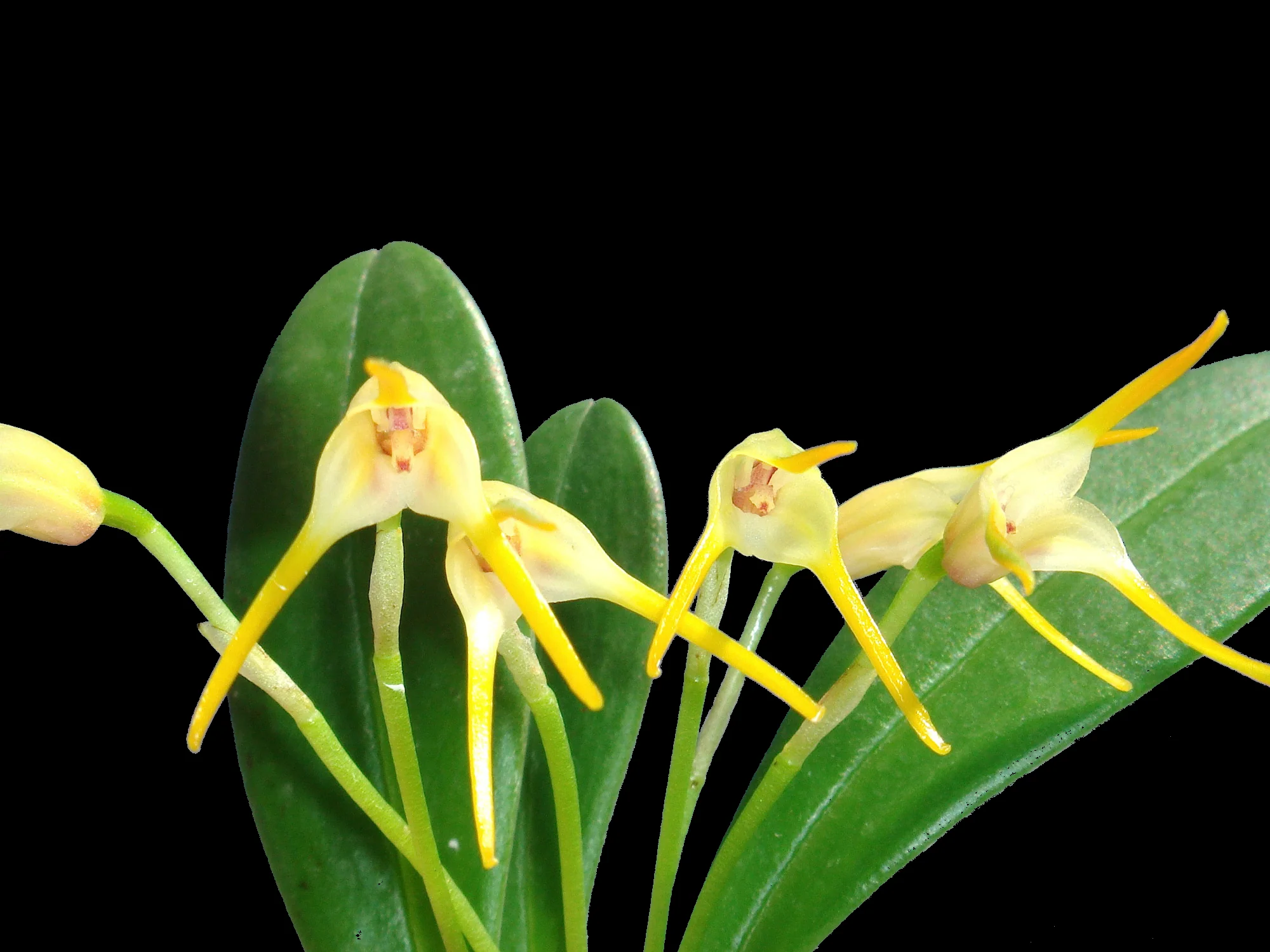
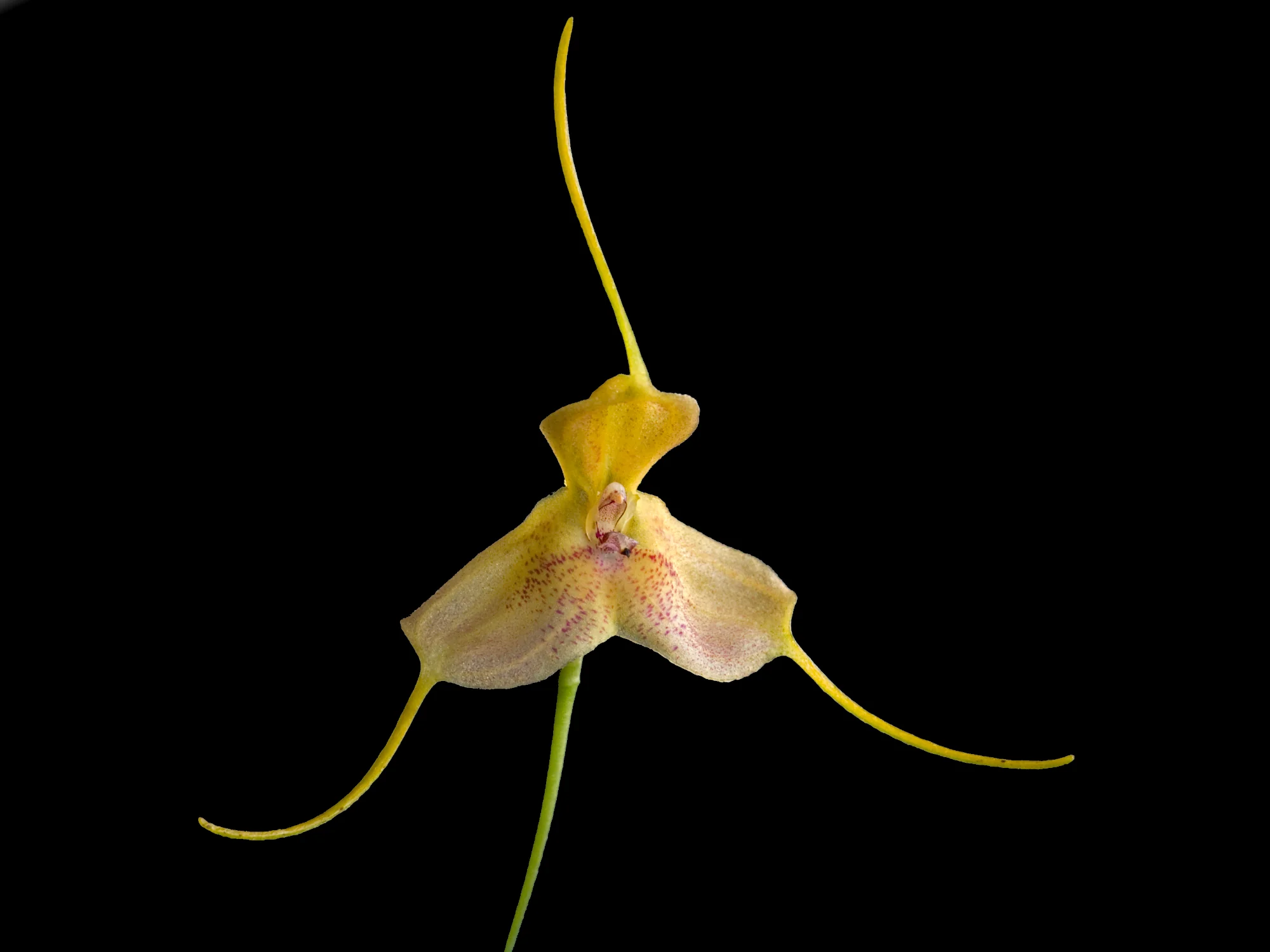
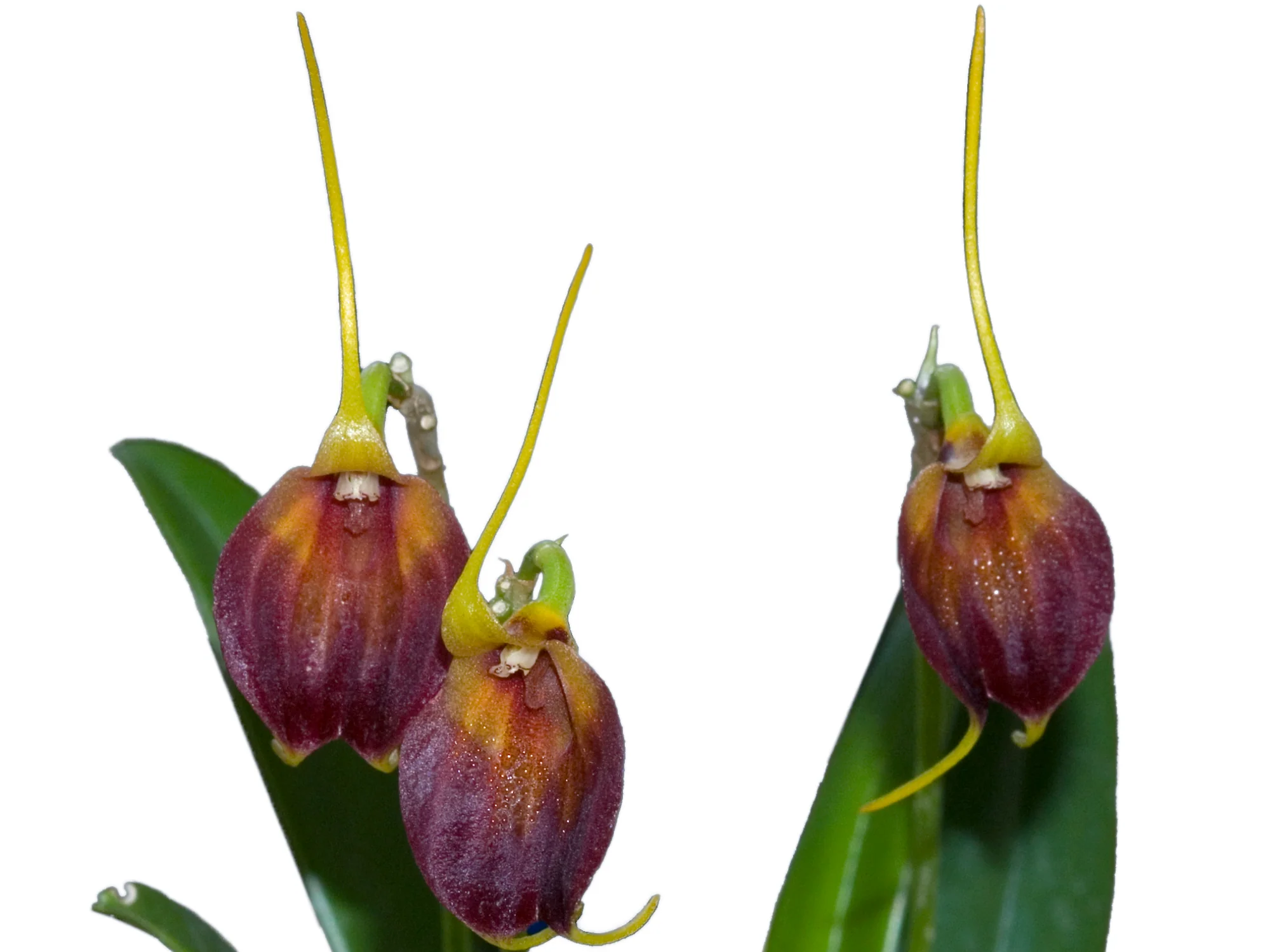
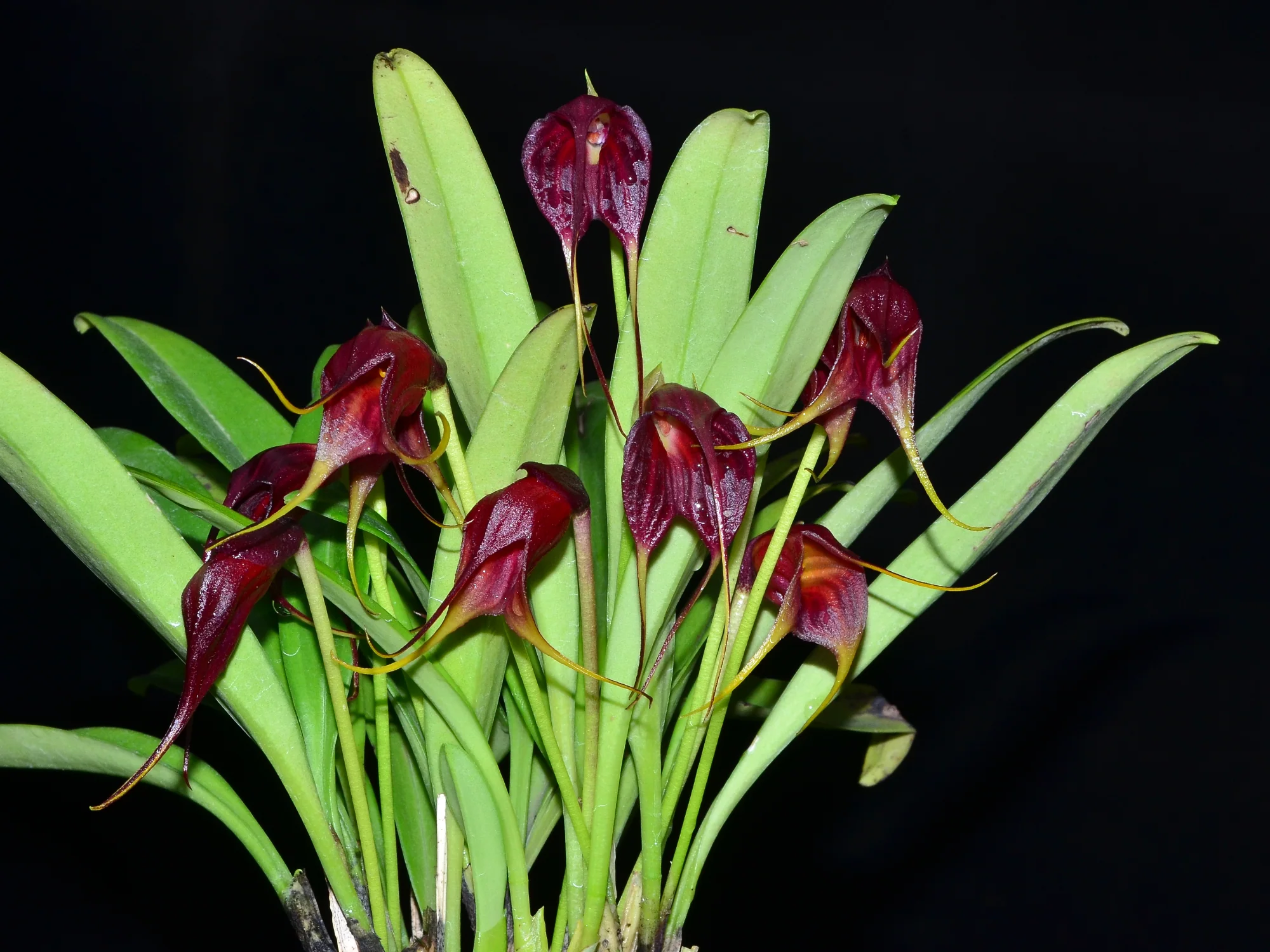
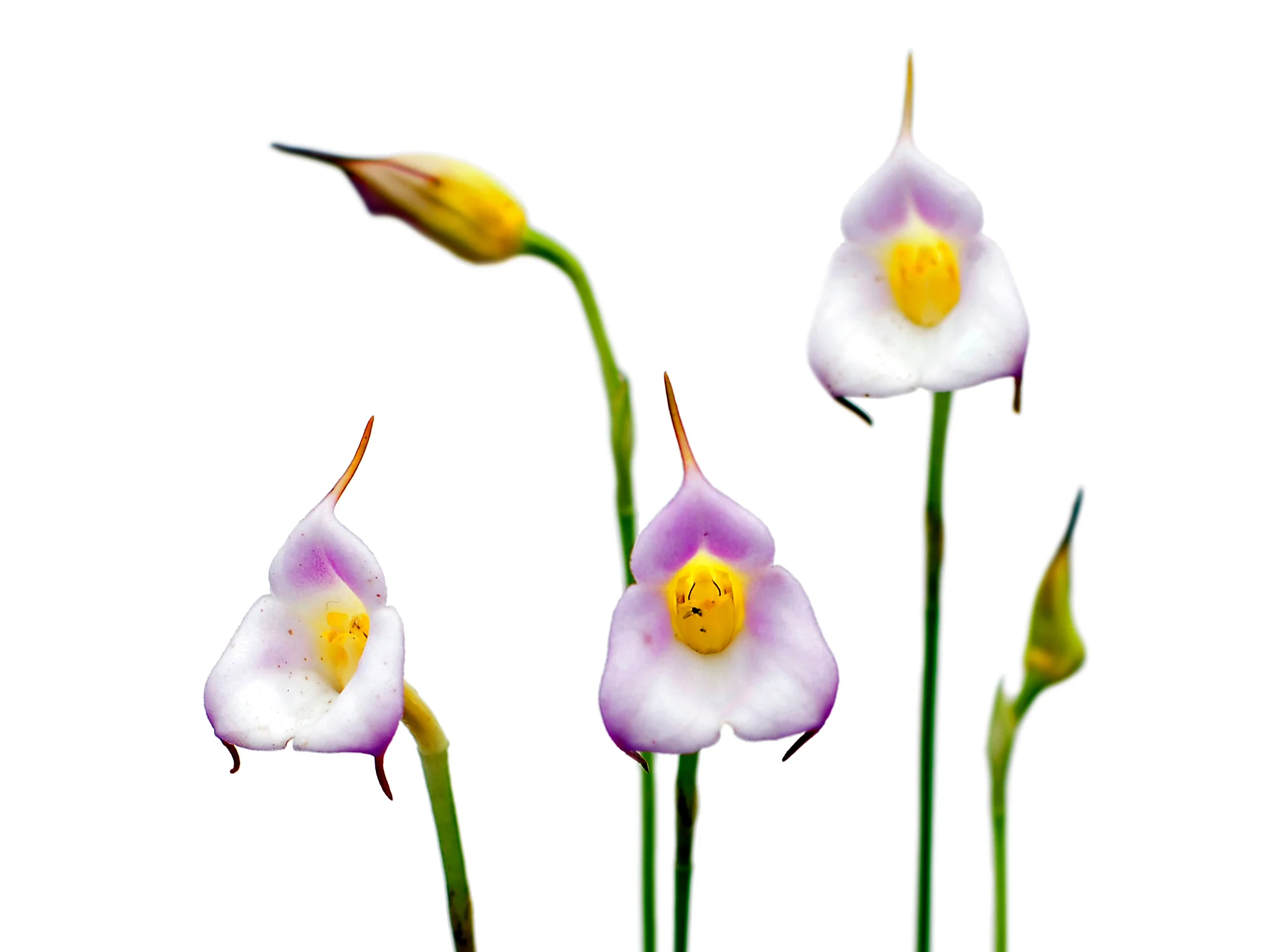
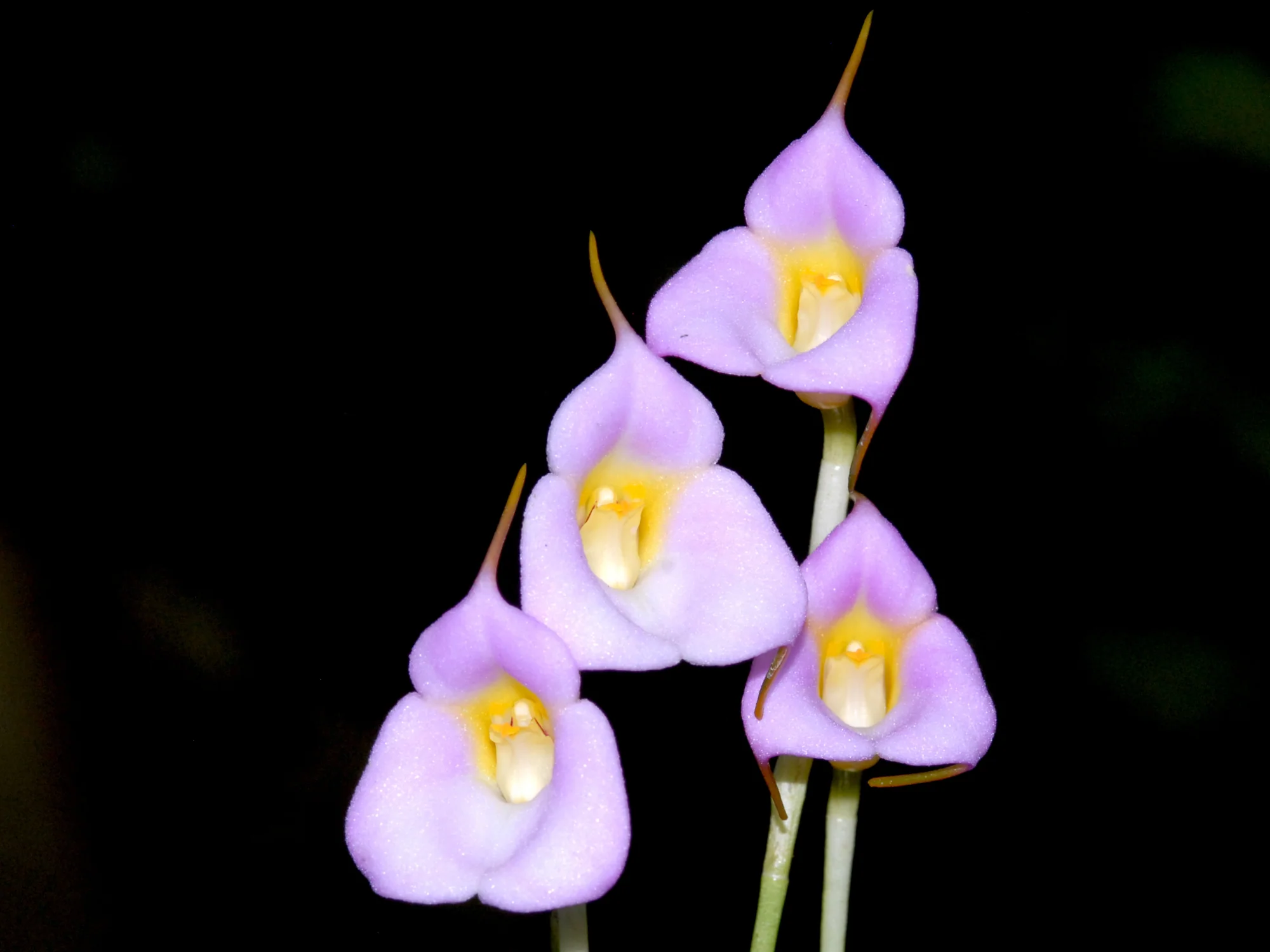
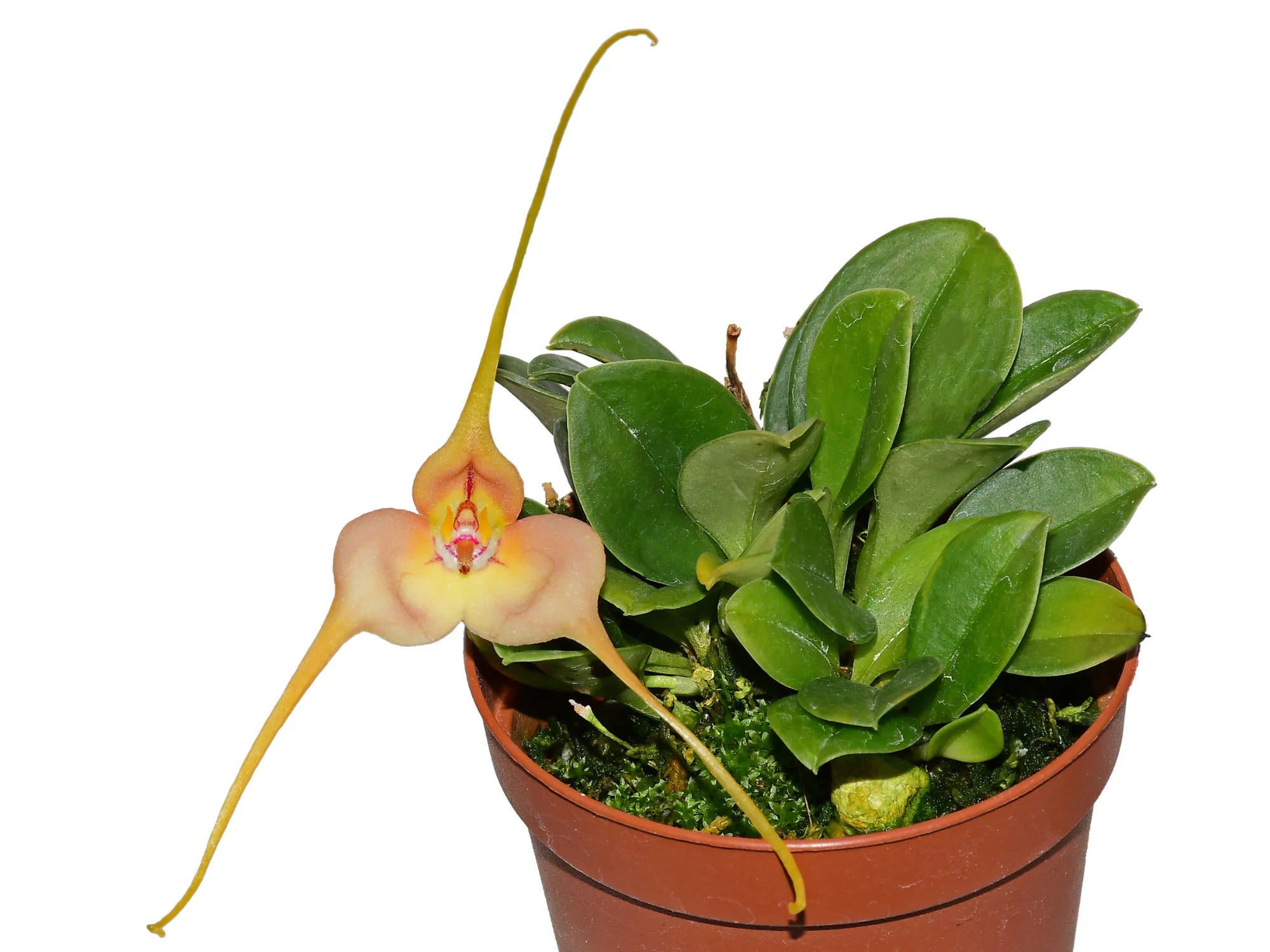
A compact epiphyte from the Andean cloud forests, bearing solitary flowers on short scapes among a dense rosette of fleshy, ovate leaves. The open, triangular flower is defined by an extraordinarily long, arching dorsal tail that curves dramatically upward — one of the most distinctive sepal extensions in the genus — with a wide frontal opening revealing a highly ornamental lip and column.
- Light: 70–80% shade cloth; avoid direct midday sun. Bright, diffused light encourages blooming without stressing the plant.
- Temperature: 55–72°F (13–22°C) — Intermediate to Cool grower. Nighttime temperature drops help sustain blooming cycles. Avoid prolonged exposure above 75°F (24°C).
- Humidity: 80–90%; always pair with strong air movement to prevent rot and fungal issues.
- Watering: Water thoroughly and frequently, never allowing the medium to fully dry out. Use soft, low-mineral water (RO or rainwater preferred).
Additional Notes
Best grown in a fine bark or sphagnum moss mix in a small plastic or net pot with excellent drainage. Ships bare root and well-established, with a healthy root system ready to settle into its new home.
A compact epiphyte from the Andean cloud forests, bearing solitary flowers on short scapes among a dense rosette of fleshy, ovate leaves. The open, triangular flower is defined by an extraordinarily long, arching dorsal tail that curves dramatically upward — one of the most distinctive sepal extensions in the genus — with a wide frontal opening revealing a highly ornamental lip and column.
- Light: 70–80% shade cloth; avoid direct midday sun. Bright, diffused light encourages blooming without stressing the plant.
- Temperature: 55–72°F (13–22°C) — Intermediate to Cool grower. Nighttime temperature drops help sustain blooming cycles. Avoid prolonged exposure above 75°F (24°C).
- Humidity: 80–90%; always pair with strong air movement to prevent rot and fungal issues.
- Watering: Water thoroughly and frequently, never allowing the medium to fully dry out. Use soft, low-mineral water (RO or rainwater preferred).
Additional Notes
Best grown in a fine bark or sphagnum moss mix in a small plastic or net pot with excellent drainage. Ships bare root and well-established, with a healthy root system ready to settle into its new home.
Original: $23.00
-65%$23.00
$8.05Description
A compact epiphyte from the Andean cloud forests, bearing solitary flowers on short scapes among a dense rosette of fleshy, ovate leaves. The open, triangular flower is defined by an extraordinarily long, arching dorsal tail that curves dramatically upward — one of the most distinctive sepal extensions in the genus — with a wide frontal opening revealing a highly ornamental lip and column.
- Light: 70–80% shade cloth; avoid direct midday sun. Bright, diffused light encourages blooming without stressing the plant.
- Temperature: 55–72°F (13–22°C) — Intermediate to Cool grower. Nighttime temperature drops help sustain blooming cycles. Avoid prolonged exposure above 75°F (24°C).
- Humidity: 80–90%; always pair with strong air movement to prevent rot and fungal issues.
- Watering: Water thoroughly and frequently, never allowing the medium to fully dry out. Use soft, low-mineral water (RO or rainwater preferred).
Additional Notes
Best grown in a fine bark or sphagnum moss mix in a small plastic or net pot with excellent drainage. Ships bare root and well-established, with a healthy root system ready to settle into its new home.