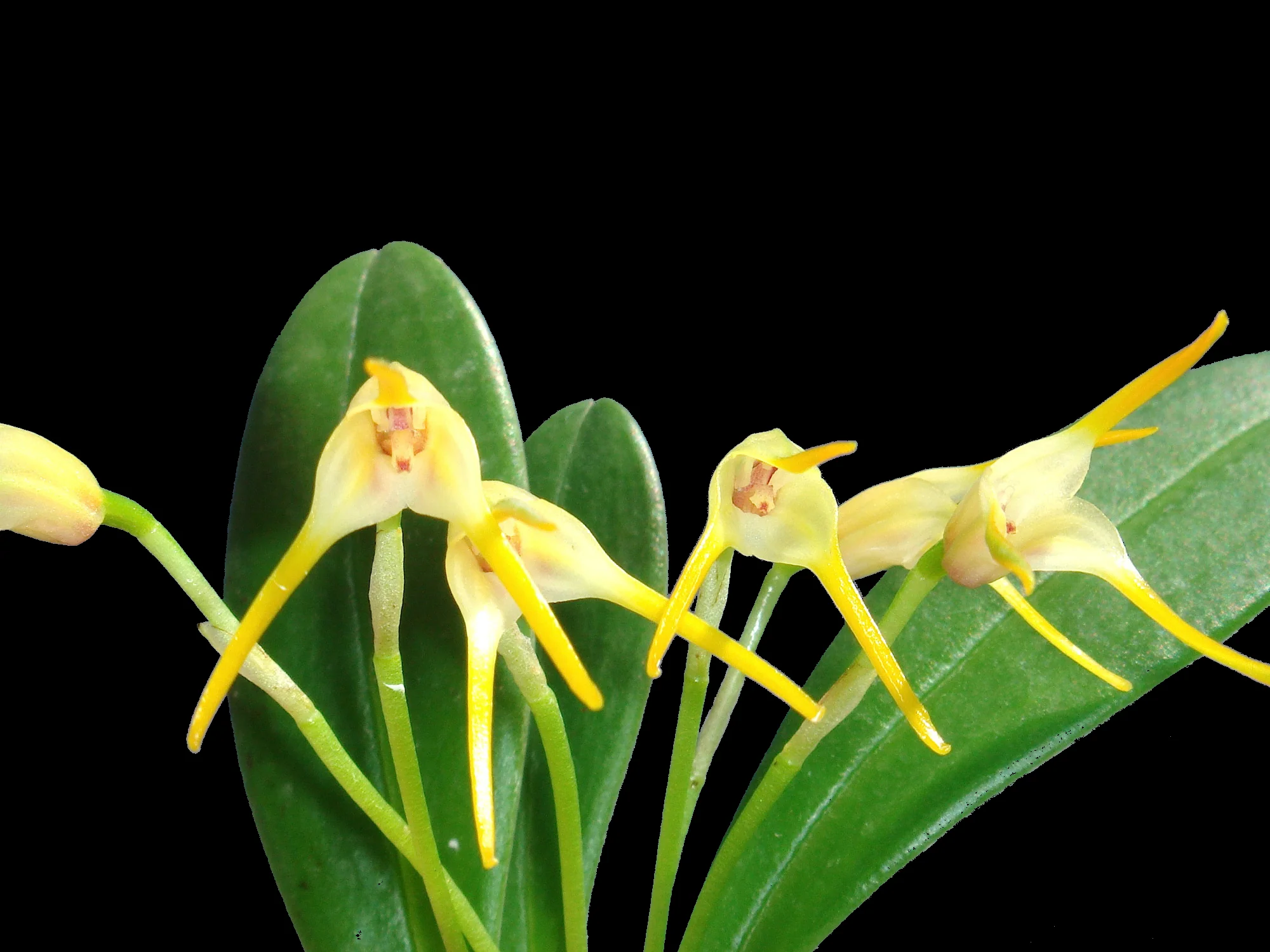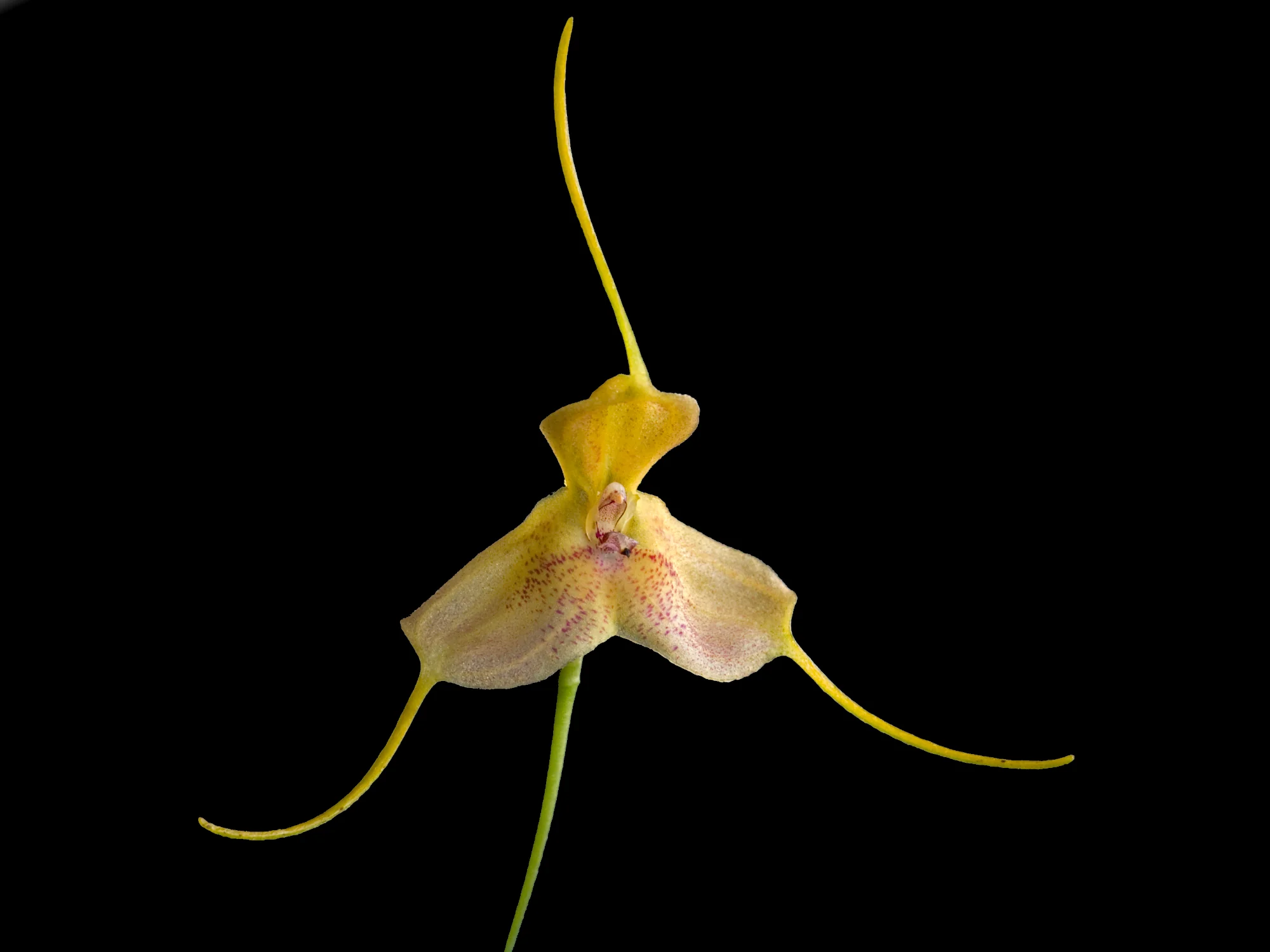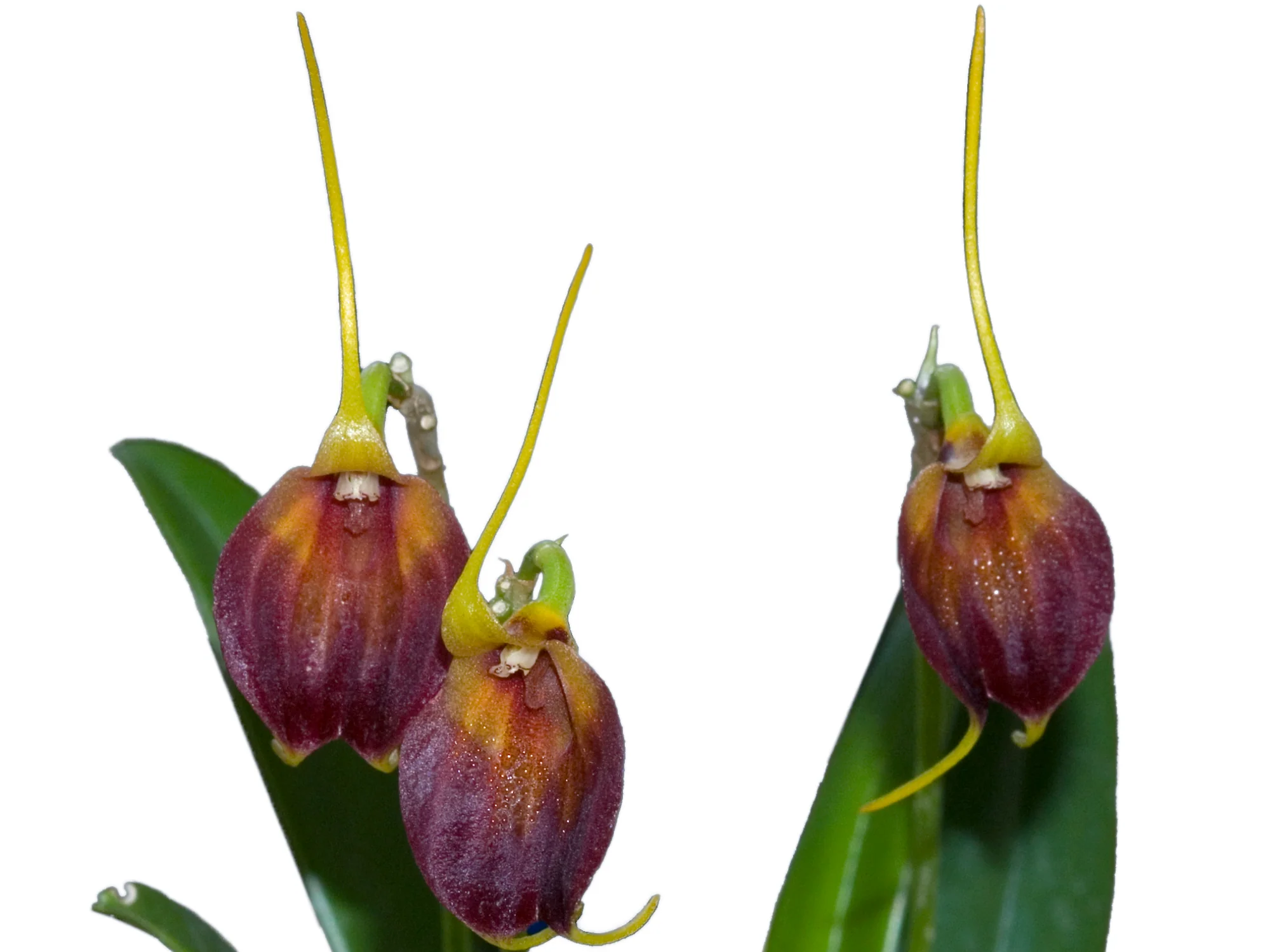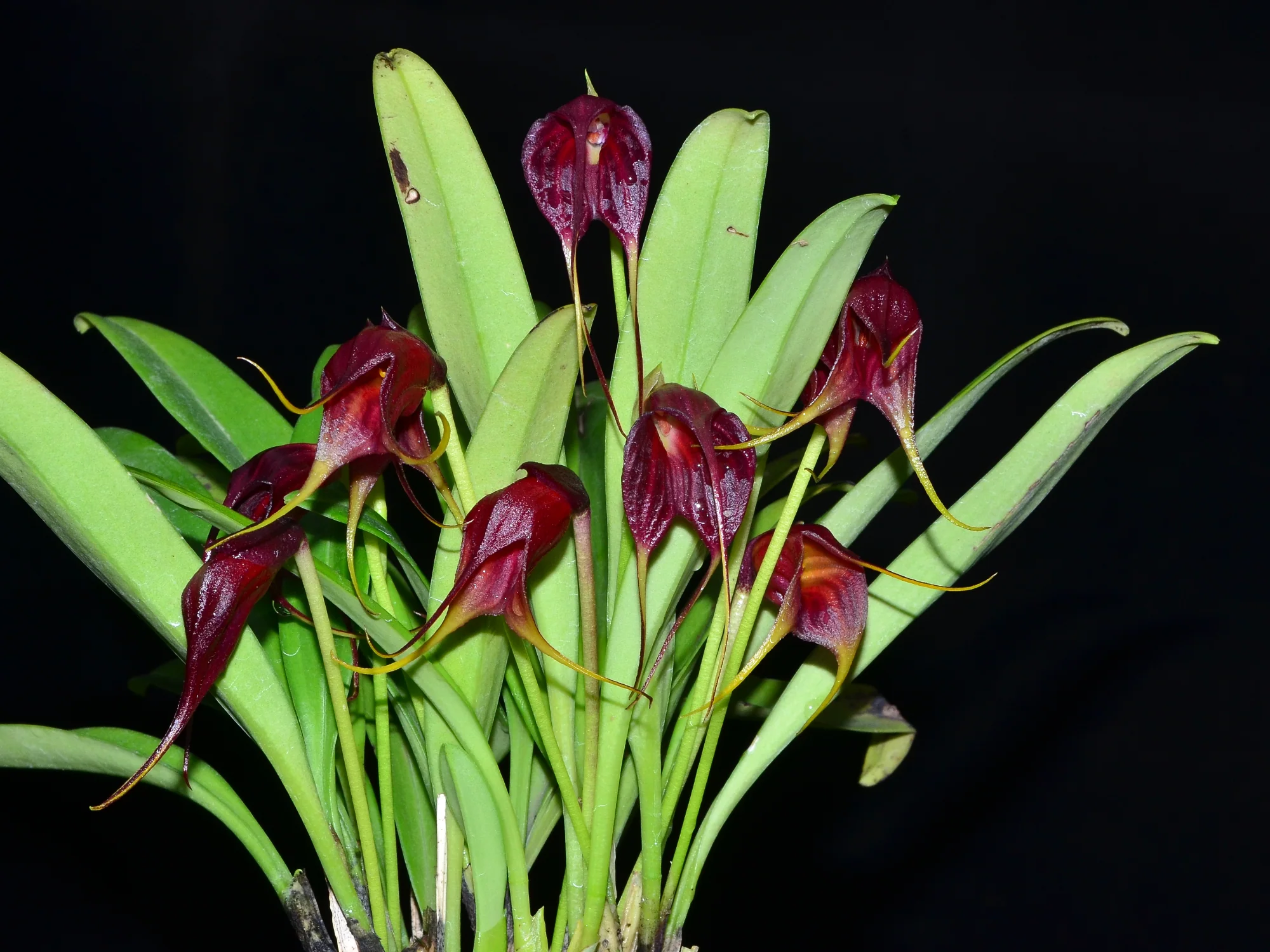
Masdevallia ivanii
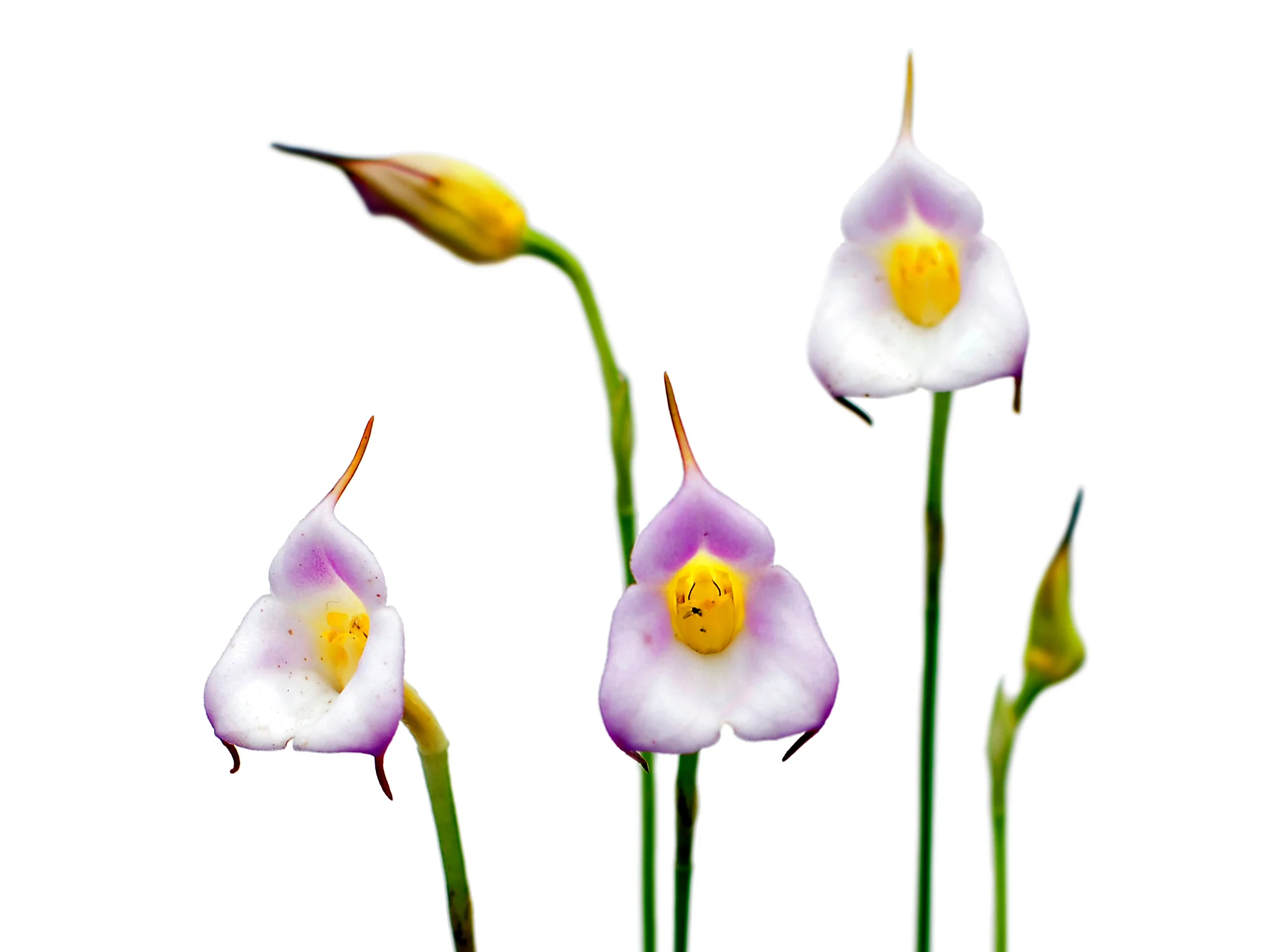
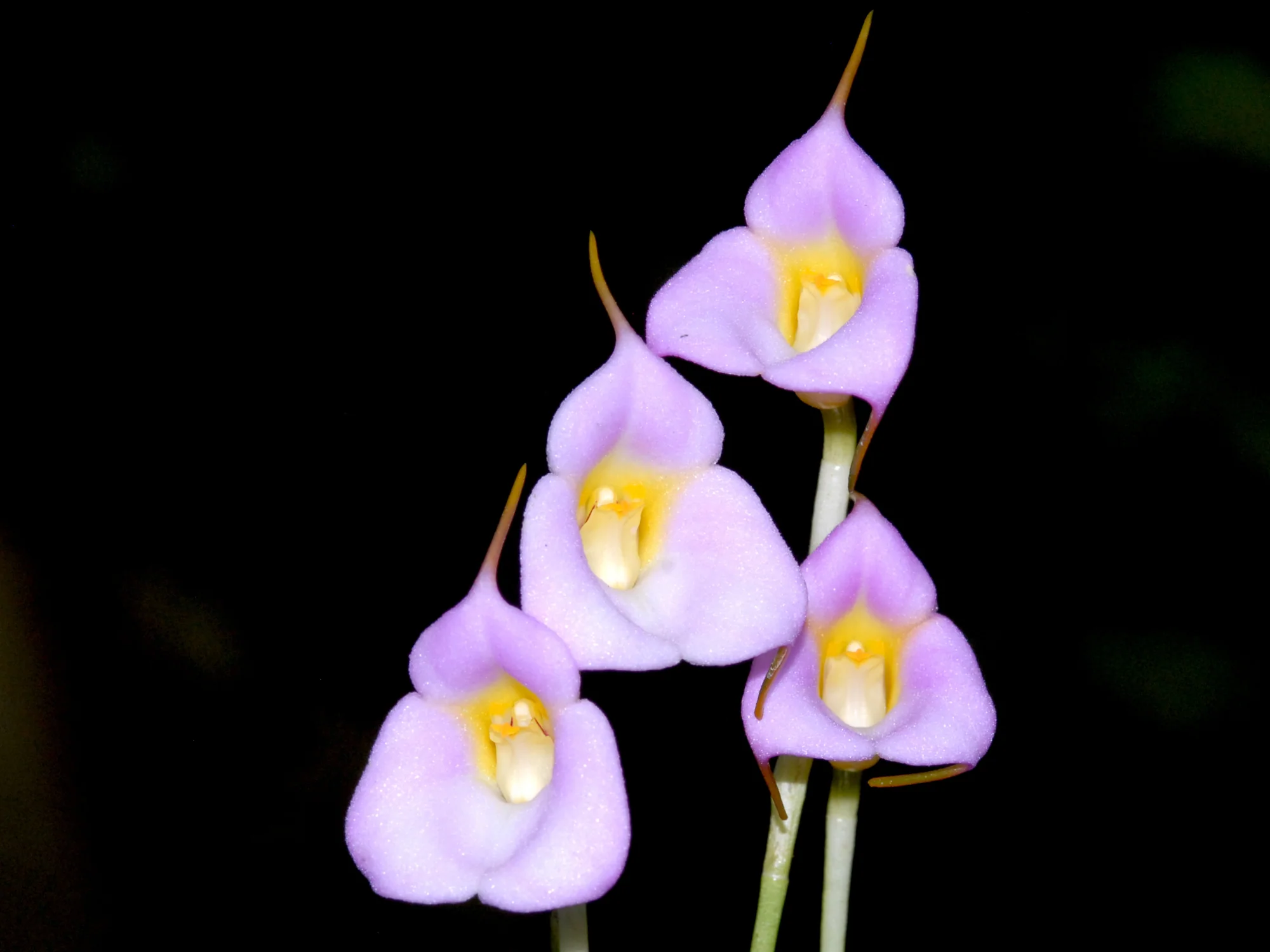
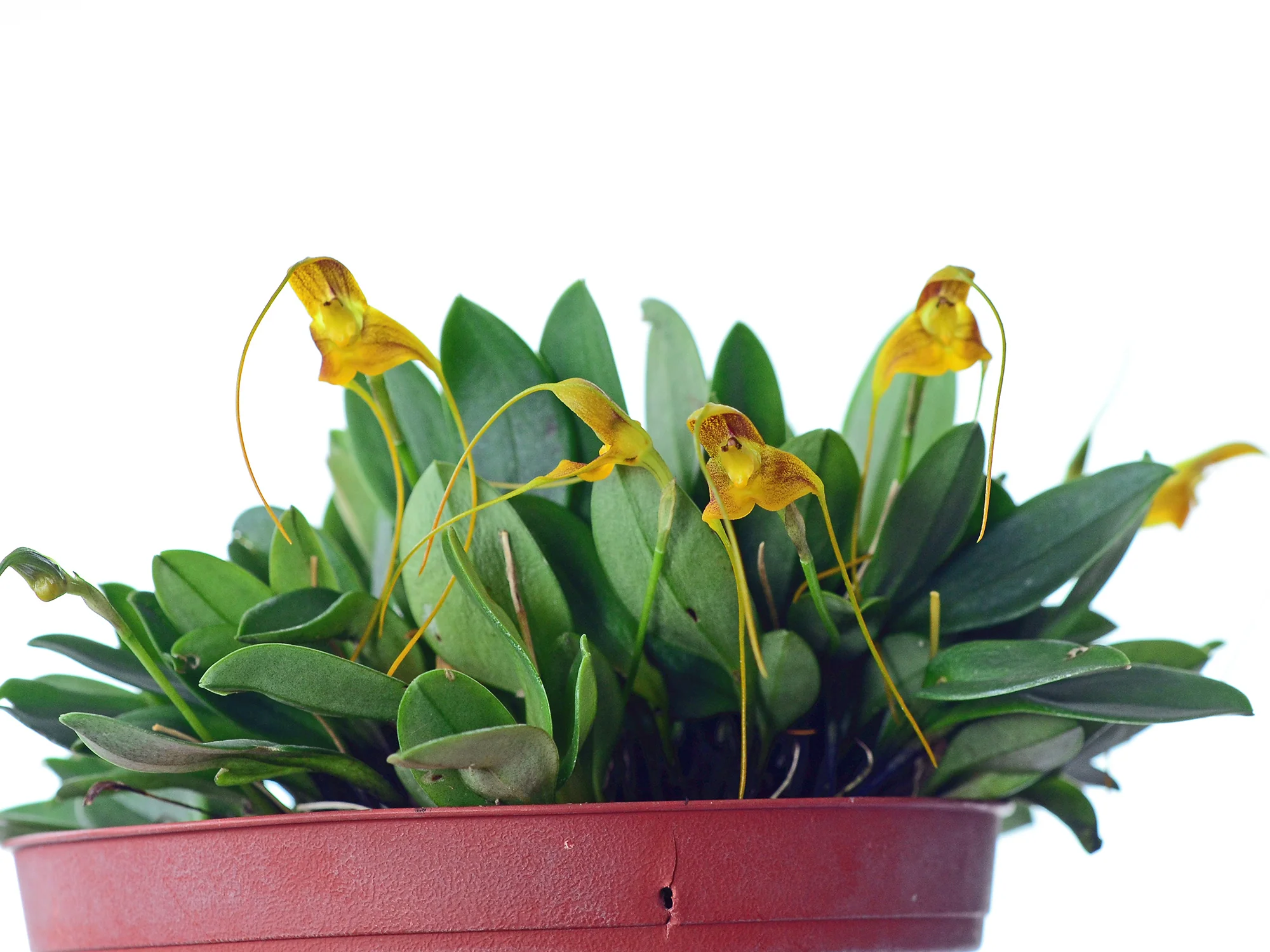
An eye-catching species bearing flowers with the broad, fused sepaline tube and graceful elongated tails typical of the genus, produced on upright single-flowered inflorescences that bloom in succession and reward consistent cool, humid cultivation.
- Light: Grow under 50–70% shade cloth; direct sun exposure causes rapid leaf scorch and should be avoided.
- Temperature: Cool grower. Daytime 57–68°F (14–20°C), nights 45–54°F (7–12°C). A marked day-night differential promotes vigorous growth and repeat blooming.
- Humidity: Requires 75–90% relative humidity; humidity trays or a humidifier paired with good air circulation keep conditions ideal.
- Watering: Maintain even moisture year-round; mounted plants need more frequent watering than potted ones, with a modest reduction during the coolest months.
Additional Notes
Native to Ecuador at elevations of 2,000–3,000 meters in cool cloud-forest habitats. Best grown in small pots with fine bark or sphagnum moss, or mounted on cork bark or tree fern.
An eye-catching species bearing flowers with the broad, fused sepaline tube and graceful elongated tails typical of the genus, produced on upright single-flowered inflorescences that bloom in succession and reward consistent cool, humid cultivation.
- Light: Grow under 50–70% shade cloth; direct sun exposure causes rapid leaf scorch and should be avoided.
- Temperature: Cool grower. Daytime 57–68°F (14–20°C), nights 45–54°F (7–12°C). A marked day-night differential promotes vigorous growth and repeat blooming.
- Humidity: Requires 75–90% relative humidity; humidity trays or a humidifier paired with good air circulation keep conditions ideal.
- Watering: Maintain even moisture year-round; mounted plants need more frequent watering than potted ones, with a modest reduction during the coolest months.
Additional Notes
Native to Ecuador at elevations of 2,000–3,000 meters in cool cloud-forest habitats. Best grown in small pots with fine bark or sphagnum moss, or mounted on cork bark or tree fern.
Description
An eye-catching species bearing flowers with the broad, fused sepaline tube and graceful elongated tails typical of the genus, produced on upright single-flowered inflorescences that bloom in succession and reward consistent cool, humid cultivation.
- Light: Grow under 50–70% shade cloth; direct sun exposure causes rapid leaf scorch and should be avoided.
- Temperature: Cool grower. Daytime 57–68°F (14–20°C), nights 45–54°F (7–12°C). A marked day-night differential promotes vigorous growth and repeat blooming.
- Humidity: Requires 75–90% relative humidity; humidity trays or a humidifier paired with good air circulation keep conditions ideal.
- Watering: Maintain even moisture year-round; mounted plants need more frequent watering than potted ones, with a modest reduction during the coolest months.
Additional Notes
Native to Ecuador at elevations of 2,000–3,000 meters in cool cloud-forest habitats. Best grown in small pots with fine bark or sphagnum moss, or mounted on cork bark or tree fern.