Lepanthes maxillaris
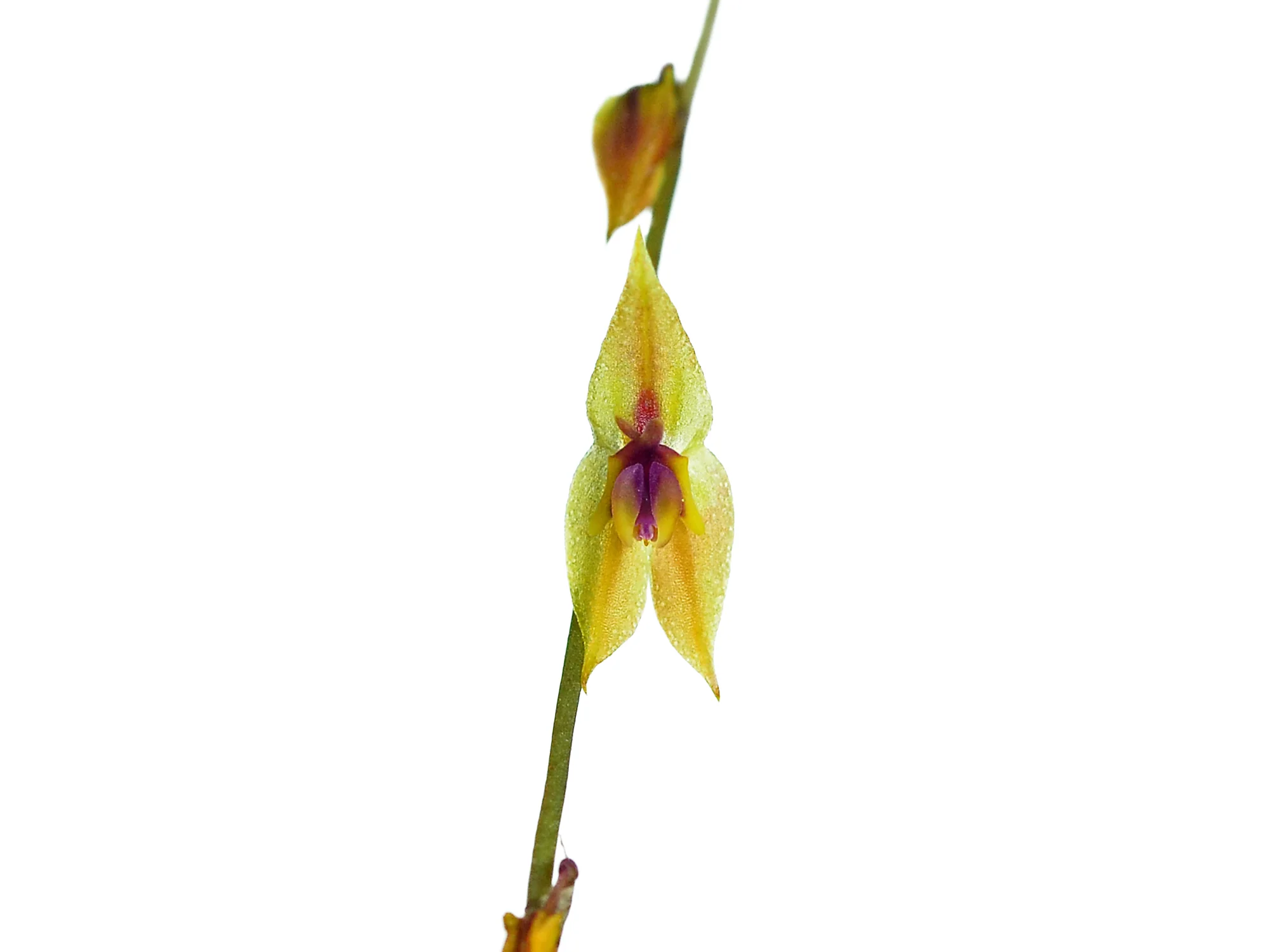
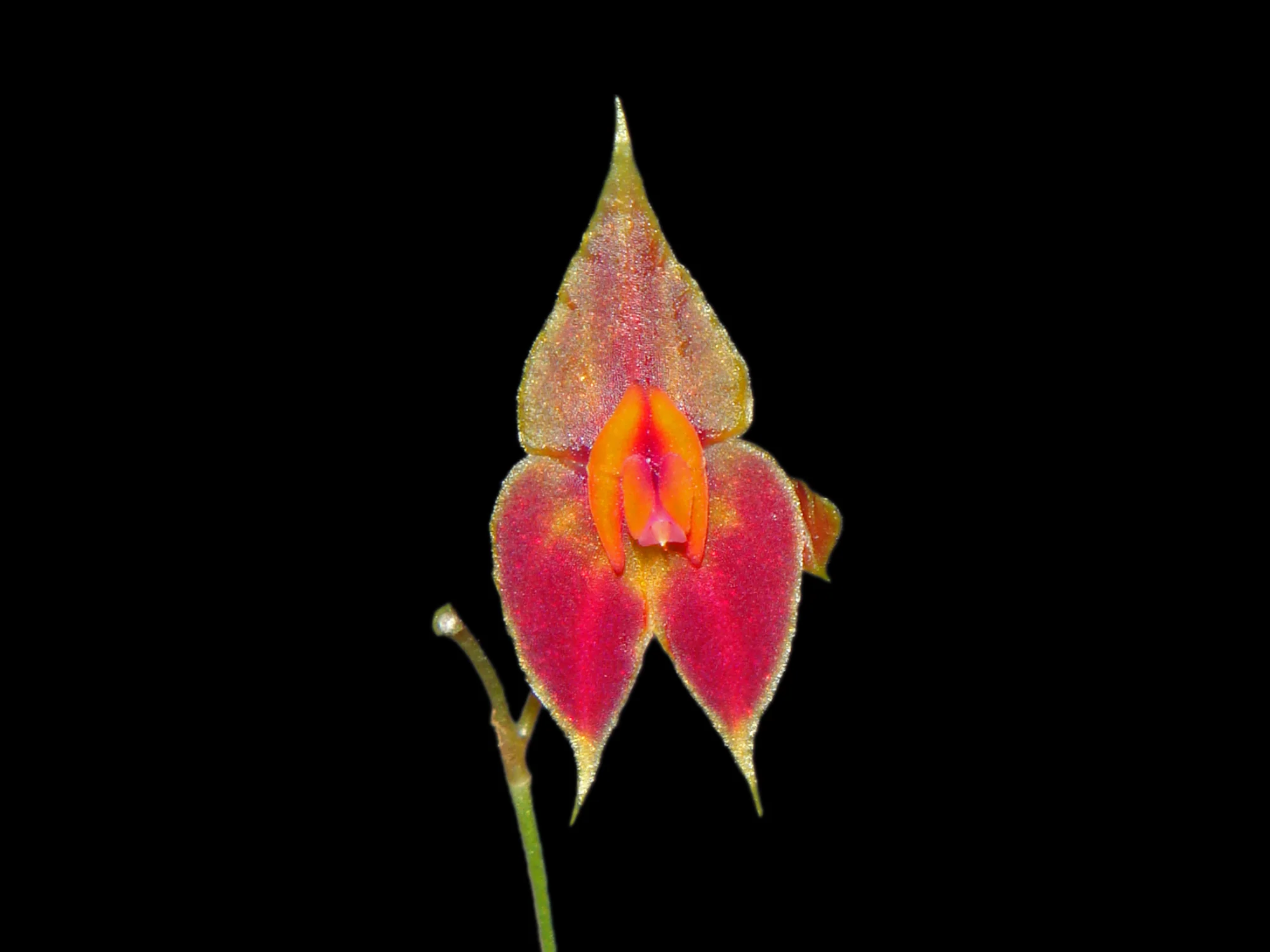
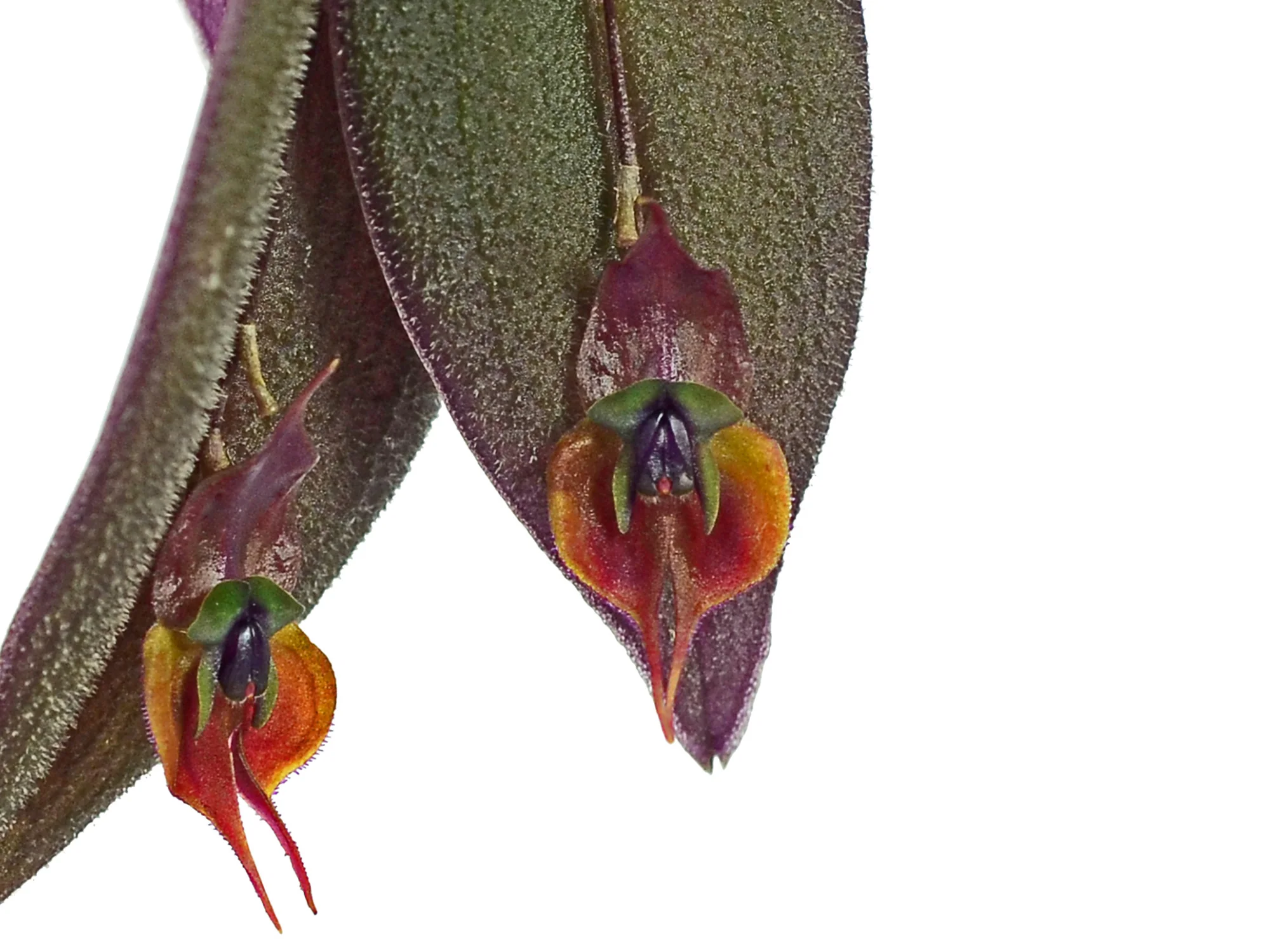
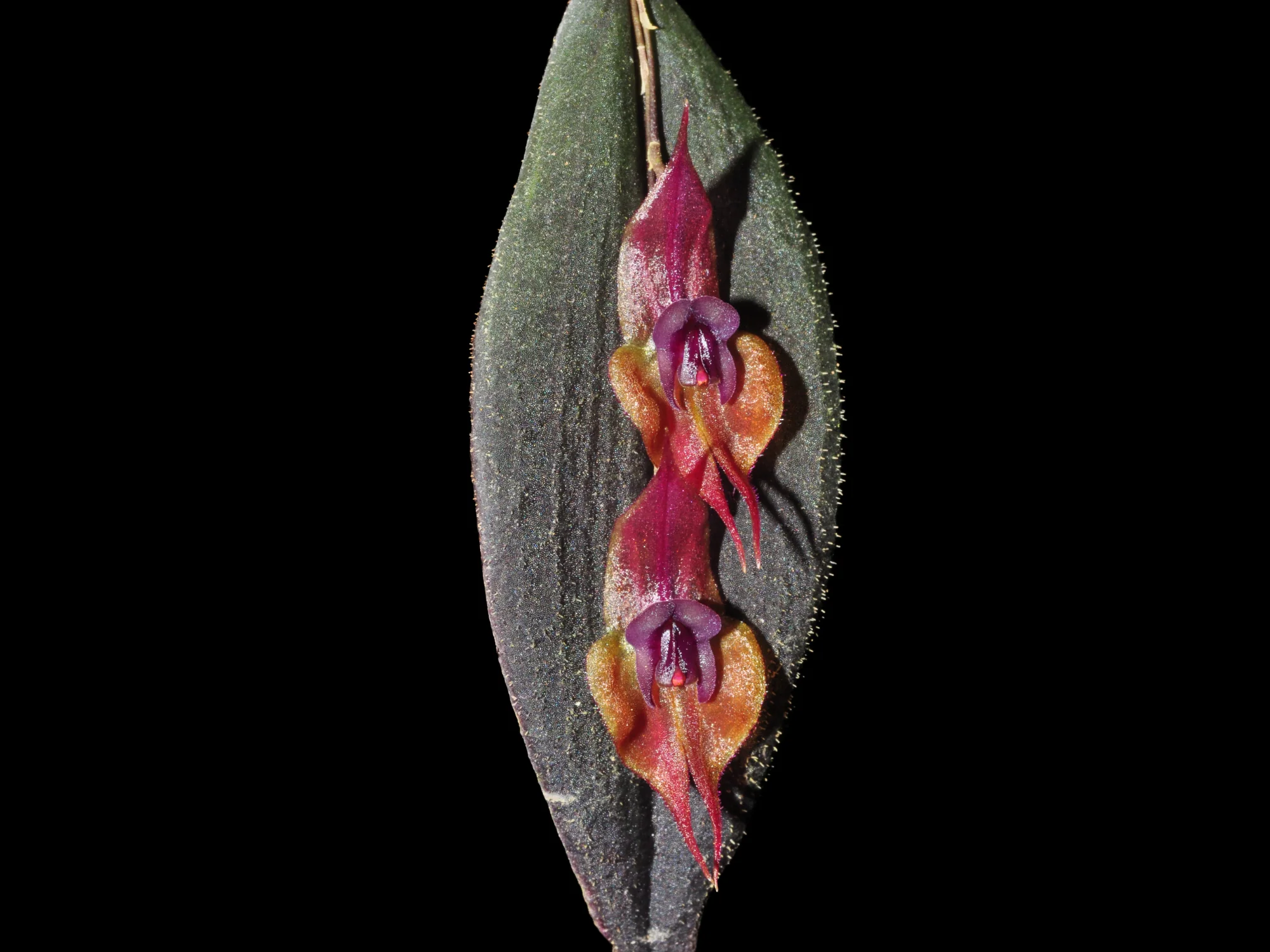
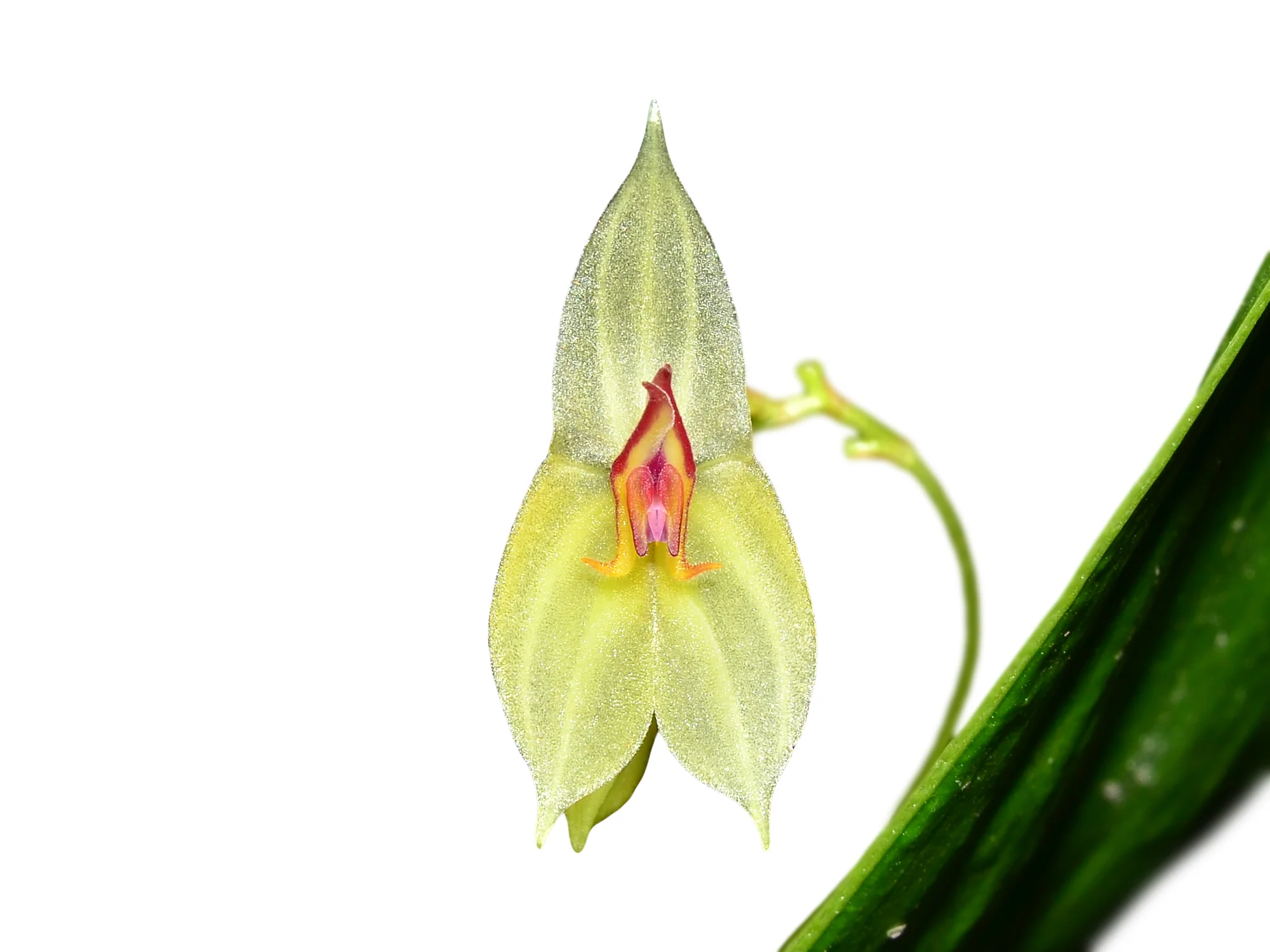
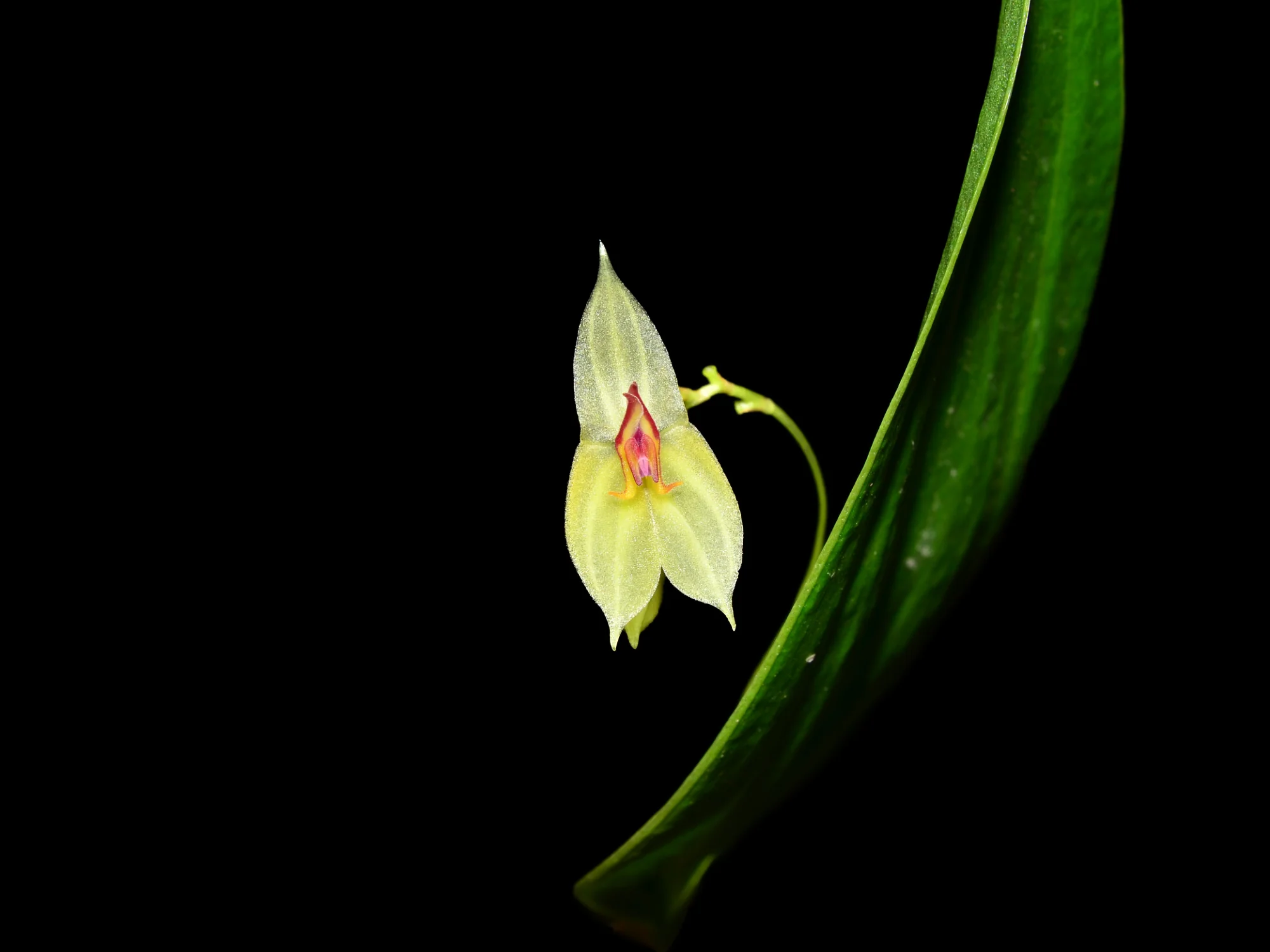
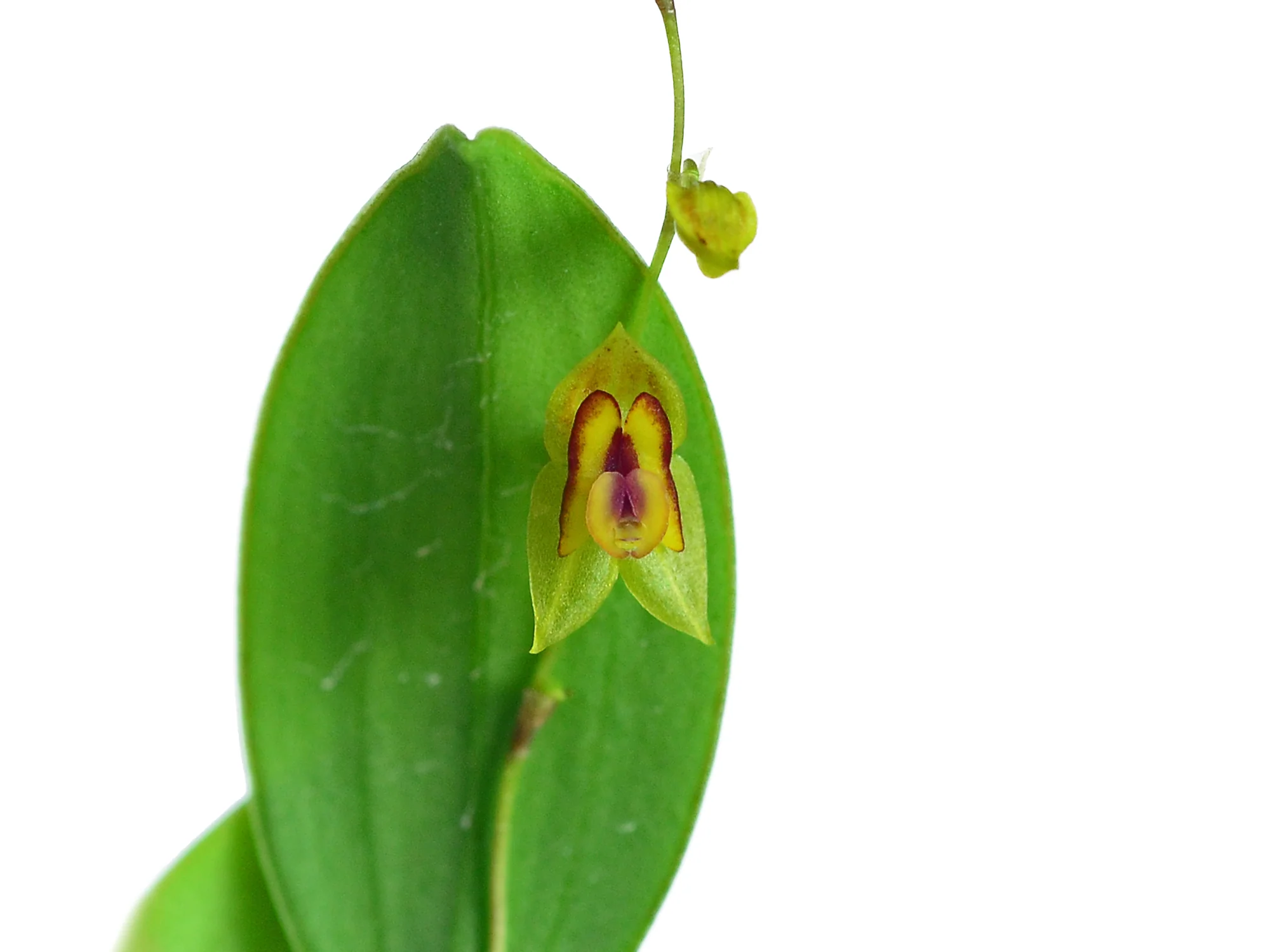
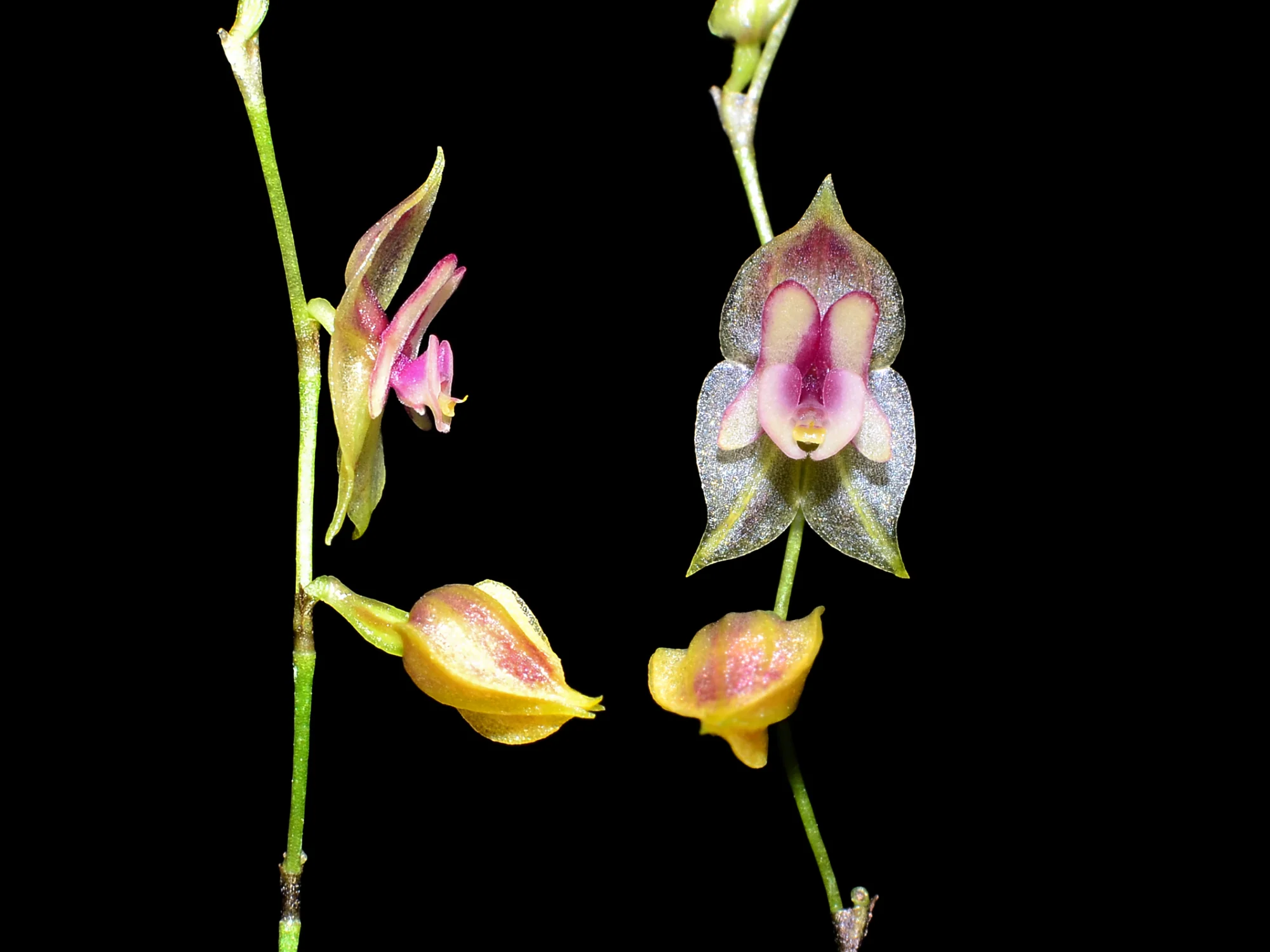
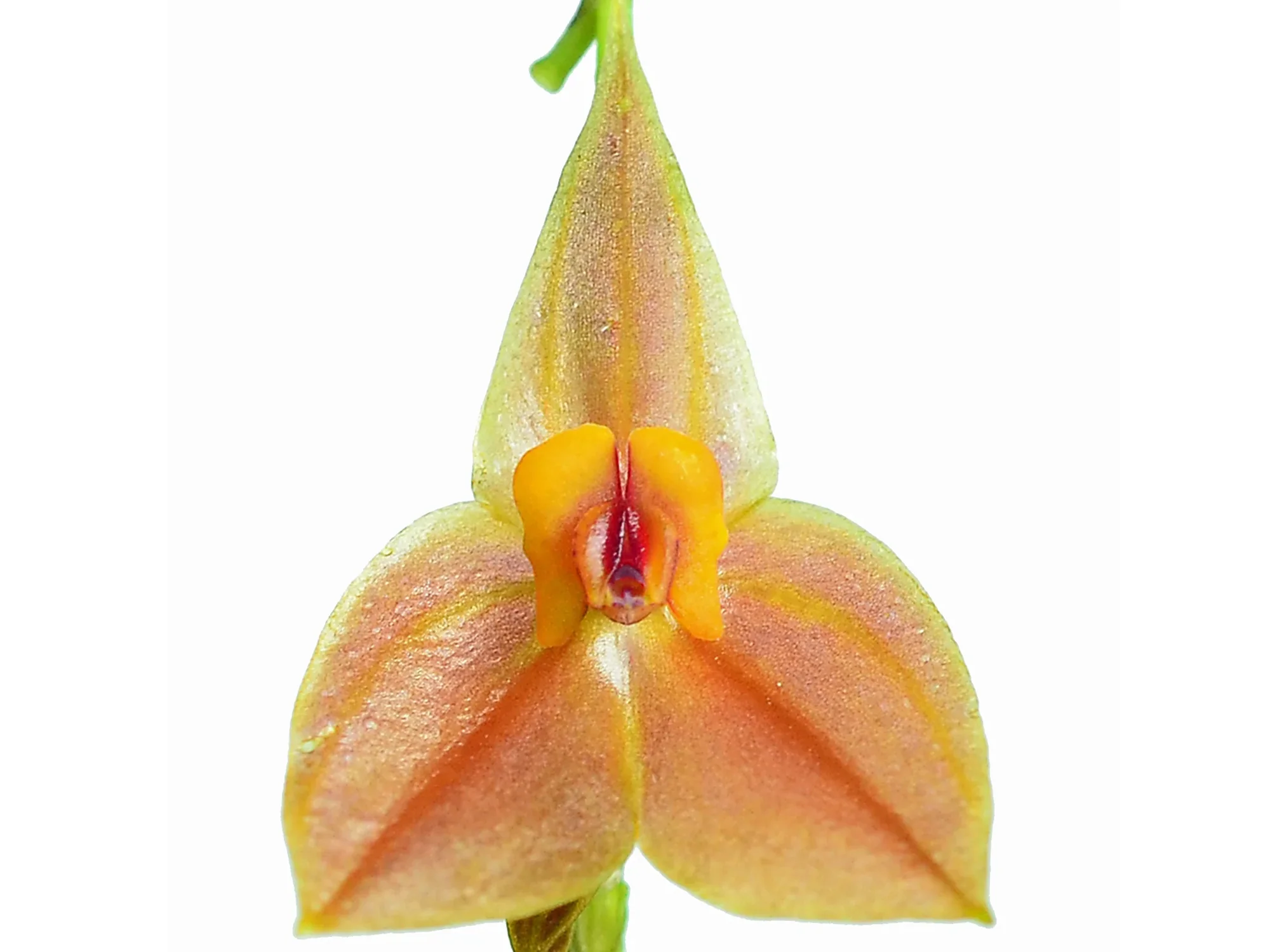
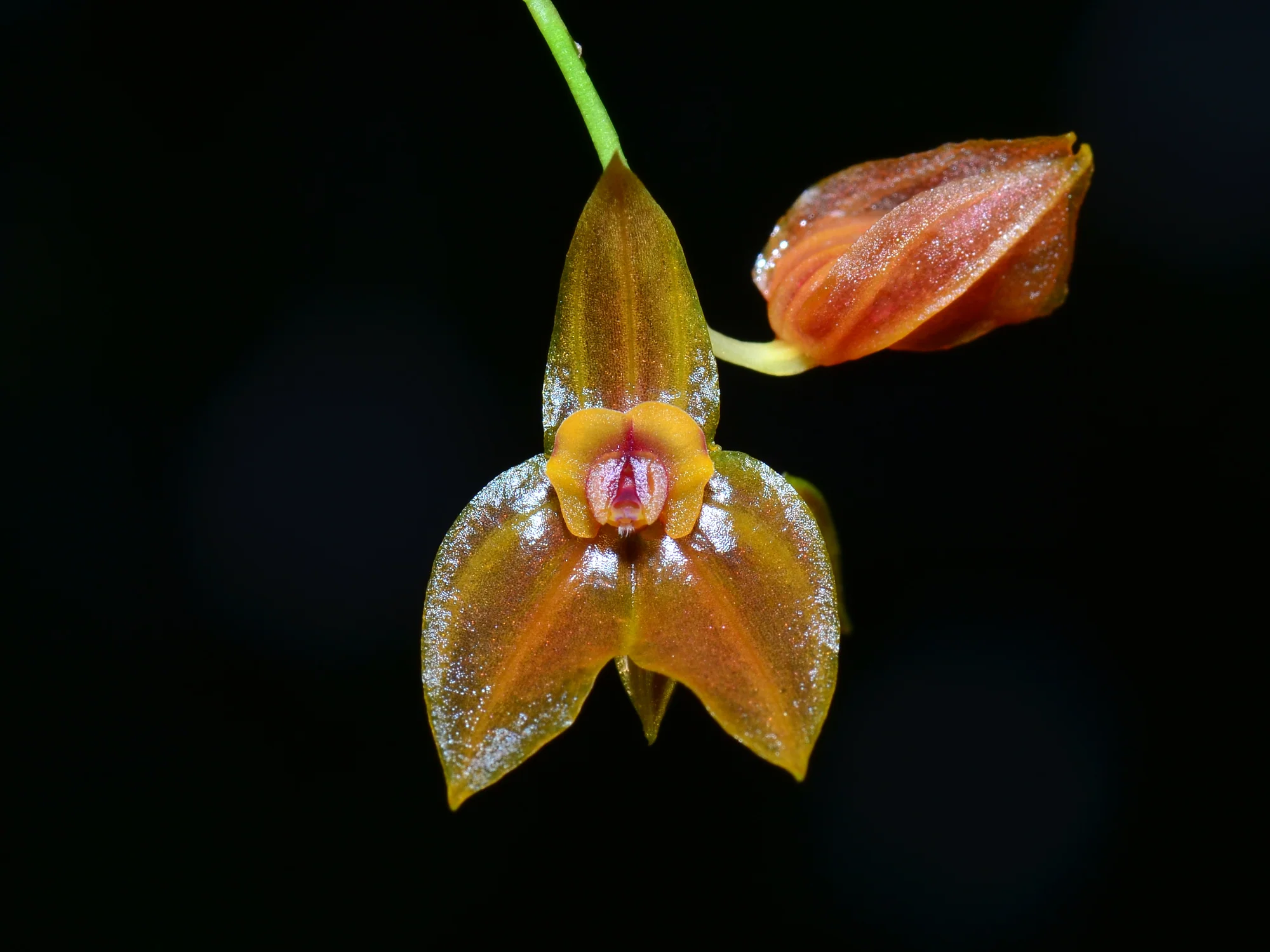
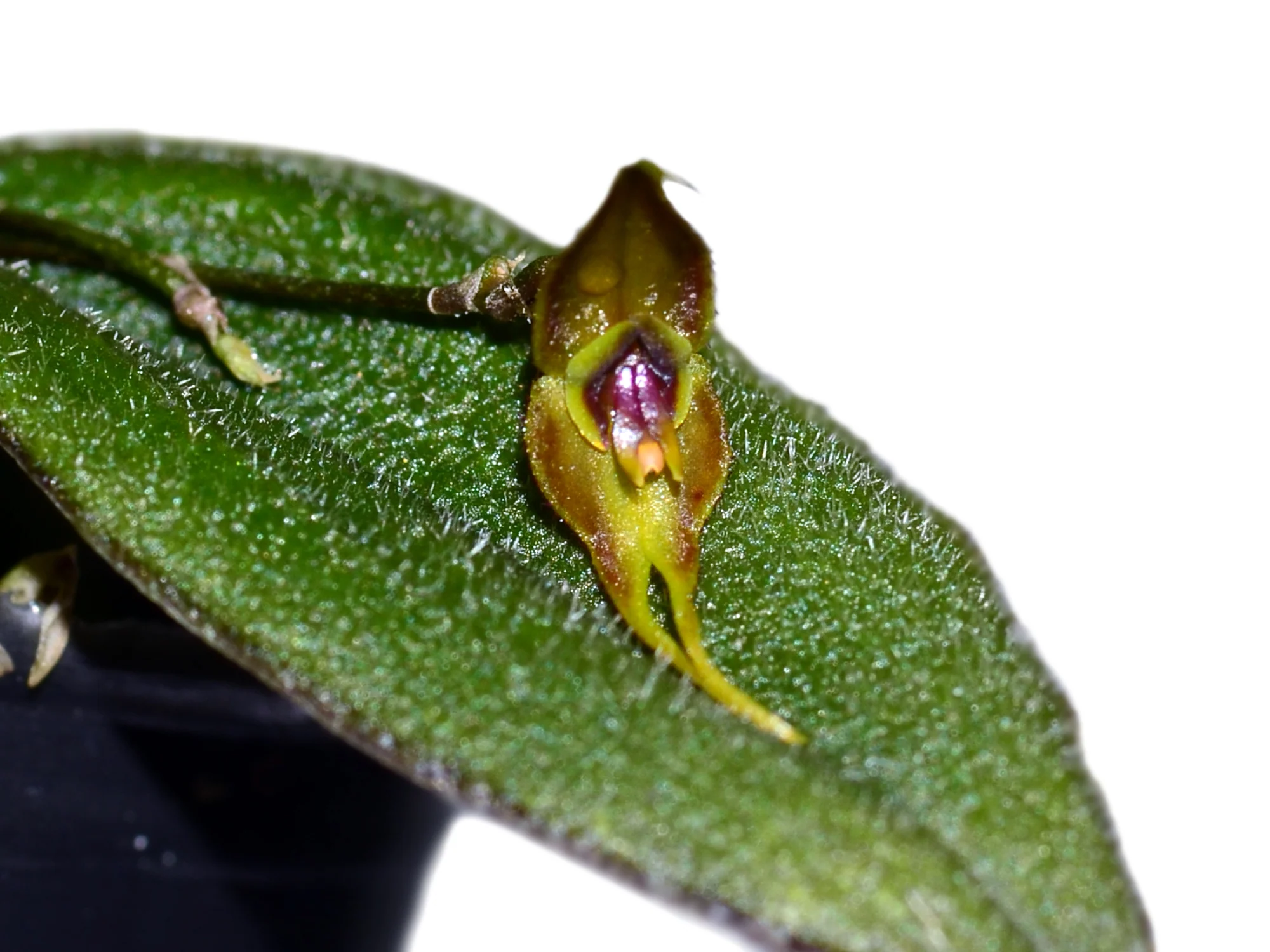
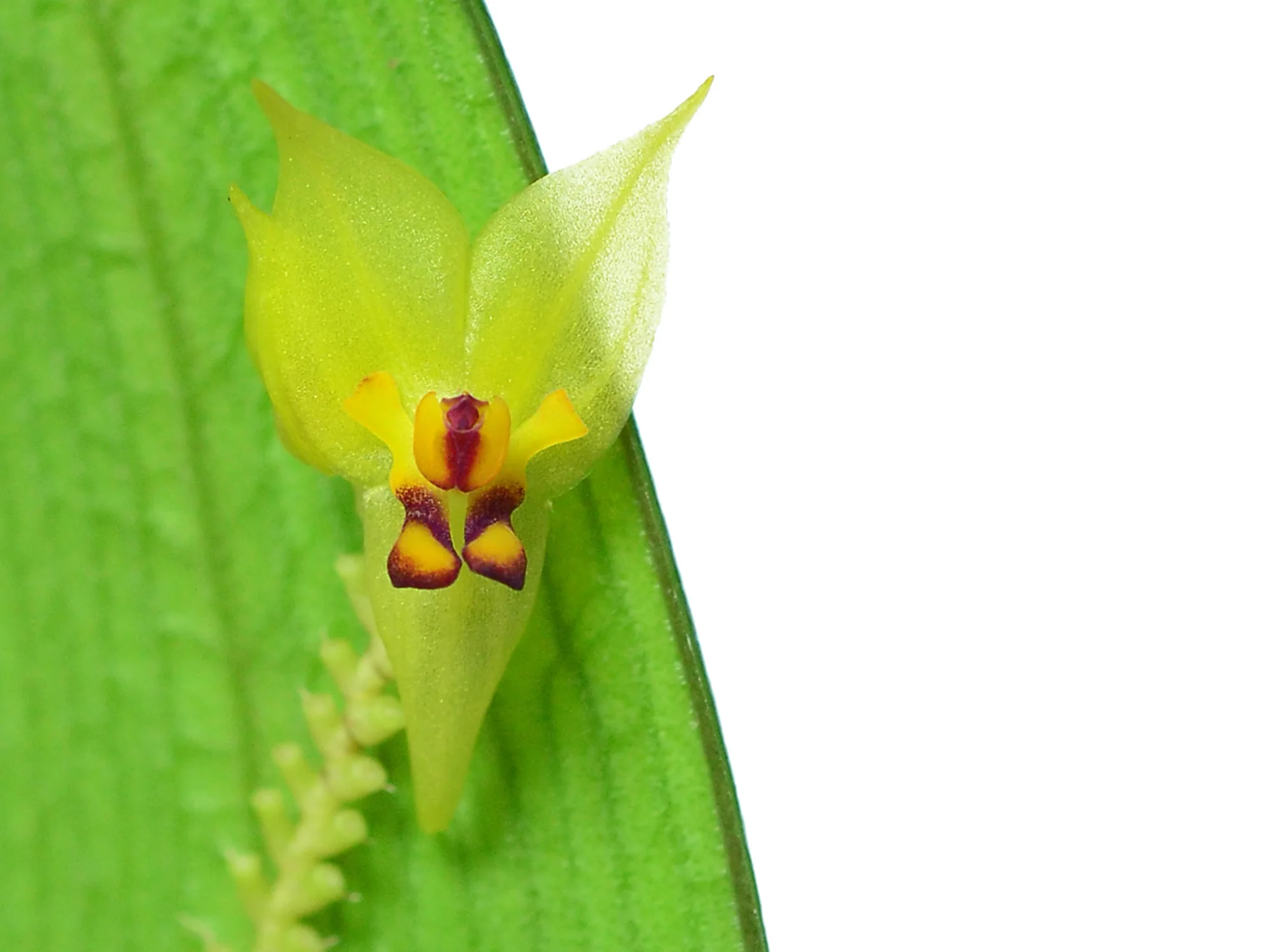
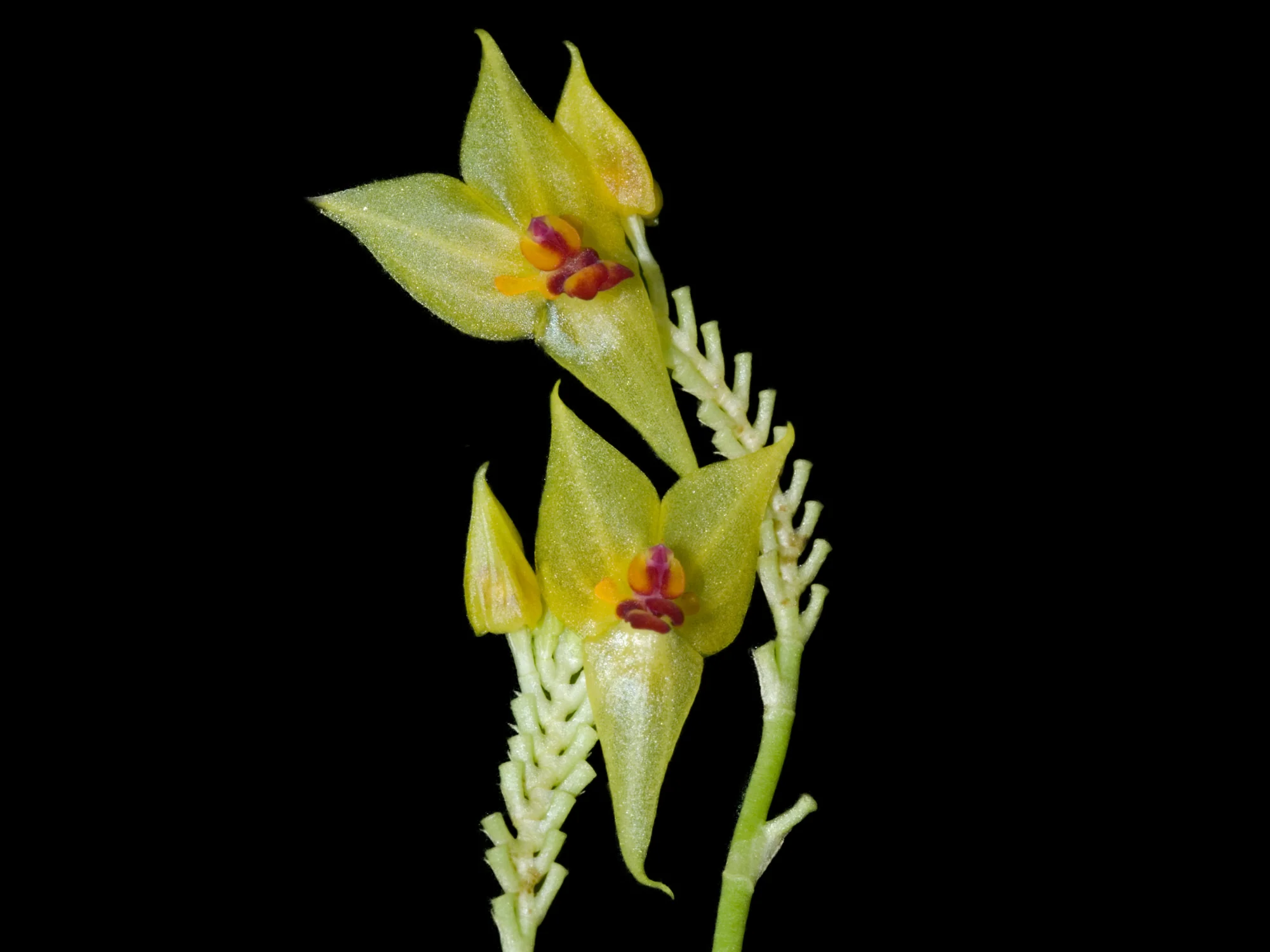
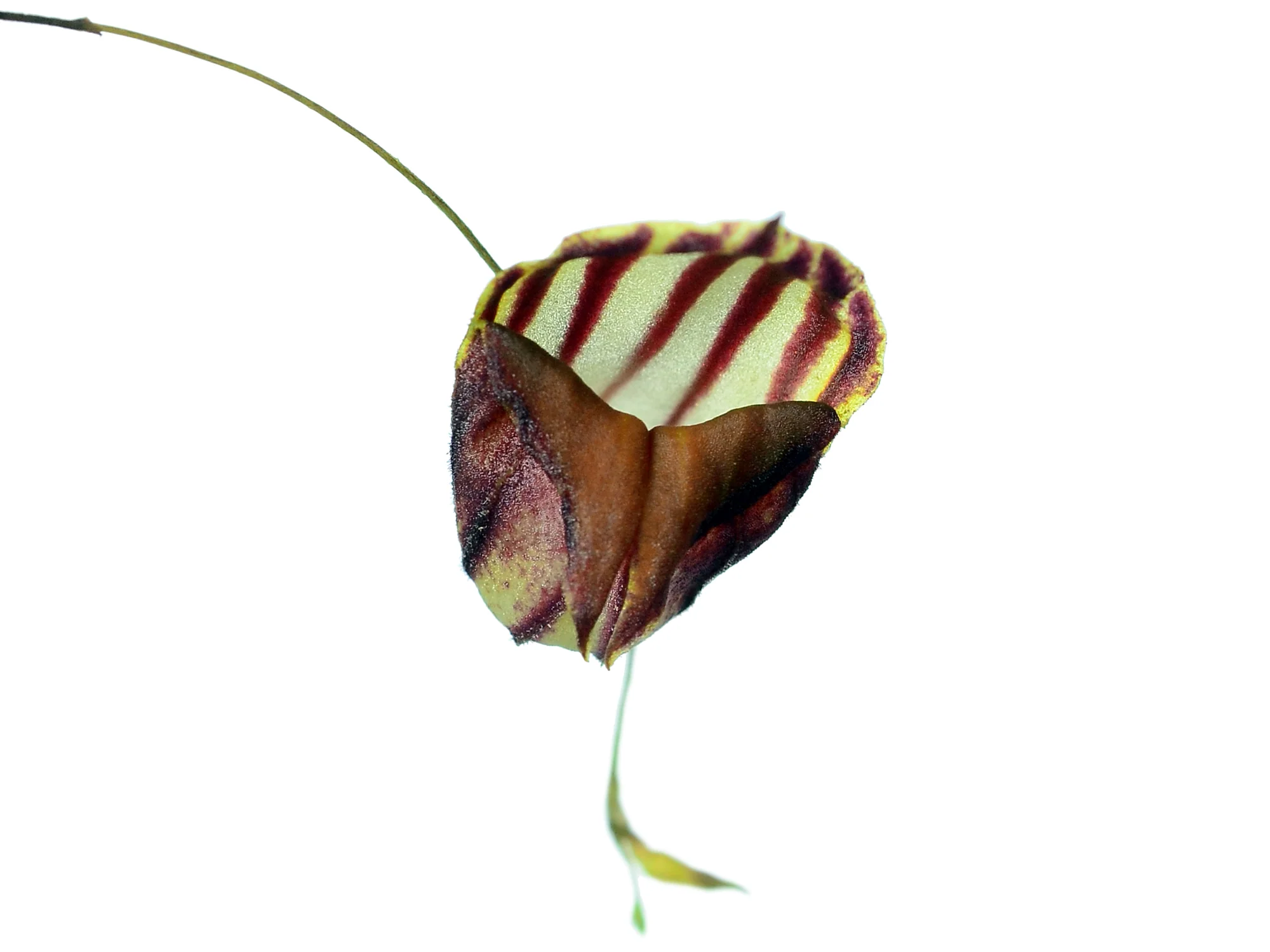
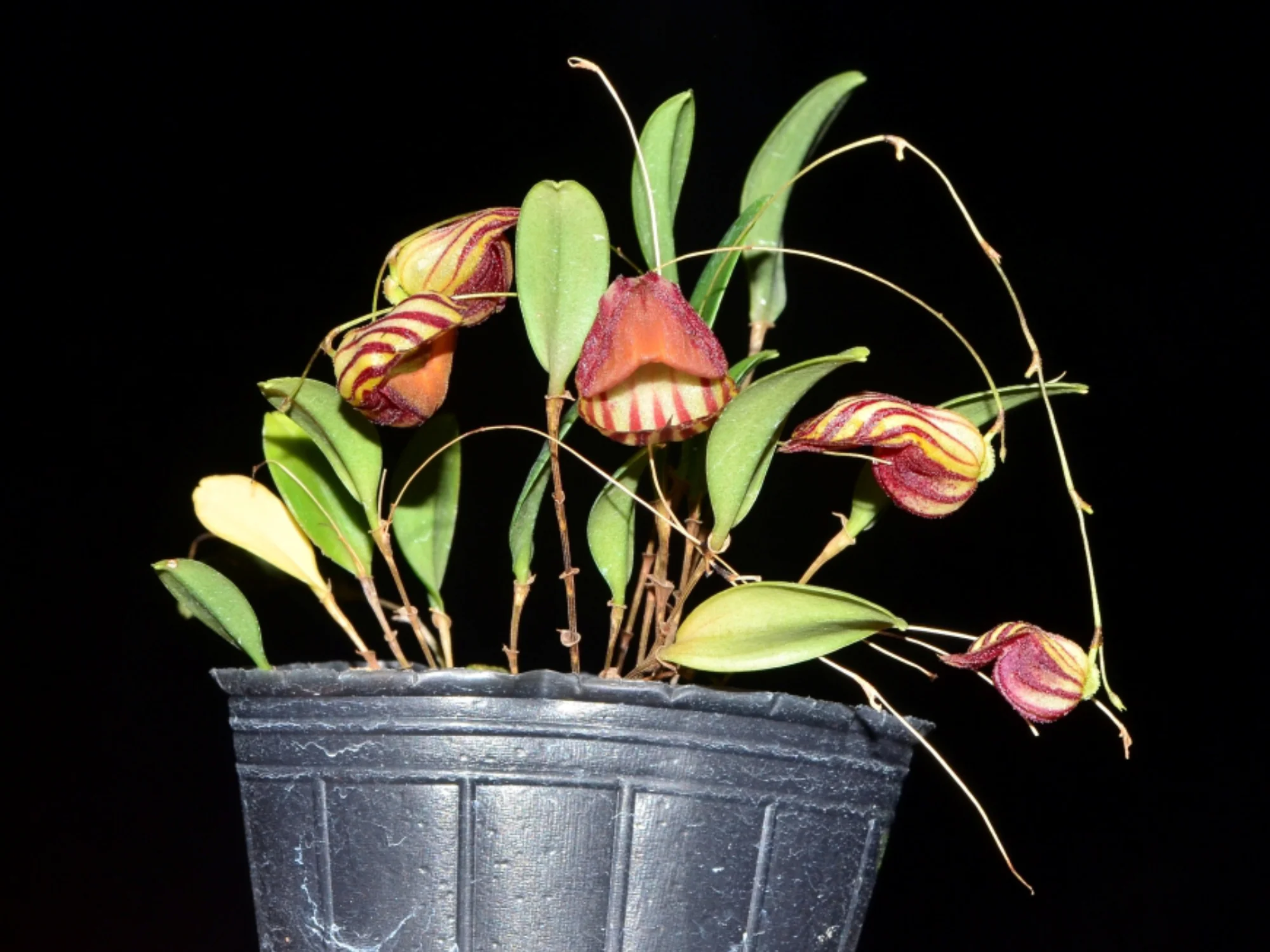
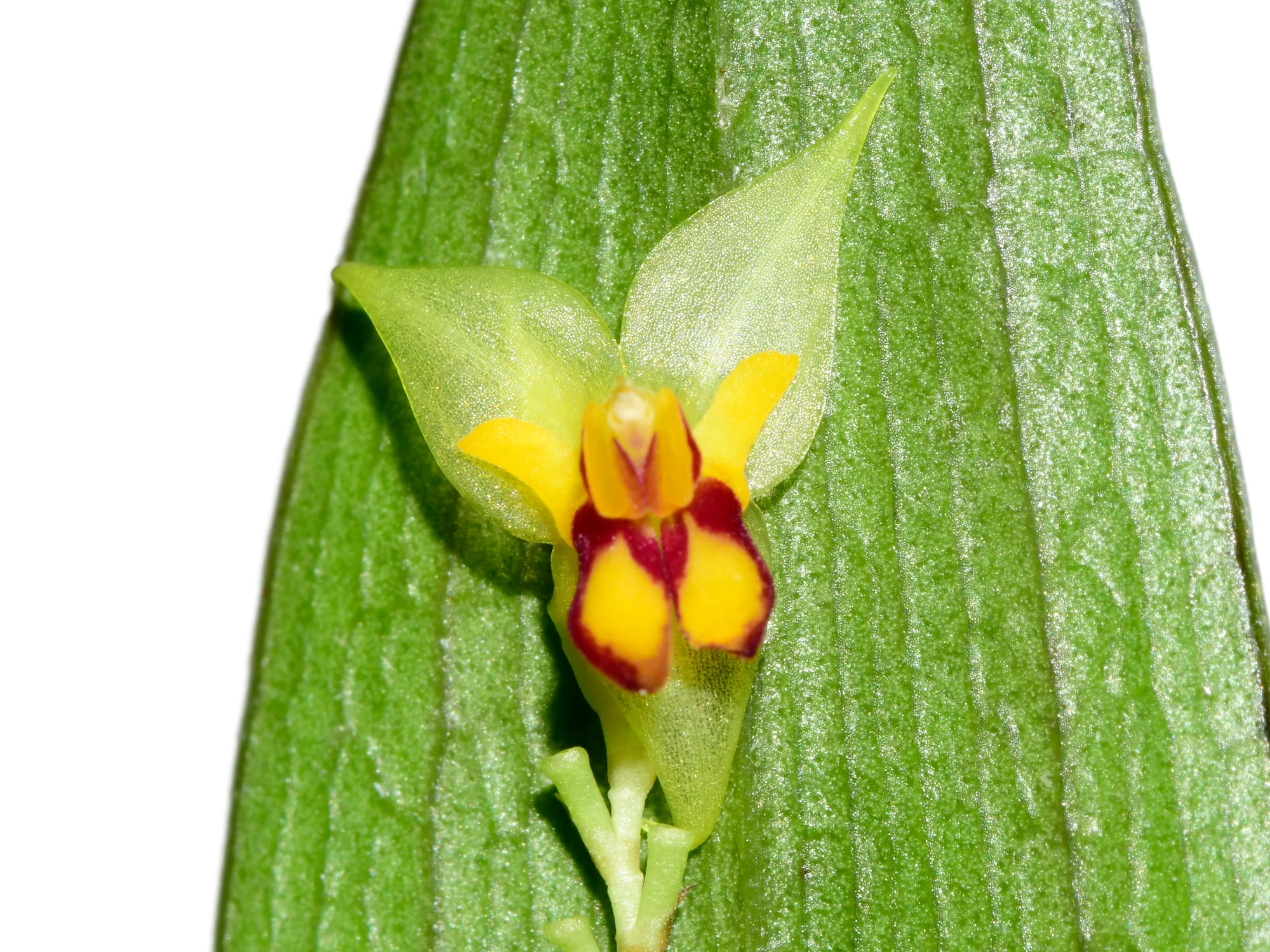
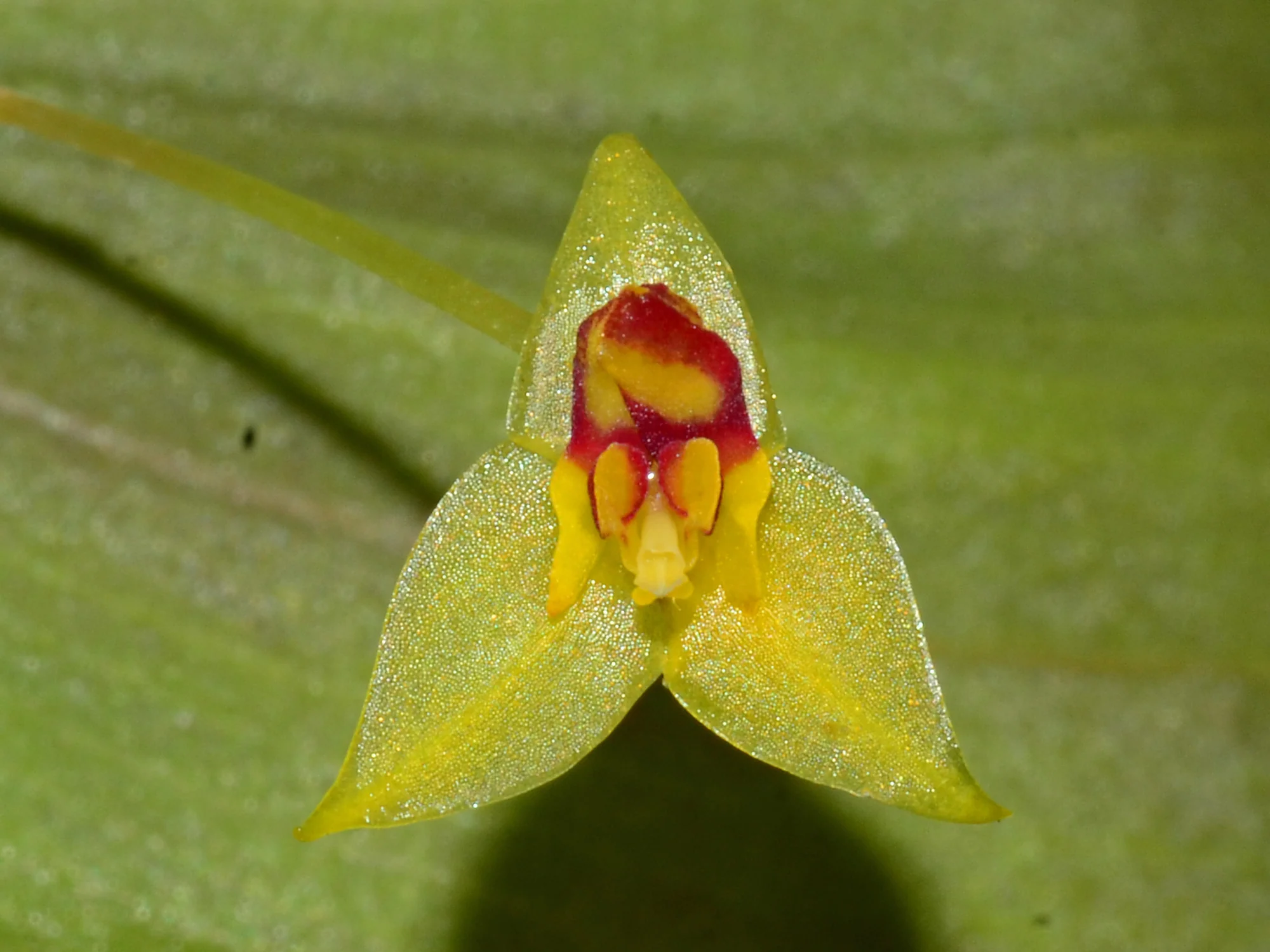
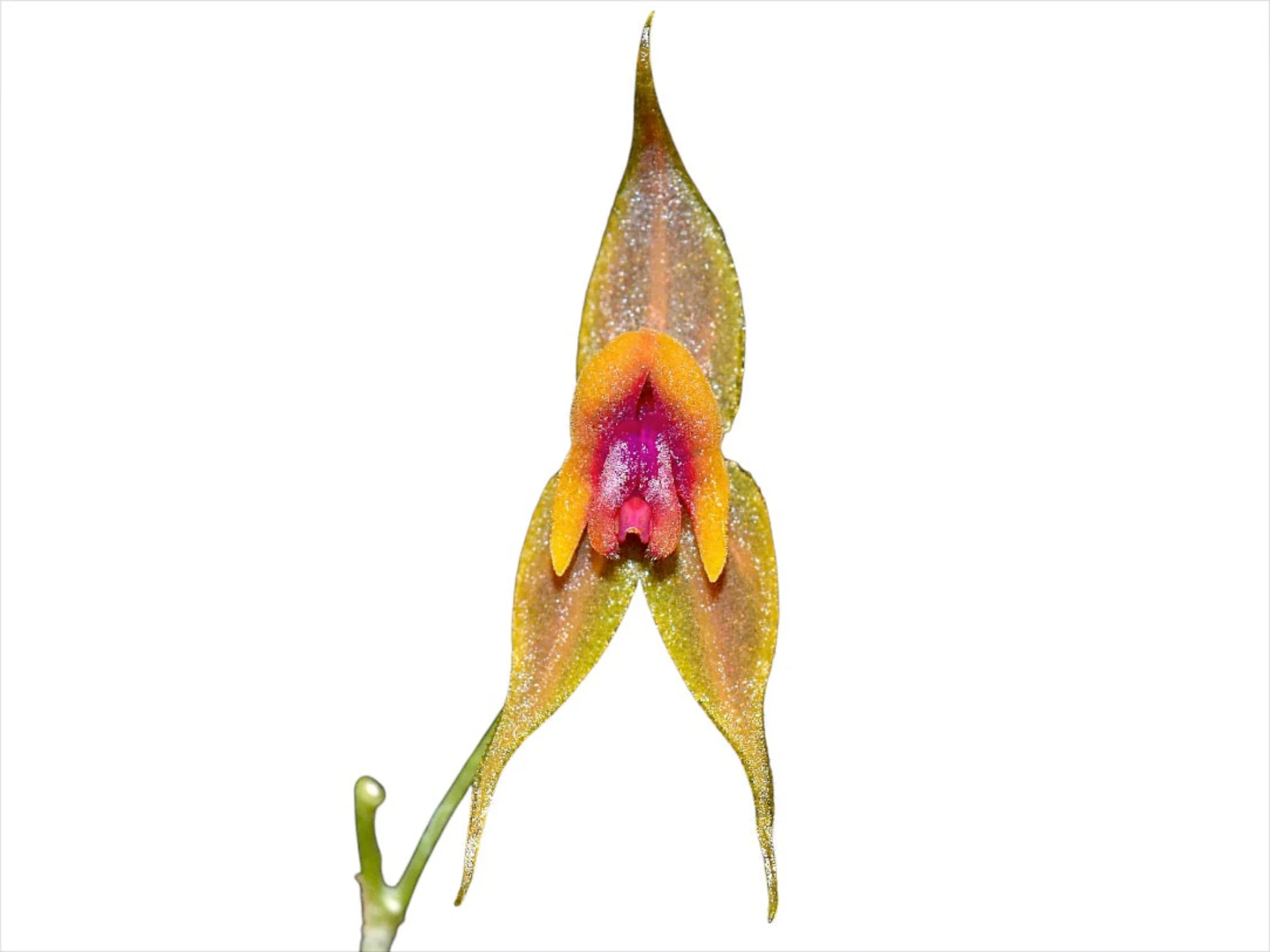
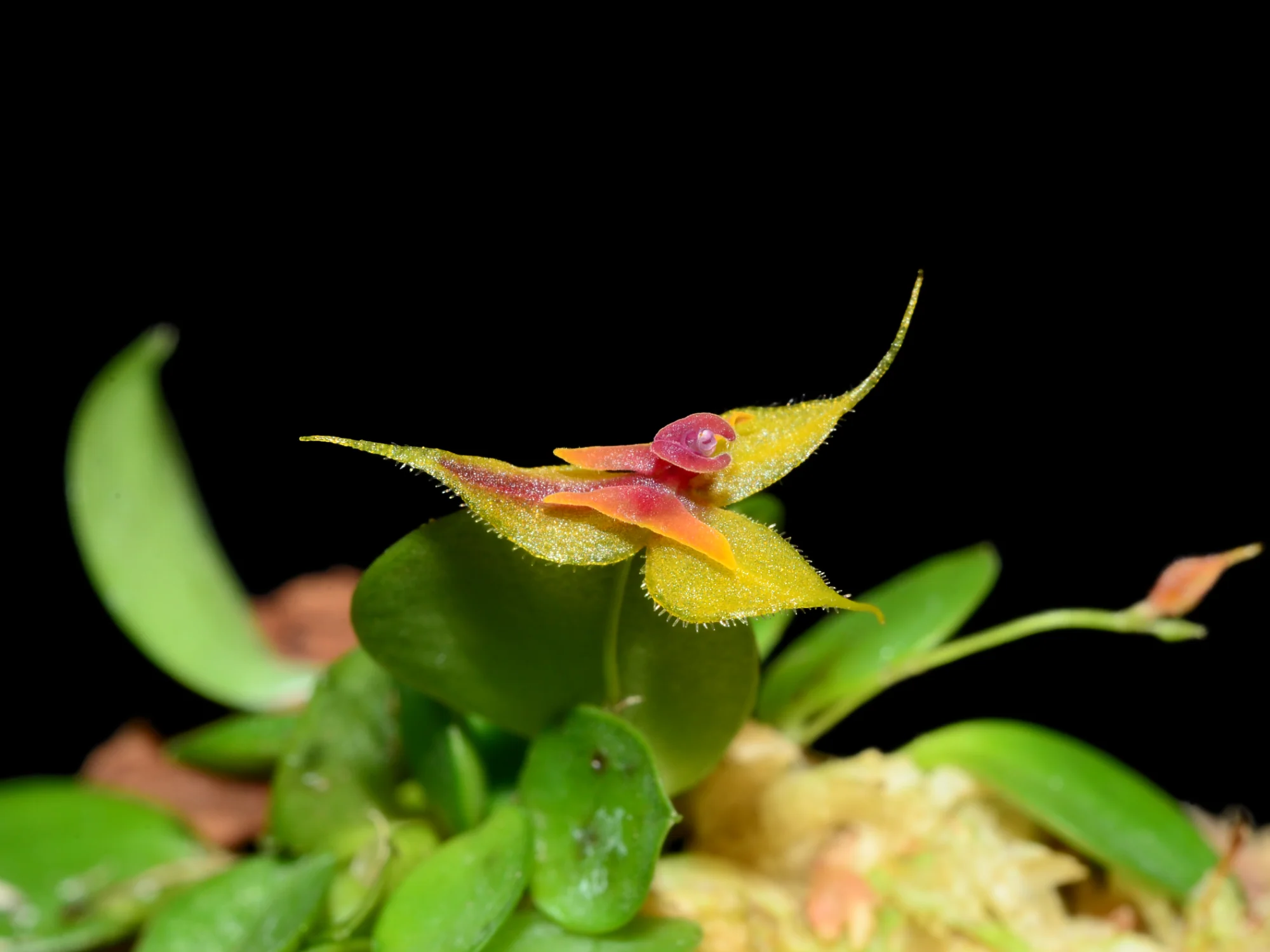
A miniature creeping species from the cloud forests of Ecuador, bearing successive clusters of tiny flowers on short inflorescences that emerge from the leaf axils. The blooms display distinctly spreading lateral sepals with elongated tails, a characteristic jaw-like structure that gives the species its name.
- Light: Bright indirect light with 50–70% shade cloth; avoid direct sun exposure, which can damage the delicate foliage.
- Temperature: 50–68°F (10–20°C); a cool to intermediate grower with a minimum tolerance around 45°F (7°C).
- Humidity: 80–90%; maintain high ambient moisture and ensure good air circulation to prevent fungal issues.
- Watering: Keep consistently moist but never waterlogged; water frequently in small amounts and avoid letting the roots dry out completely.
Additional Notes
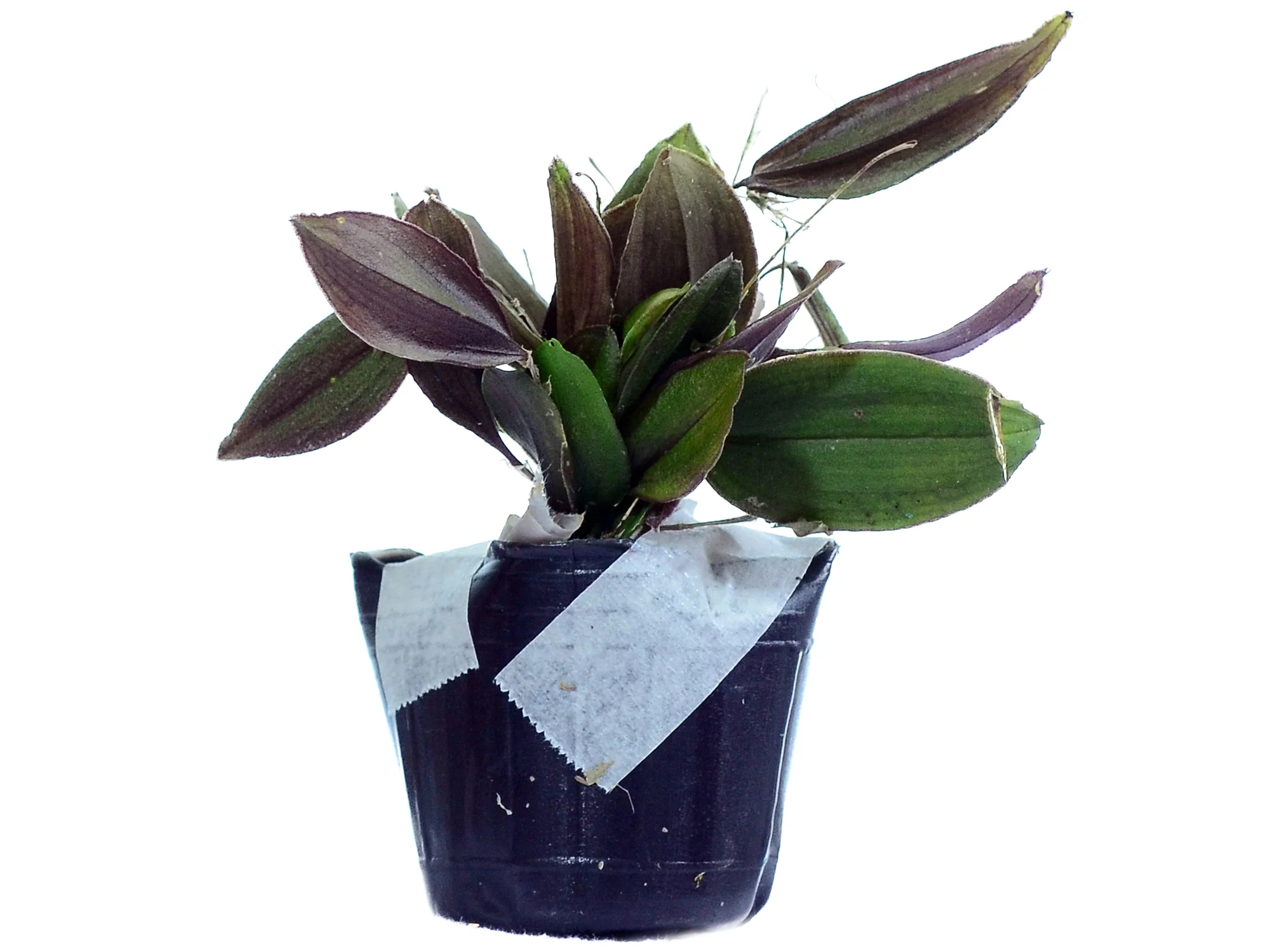
Best mounted on cork bark or tree fern to accommodate its creeping rhizome, or grown in a small pot with fine sphagnum moss. Ships bare root, well-established.
A miniature creeping species from the cloud forests of Ecuador, bearing successive clusters of tiny flowers on short inflorescences that emerge from the leaf axils. The blooms display distinctly spreading lateral sepals with elongated tails, a characteristic jaw-like structure that gives the species its name.
- Light: Bright indirect light with 50–70% shade cloth; avoid direct sun exposure, which can damage the delicate foliage.
- Temperature: 50–68°F (10–20°C); a cool to intermediate grower with a minimum tolerance around 45°F (7°C).
- Humidity: 80–90%; maintain high ambient moisture and ensure good air circulation to prevent fungal issues.
- Watering: Keep consistently moist but never waterlogged; water frequently in small amounts and avoid letting the roots dry out completely.
Additional Notes
Best mounted on cork bark or tree fern to accommodate its creeping rhizome, or grown in a small pot with fine sphagnum moss. Ships bare root, well-established.
Original: $25.00
-65%$25.00
$8.75Description
A miniature creeping species from the cloud forests of Ecuador, bearing successive clusters of tiny flowers on short inflorescences that emerge from the leaf axils. The blooms display distinctly spreading lateral sepals with elongated tails, a characteristic jaw-like structure that gives the species its name.
- Light: Bright indirect light with 50–70% shade cloth; avoid direct sun exposure, which can damage the delicate foliage.
- Temperature: 50–68°F (10–20°C); a cool to intermediate grower with a minimum tolerance around 45°F (7°C).
- Humidity: 80–90%; maintain high ambient moisture and ensure good air circulation to prevent fungal issues.
- Watering: Keep consistently moist but never waterlogged; water frequently in small amounts and avoid letting the roots dry out completely.
Additional Notes
Best mounted on cork bark or tree fern to accommodate its creeping rhizome, or grown in a small pot with fine sphagnum moss. Ships bare root, well-established.