Bulbophyllum maximum
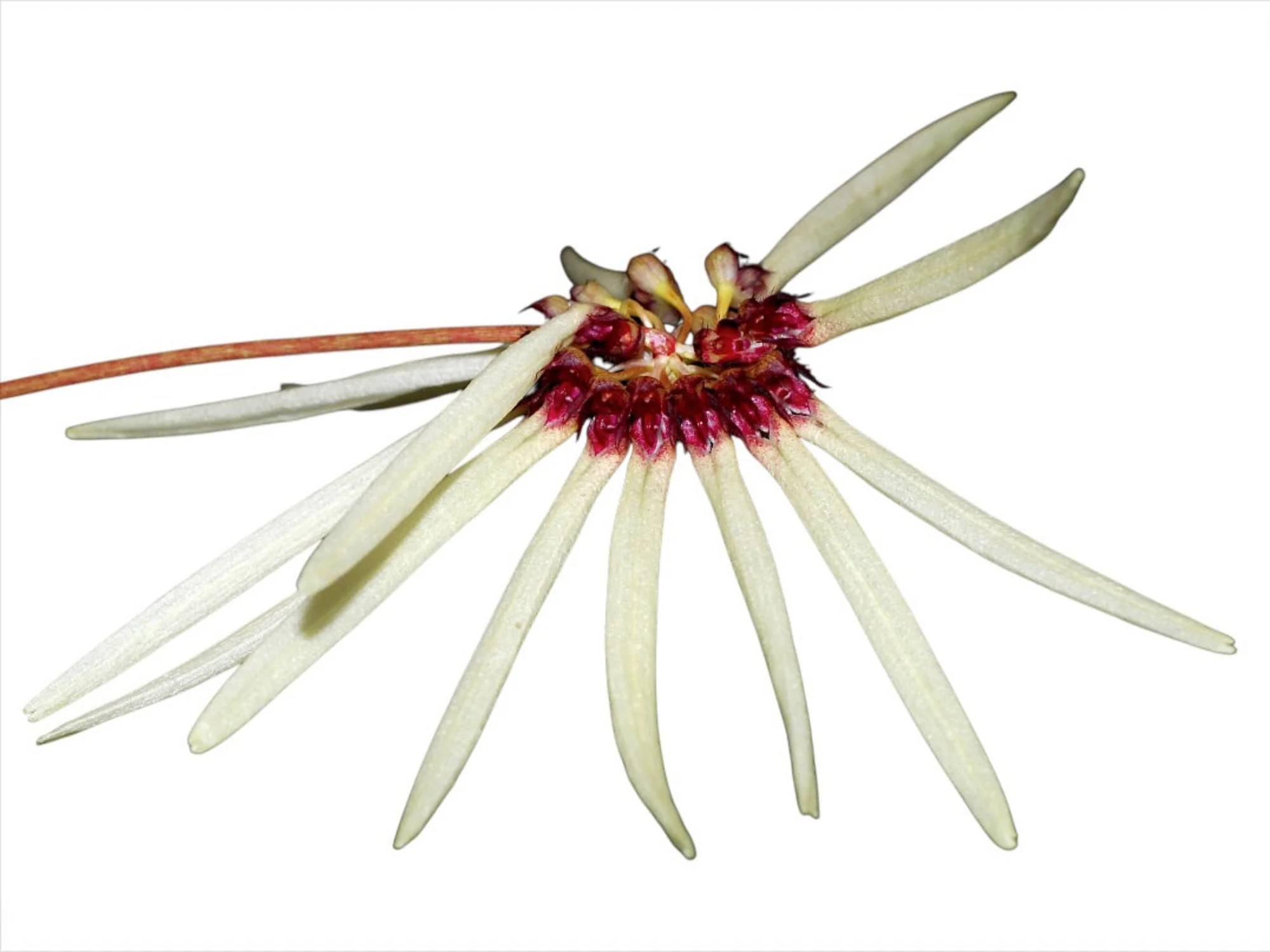
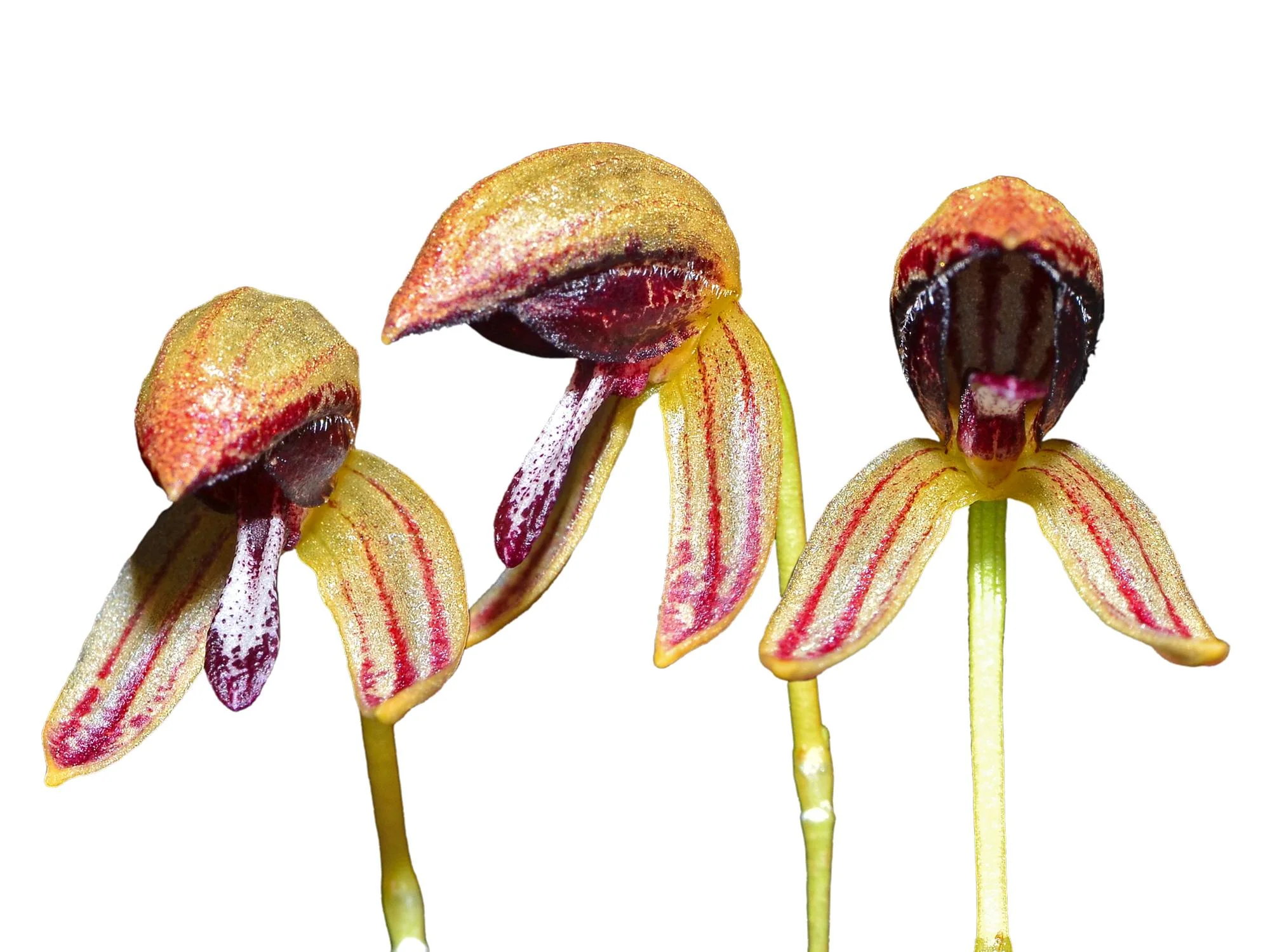
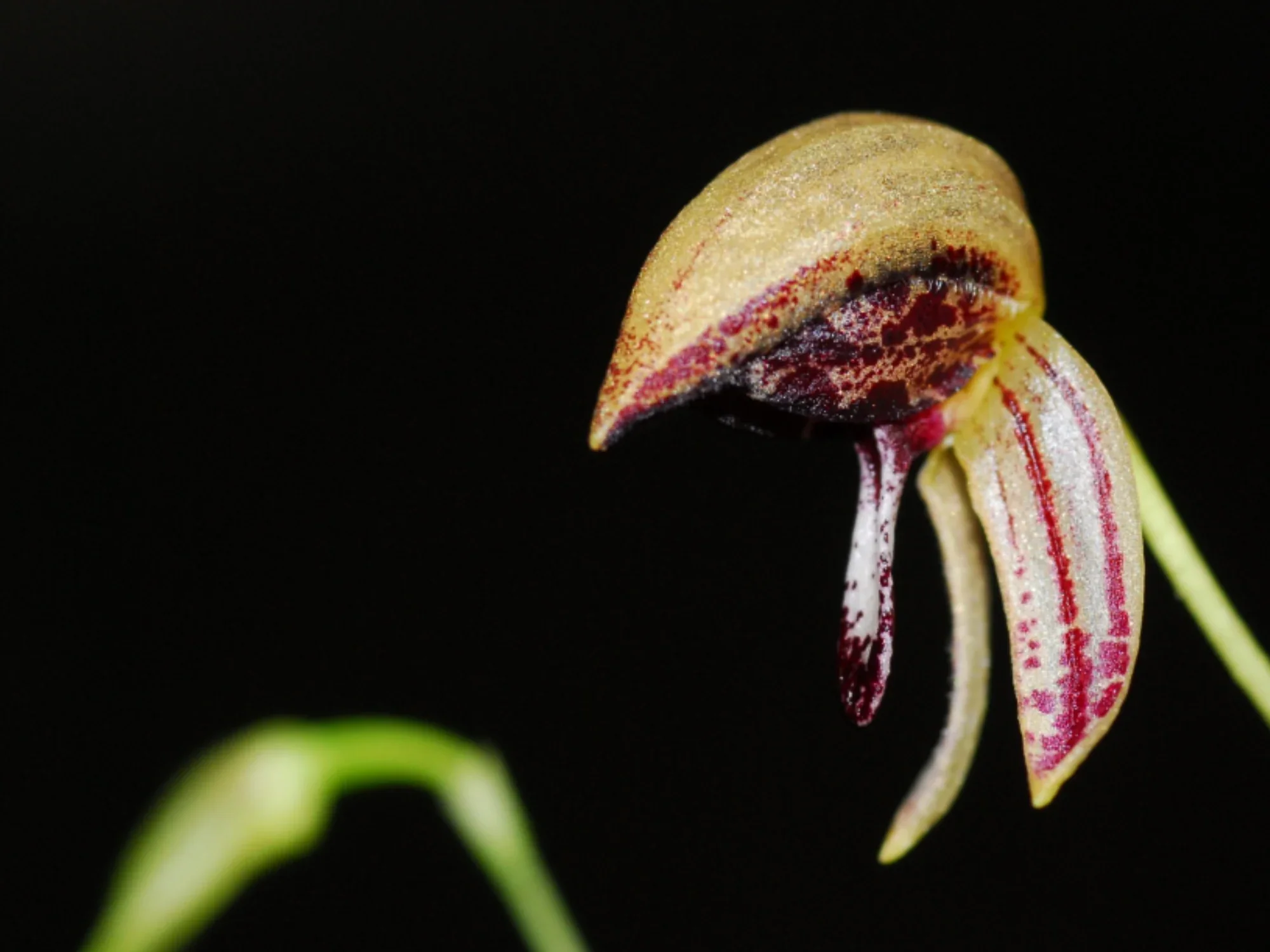
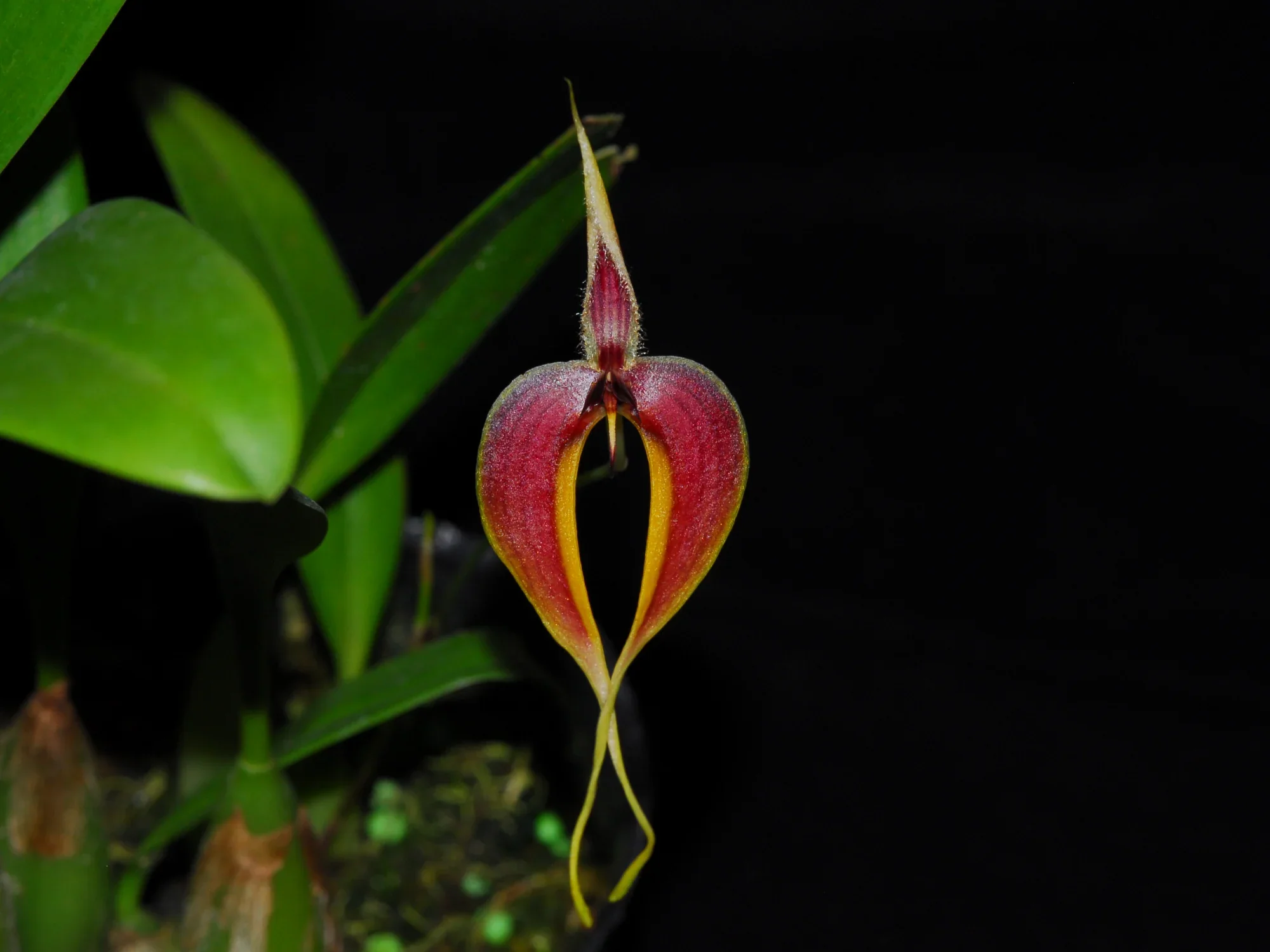
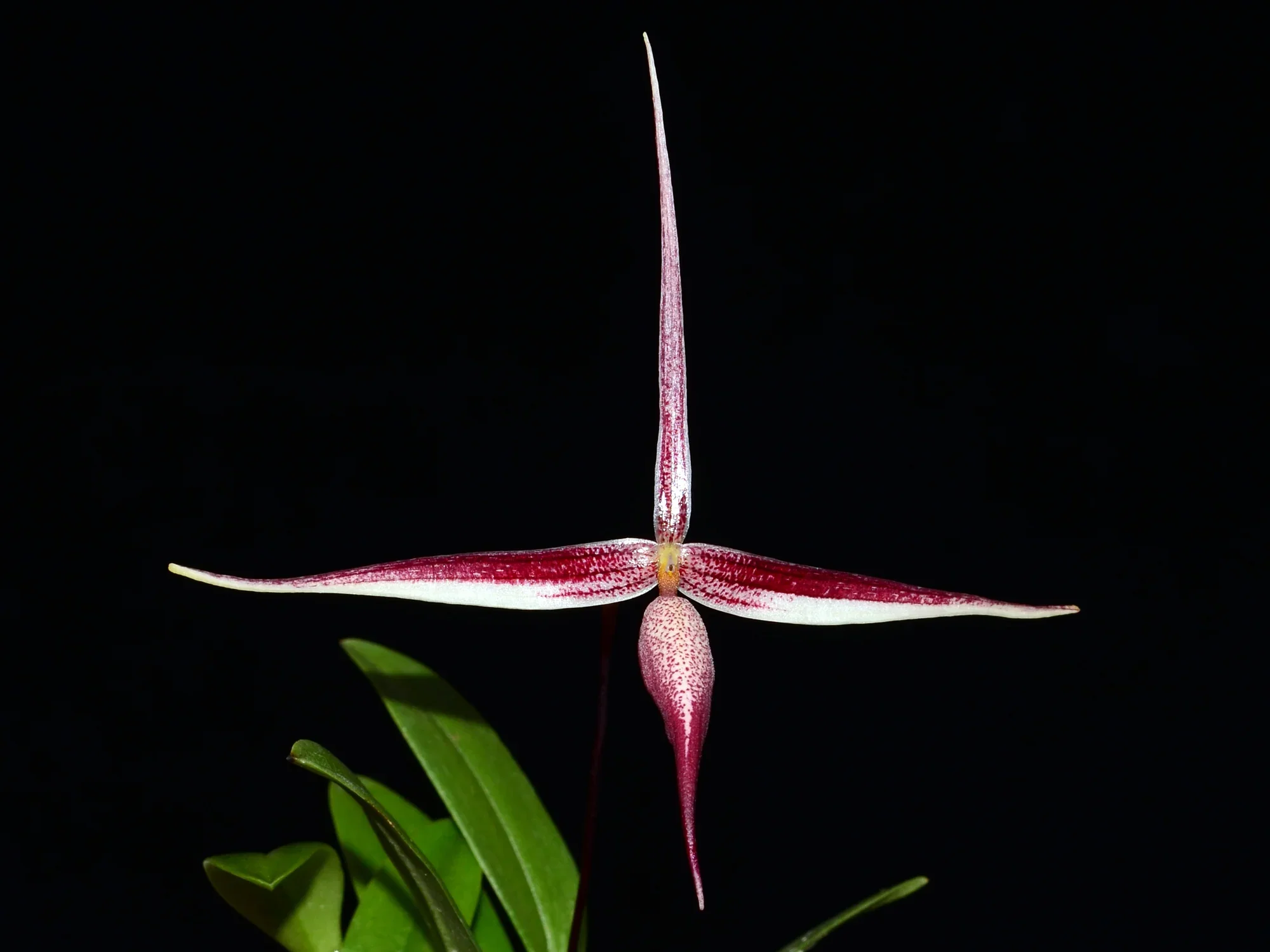
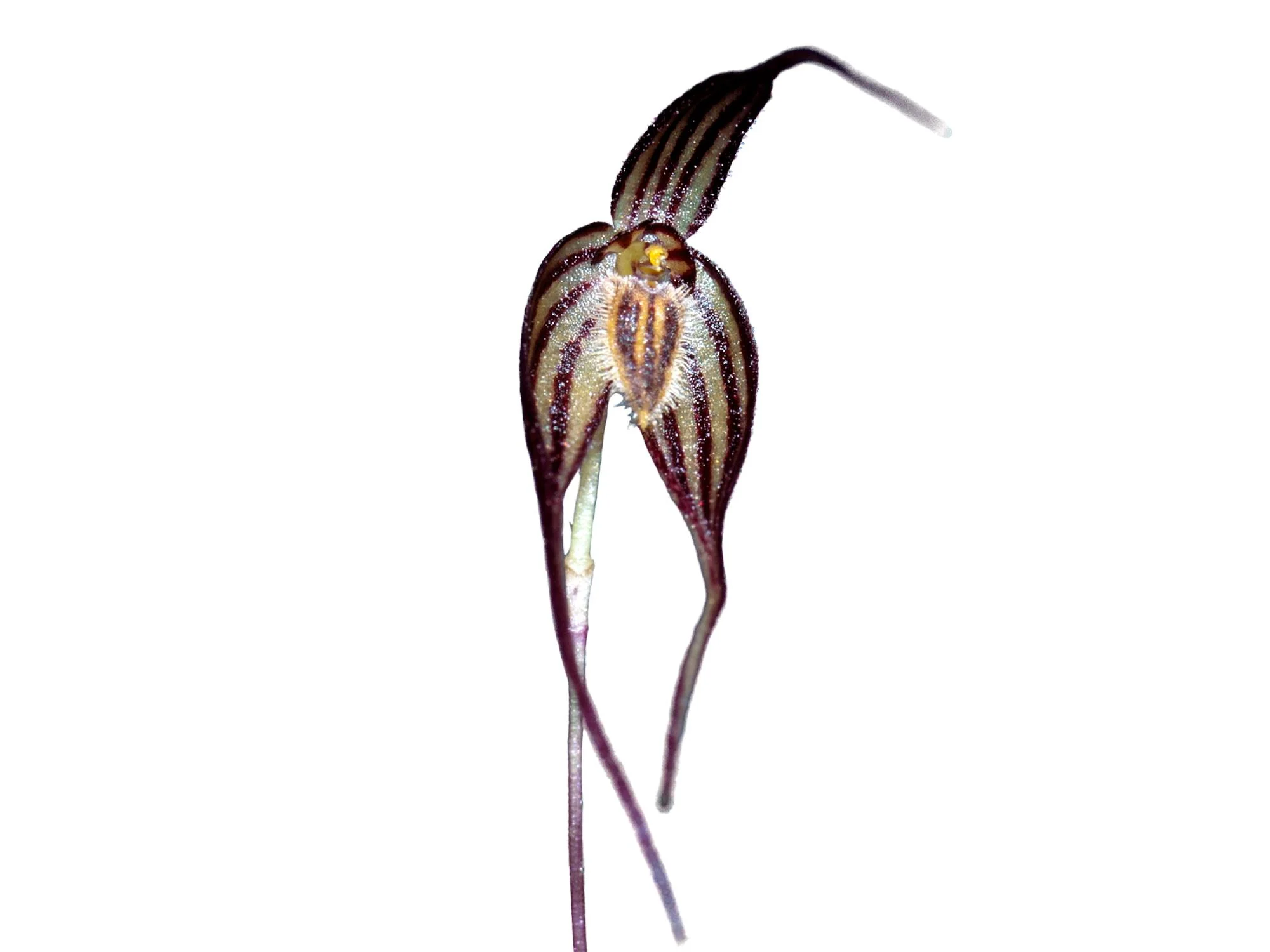
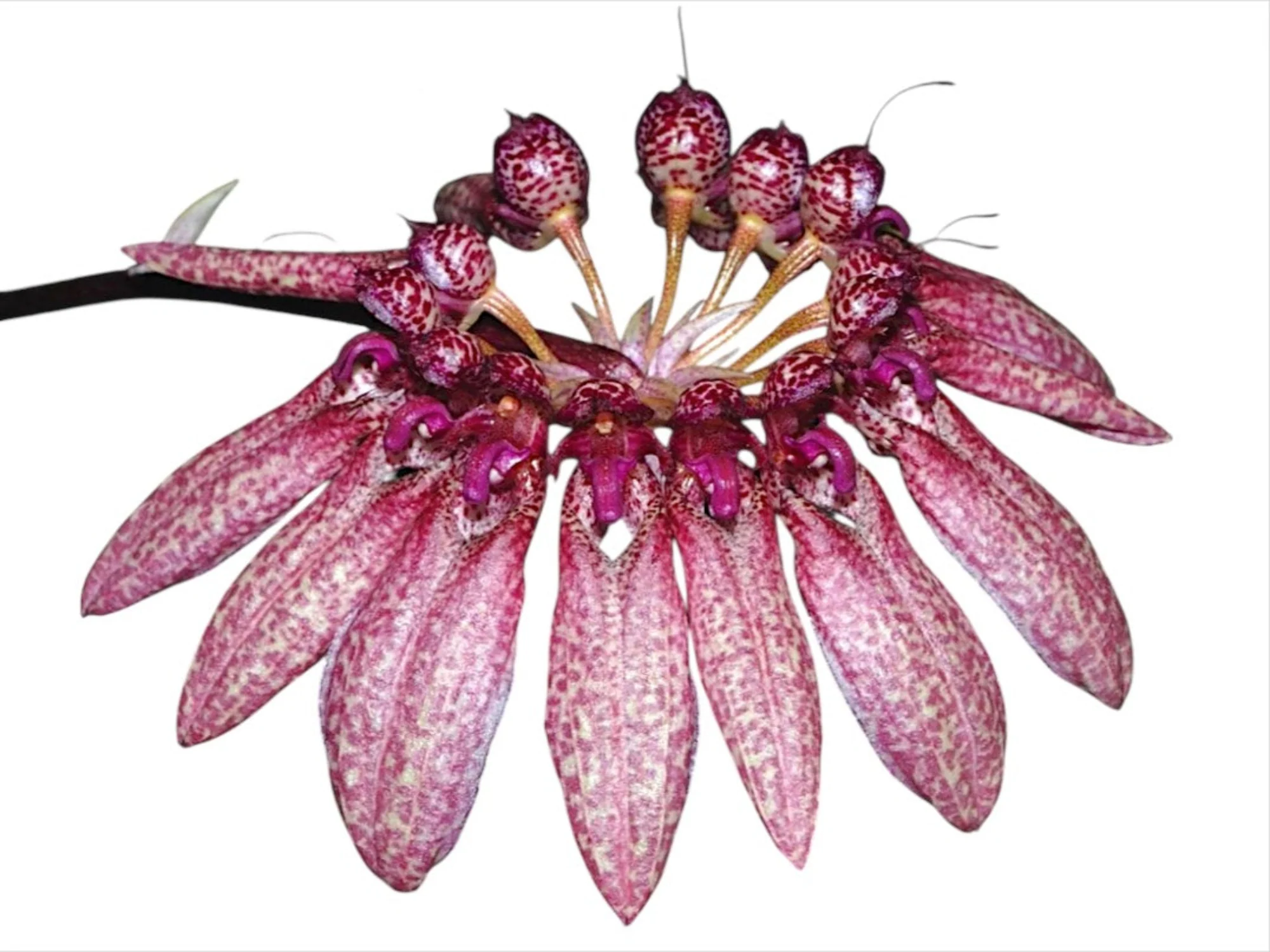
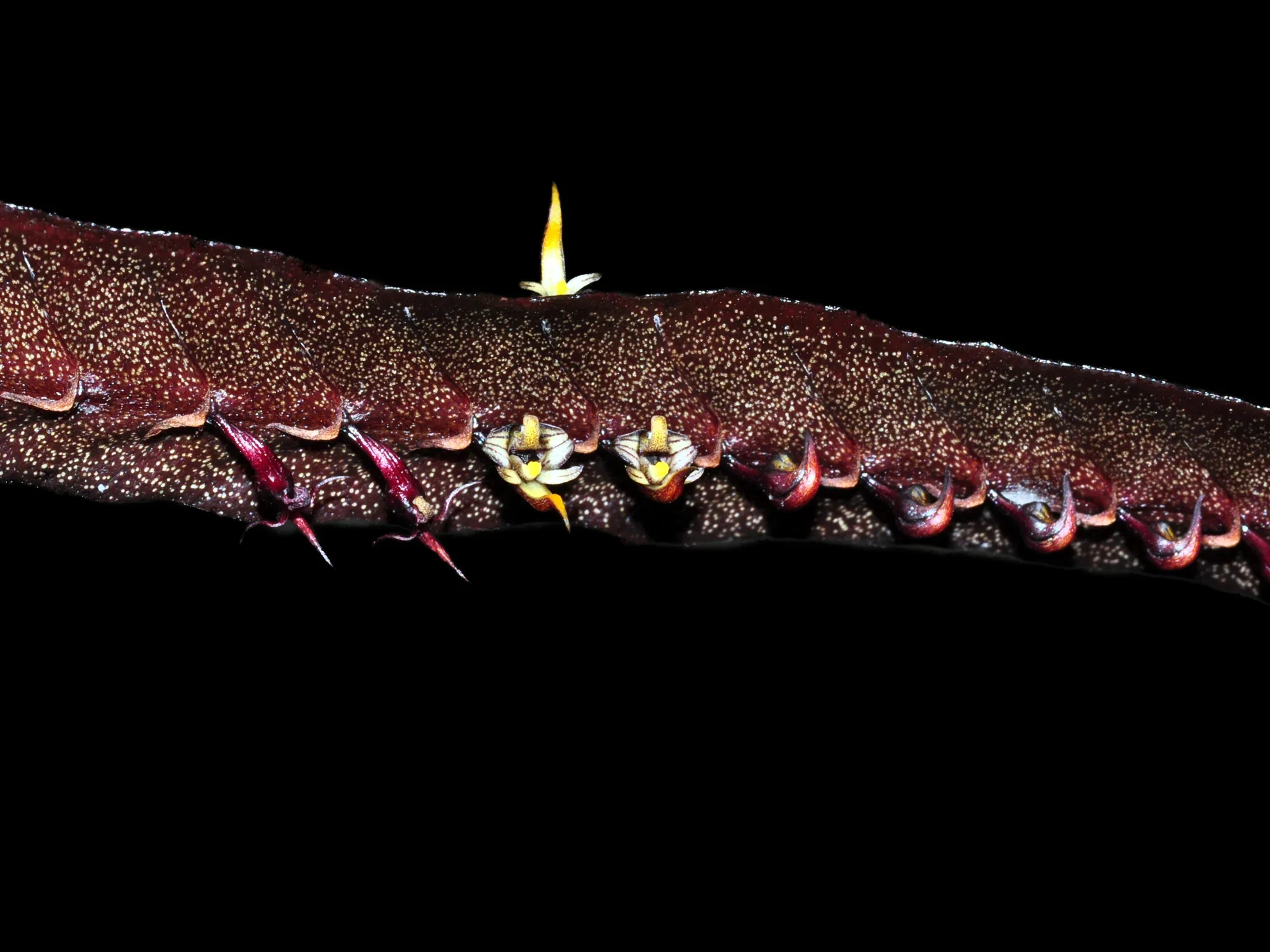
An intermediate-growing epiphyte from the montane forests of tropical Africa, producing massive, thick, fleshy rachises densely lined with rows of small flowers along their entire length. The outward-curving sepals and contrasting labelos create a bold, caterpillar-like inflorescence structure — one of the most impressively scaled flower spikes in the genus.
- Light: Bright indirect light with 40–60% shade cloth; avoid direct sun to protect the broad foliage.
- Temperature: 58–78°F (14–26°C); an intermediate grower with a minimum tolerance around 55°F (13°C).
- Humidity: 70–85%; maintain consistent humidity with good air circulation.
- Watering: Water thoroughly and allow the mix to approach dryness between waterings; avoid prolonged saturation at the roots.
Additional Notes
Best grown in a large basket or pot with a well-draining bark-based mix to support its robust growth habit. Ships bare root, well established.
An intermediate-growing epiphyte from the montane forests of tropical Africa, producing massive, thick, fleshy rachises densely lined with rows of small flowers along their entire length. The outward-curving sepals and contrasting labelos create a bold, caterpillar-like inflorescence structure — one of the most impressively scaled flower spikes in the genus.
- Light: Bright indirect light with 40–60% shade cloth; avoid direct sun to protect the broad foliage.
- Temperature: 58–78°F (14–26°C); an intermediate grower with a minimum tolerance around 55°F (13°C).
- Humidity: 70–85%; maintain consistent humidity with good air circulation.
- Watering: Water thoroughly and allow the mix to approach dryness between waterings; avoid prolonged saturation at the roots.
Additional Notes
Best grown in a large basket or pot with a well-draining bark-based mix to support its robust growth habit. Ships bare root, well established.
Description
An intermediate-growing epiphyte from the montane forests of tropical Africa, producing massive, thick, fleshy rachises densely lined with rows of small flowers along their entire length. The outward-curving sepals and contrasting labelos create a bold, caterpillar-like inflorescence structure — one of the most impressively scaled flower spikes in the genus.
- Light: Bright indirect light with 40–60% shade cloth; avoid direct sun to protect the broad foliage.
- Temperature: 58–78°F (14–26°C); an intermediate grower with a minimum tolerance around 55°F (13°C).
- Humidity: 70–85%; maintain consistent humidity with good air circulation.
- Watering: Water thoroughly and allow the mix to approach dryness between waterings; avoid prolonged saturation at the roots.
Additional Notes
Best grown in a large basket or pot with a well-draining bark-based mix to support its robust growth habit. Ships bare root, well established.