Pleurothallis amphigya
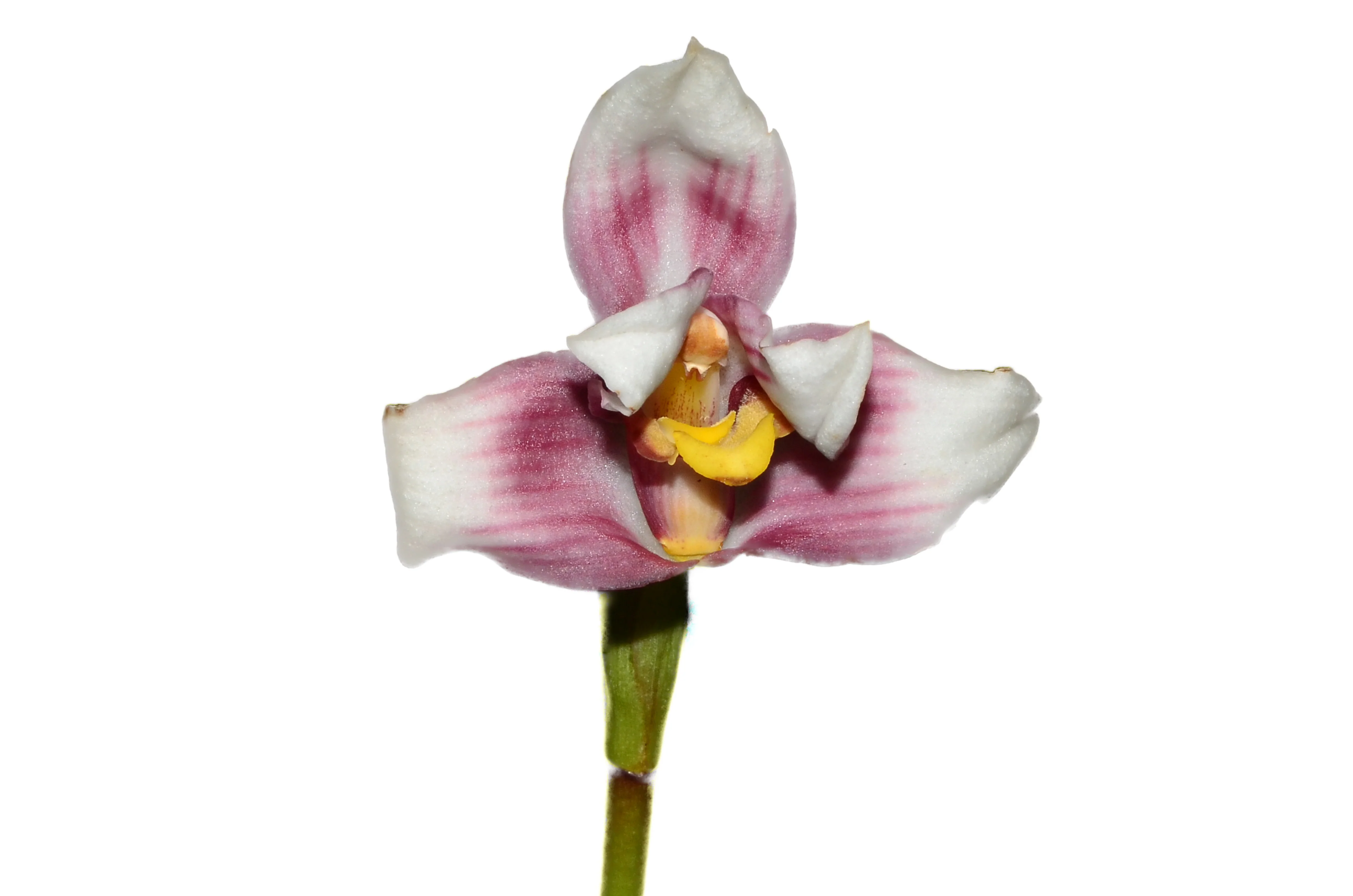
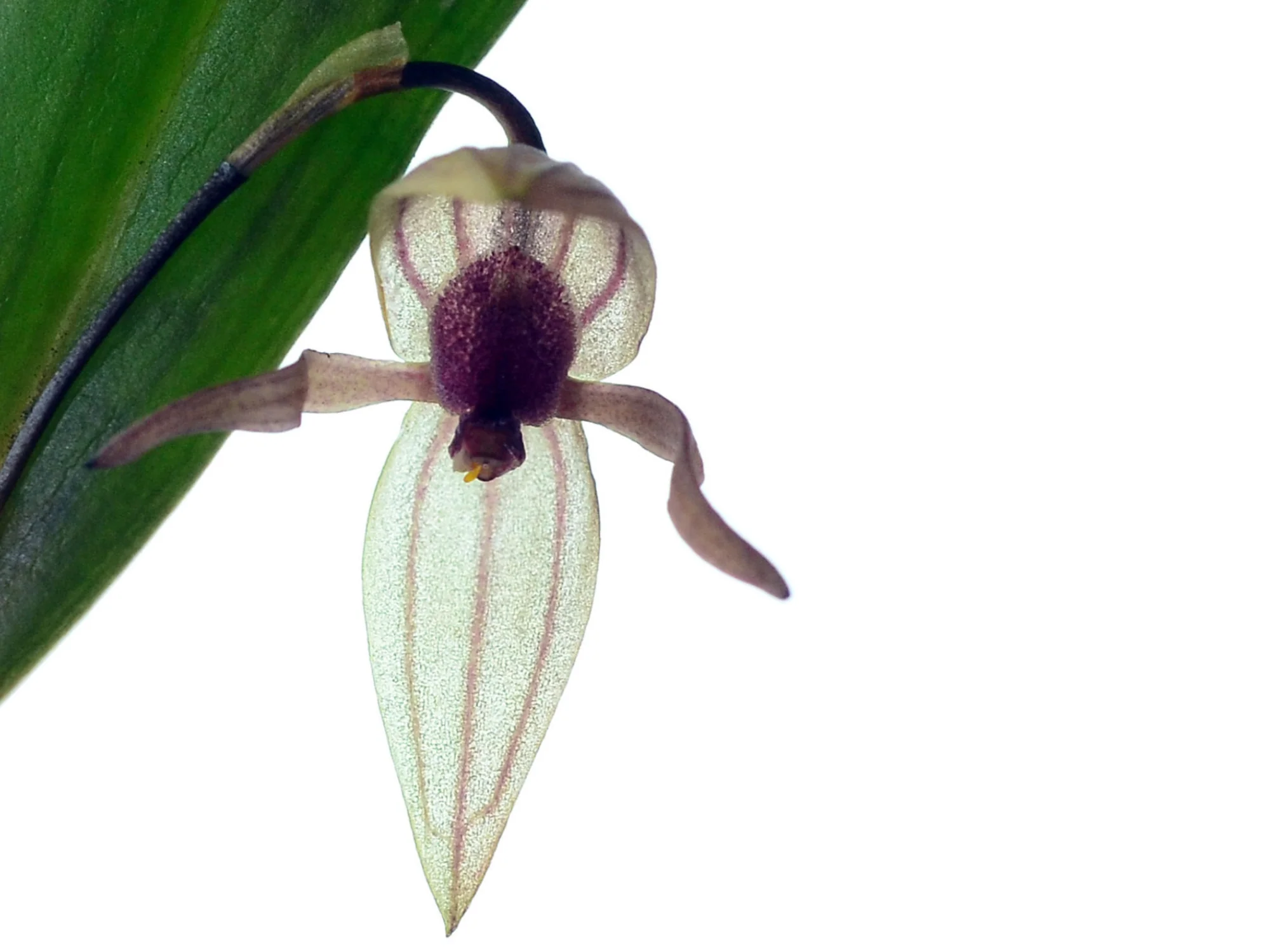
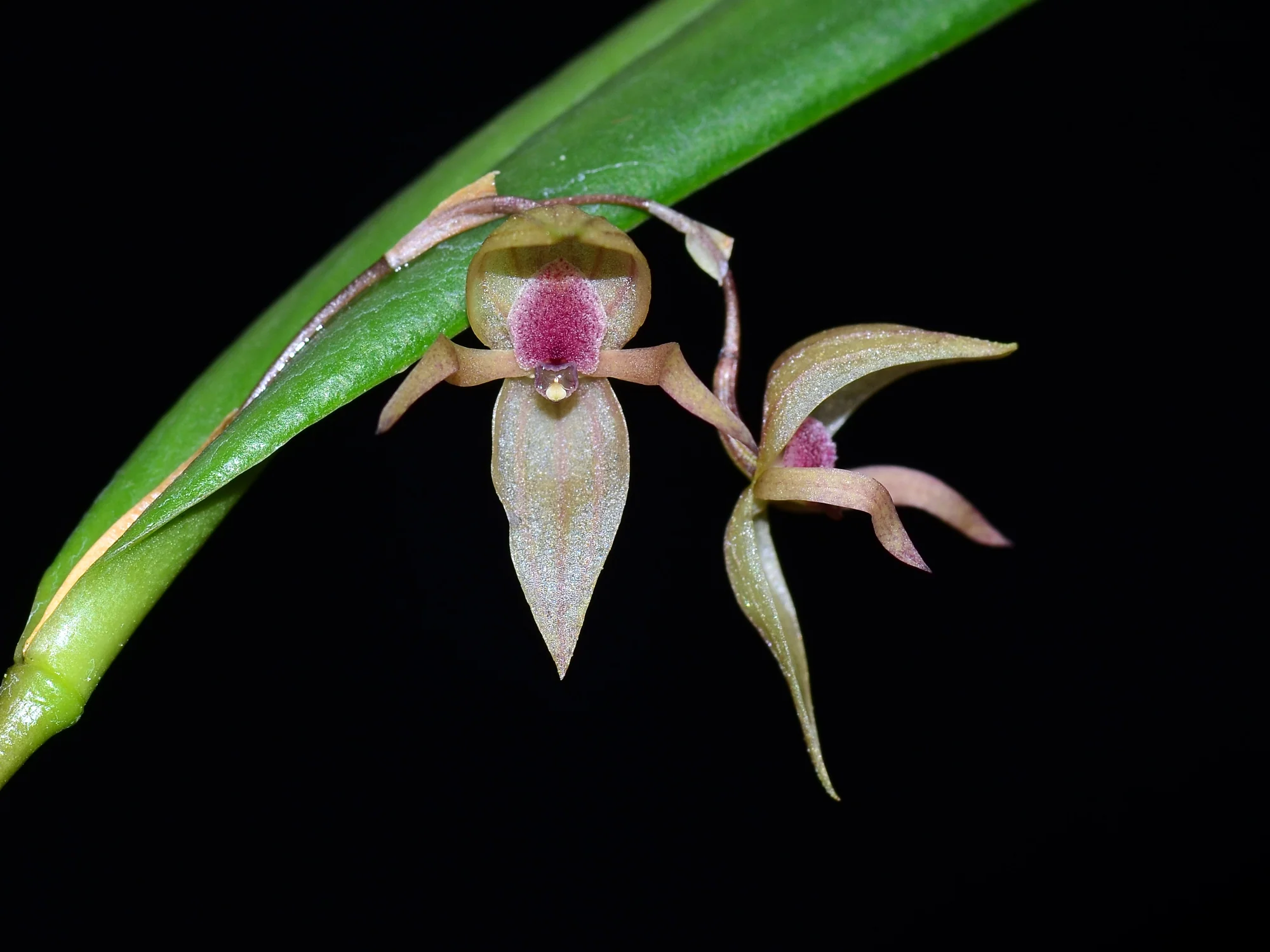
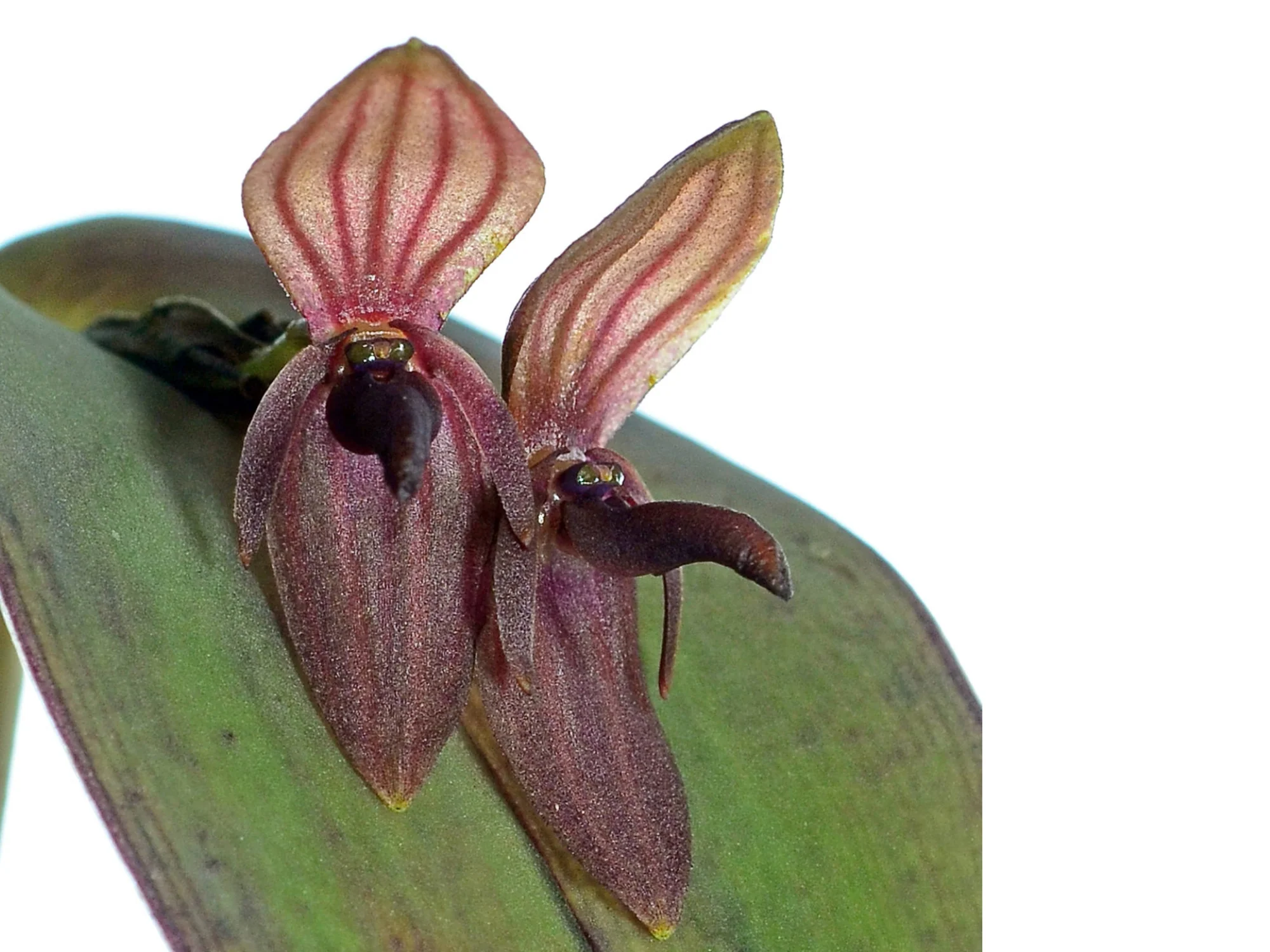
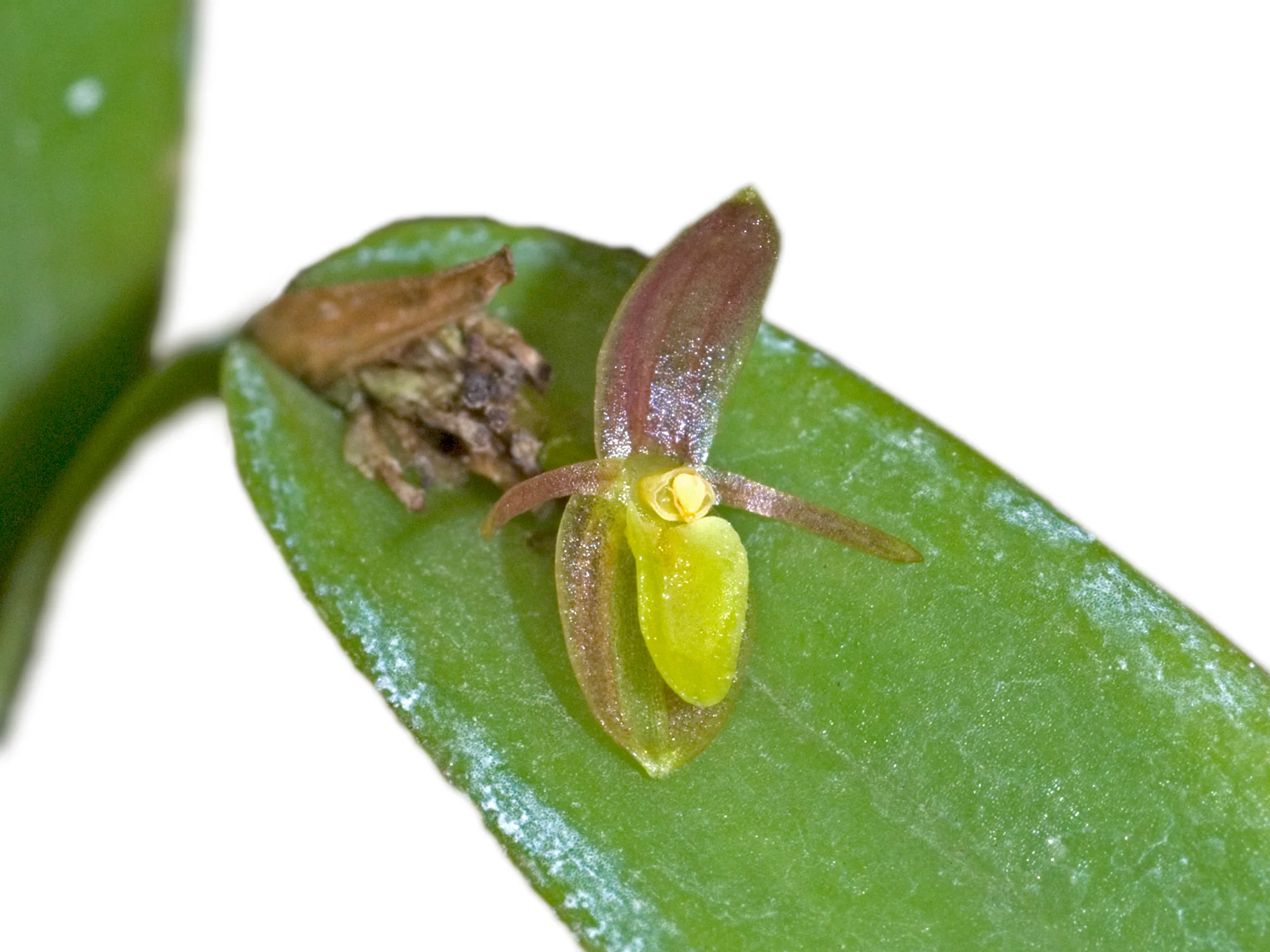
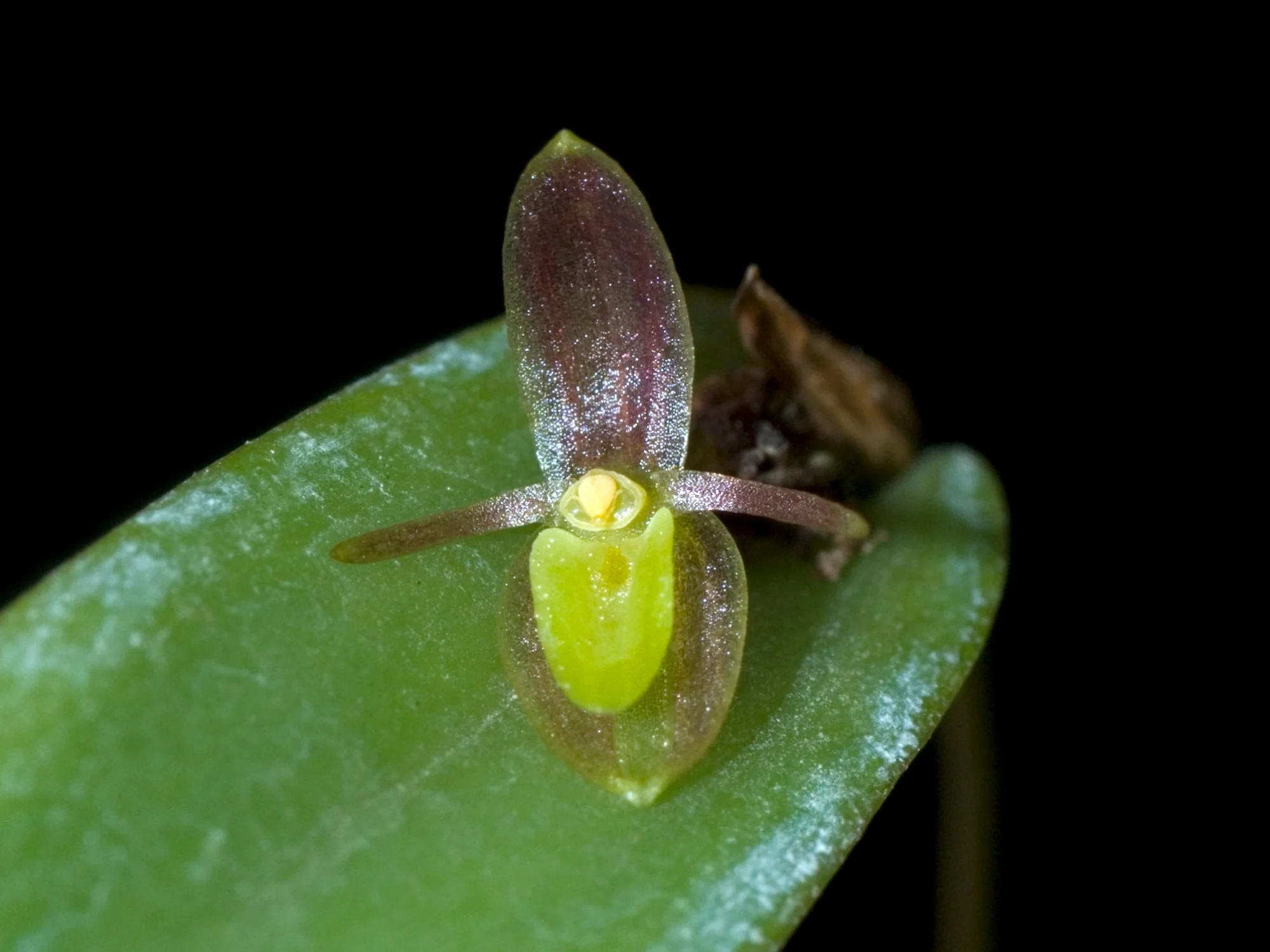
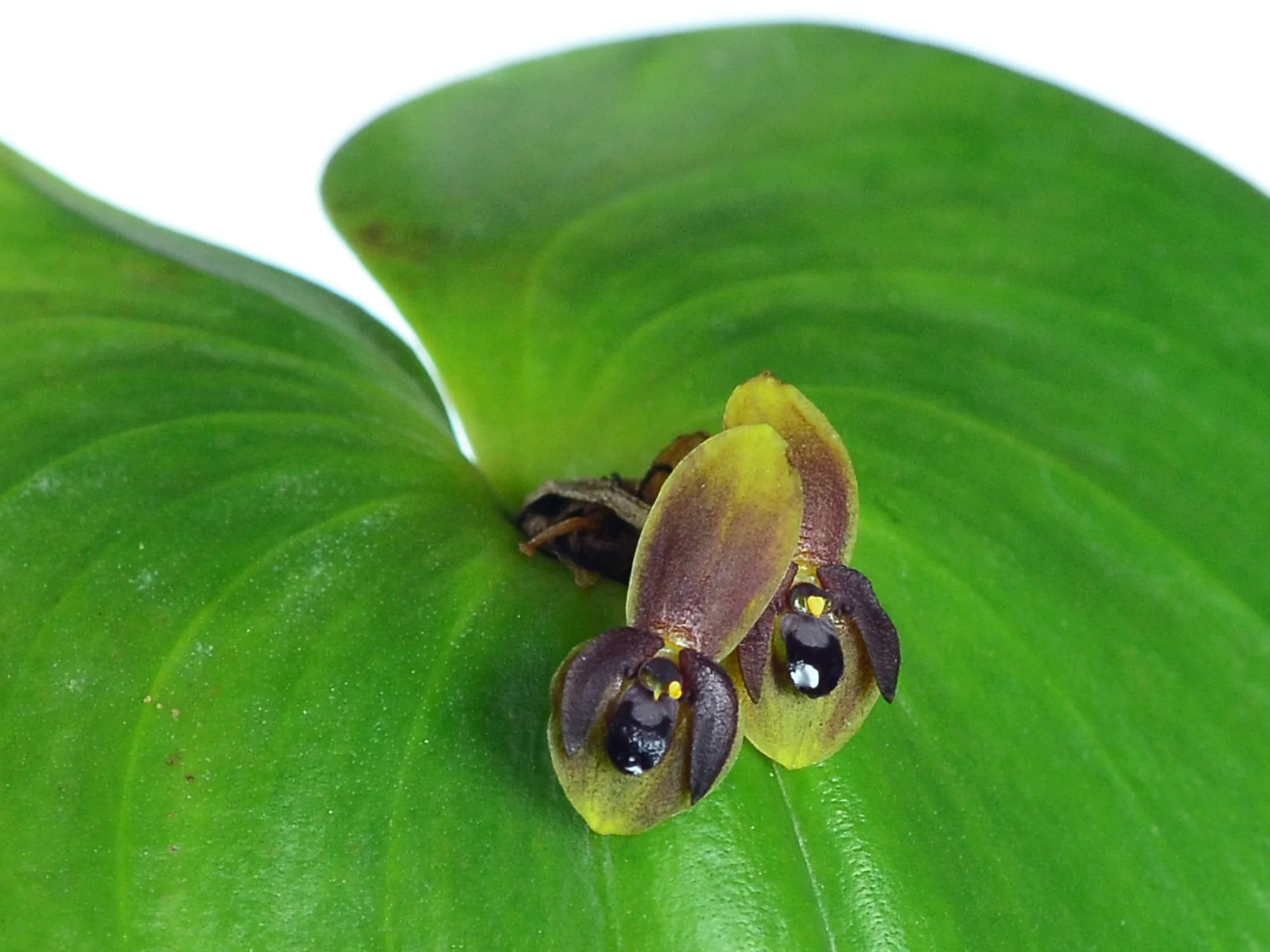
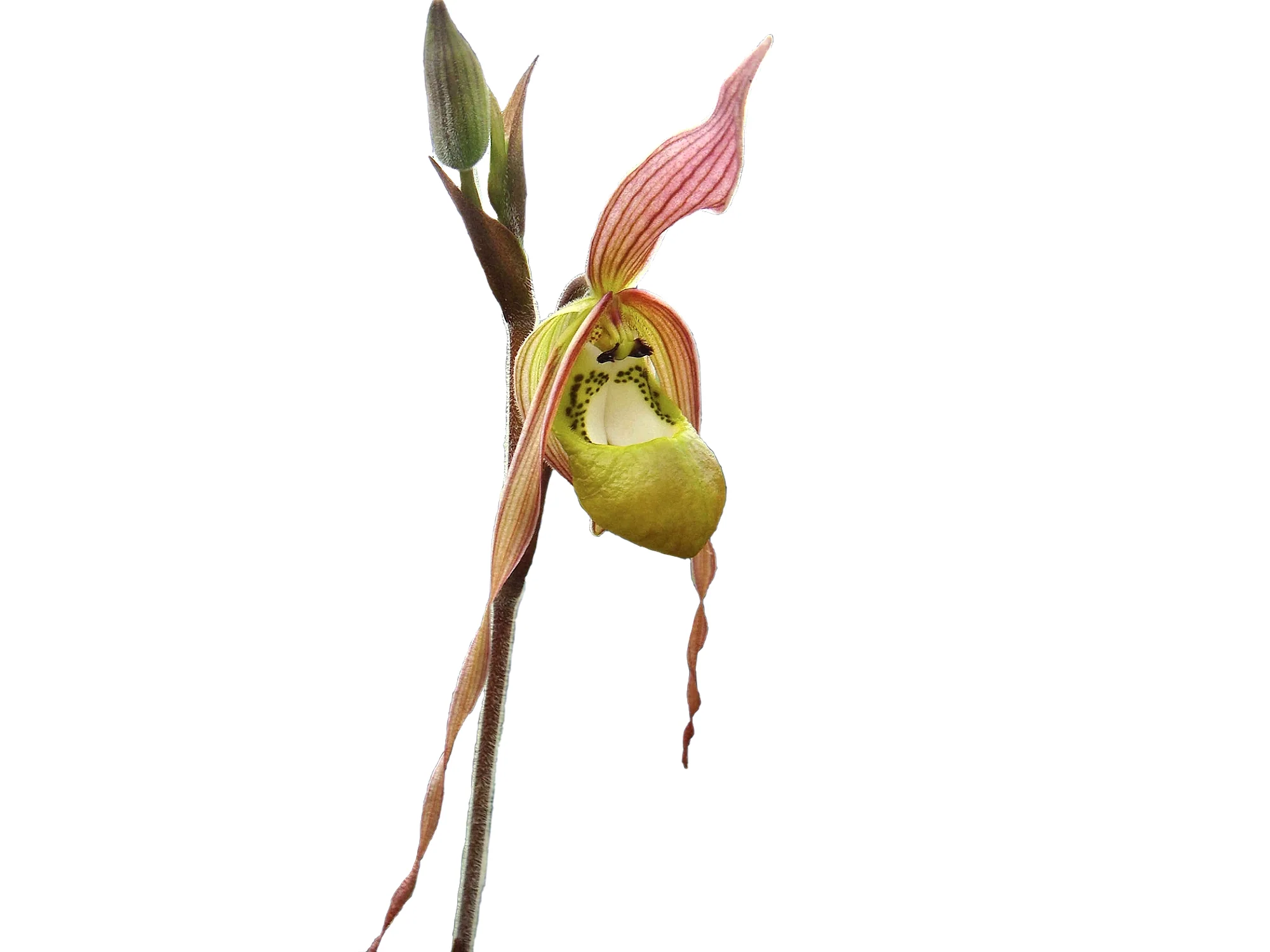
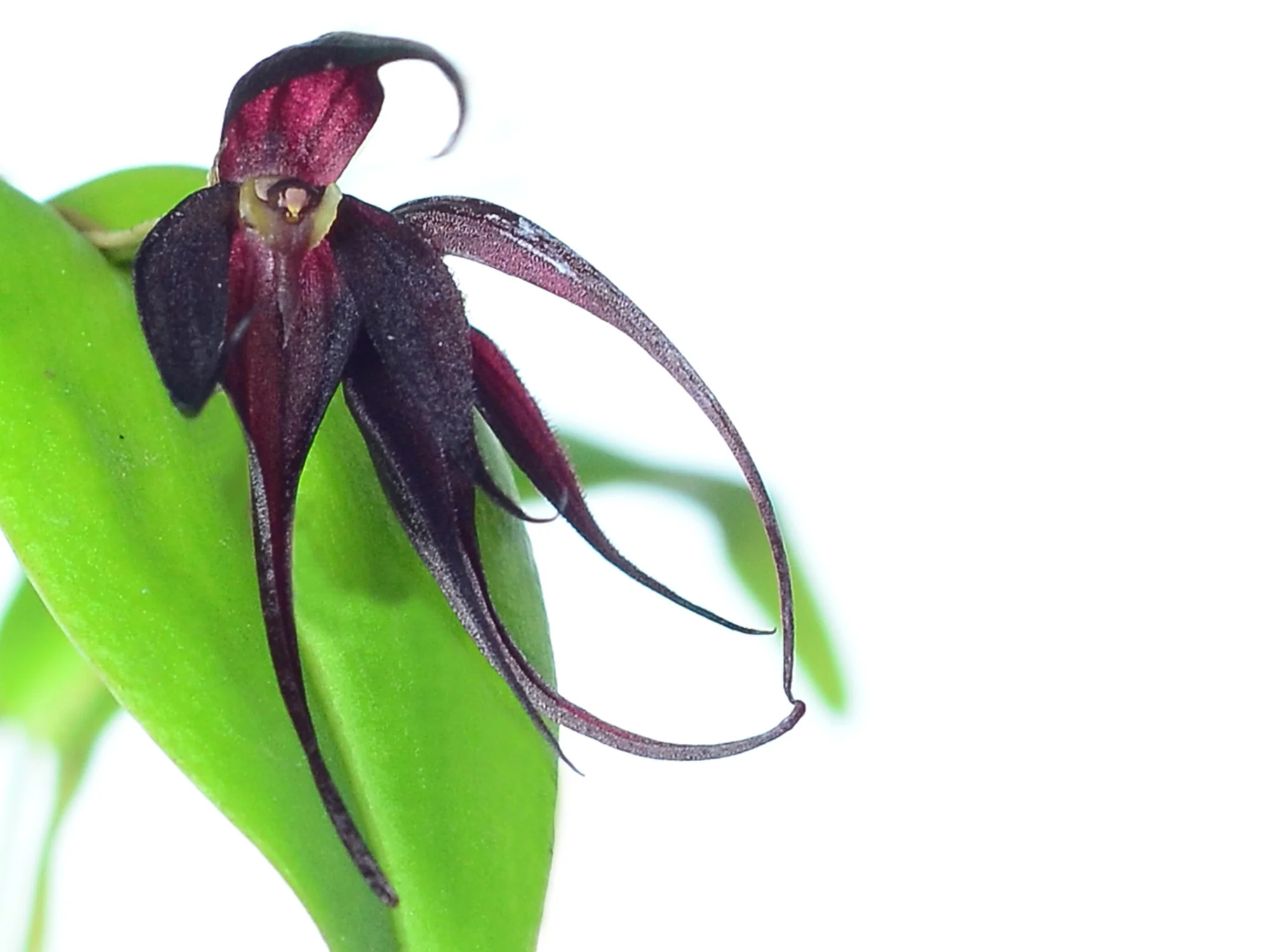
A sculptural and dramatic epiphyte from the Andean cloud forests, producing solitary flowers directly from the surface of the leaf. The dorsal sepal curves sharply backward into a pronounced hook, while the lateral sepals extend into extraordinarily long, strap-like tails that spiral outward and downward — a bold, almost architectural form with a rich, velvety texture throughout.
- Light: Bright indirect light with 50–70% shade cloth; avoid direct sun, which can stress the broad, fleshy leaves.
- Temperature: 50–68°F (10–20°C); a Cool grower that performs best with stable cool conditions and good air movement. Minimum 45°F (7°C).
- Humidity: 70–90%; grow in a small pot or mount with a fine open mix to maintain moisture around the roots while ensuring good airflow.
- Watering: Water regularly to keep roots evenly moist; avoid prolonged dryness between waterings.
Additional Notes
The hooked dorsal sepal and spiraling sepal tails make this one of the most architecturally striking species in the genus — a true showpiece for advanced collectors. Best grown in a small pot with a fine, well-draining mix or mounted on cork. Plants are shipped bare root and well-established.
A sculptural and dramatic epiphyte from the Andean cloud forests, producing solitary flowers directly from the surface of the leaf. The dorsal sepal curves sharply backward into a pronounced hook, while the lateral sepals extend into extraordinarily long, strap-like tails that spiral outward and downward — a bold, almost architectural form with a rich, velvety texture throughout.
- Light: Bright indirect light with 50–70% shade cloth; avoid direct sun, which can stress the broad, fleshy leaves.
- Temperature: 50–68°F (10–20°C); a Cool grower that performs best with stable cool conditions and good air movement. Minimum 45°F (7°C).
- Humidity: 70–90%; grow in a small pot or mount with a fine open mix to maintain moisture around the roots while ensuring good airflow.
- Watering: Water regularly to keep roots evenly moist; avoid prolonged dryness between waterings.
Additional Notes
The hooked dorsal sepal and spiraling sepal tails make this one of the most architecturally striking species in the genus — a true showpiece for advanced collectors. Best grown in a small pot with a fine, well-draining mix or mounted on cork. Plants are shipped bare root and well-established.
Description
A sculptural and dramatic epiphyte from the Andean cloud forests, producing solitary flowers directly from the surface of the leaf. The dorsal sepal curves sharply backward into a pronounced hook, while the lateral sepals extend into extraordinarily long, strap-like tails that spiral outward and downward — a bold, almost architectural form with a rich, velvety texture throughout.
- Light: Bright indirect light with 50–70% shade cloth; avoid direct sun, which can stress the broad, fleshy leaves.
- Temperature: 50–68°F (10–20°C); a Cool grower that performs best with stable cool conditions and good air movement. Minimum 45°F (7°C).
- Humidity: 70–90%; grow in a small pot or mount with a fine open mix to maintain moisture around the roots while ensuring good airflow.
- Watering: Water regularly to keep roots evenly moist; avoid prolonged dryness between waterings.
Additional Notes
The hooked dorsal sepal and spiraling sepal tails make this one of the most architecturally striking species in the genus — a true showpiece for advanced collectors. Best grown in a small pot with a fine, well-draining mix or mounted on cork. Plants are shipped bare root and well-established.