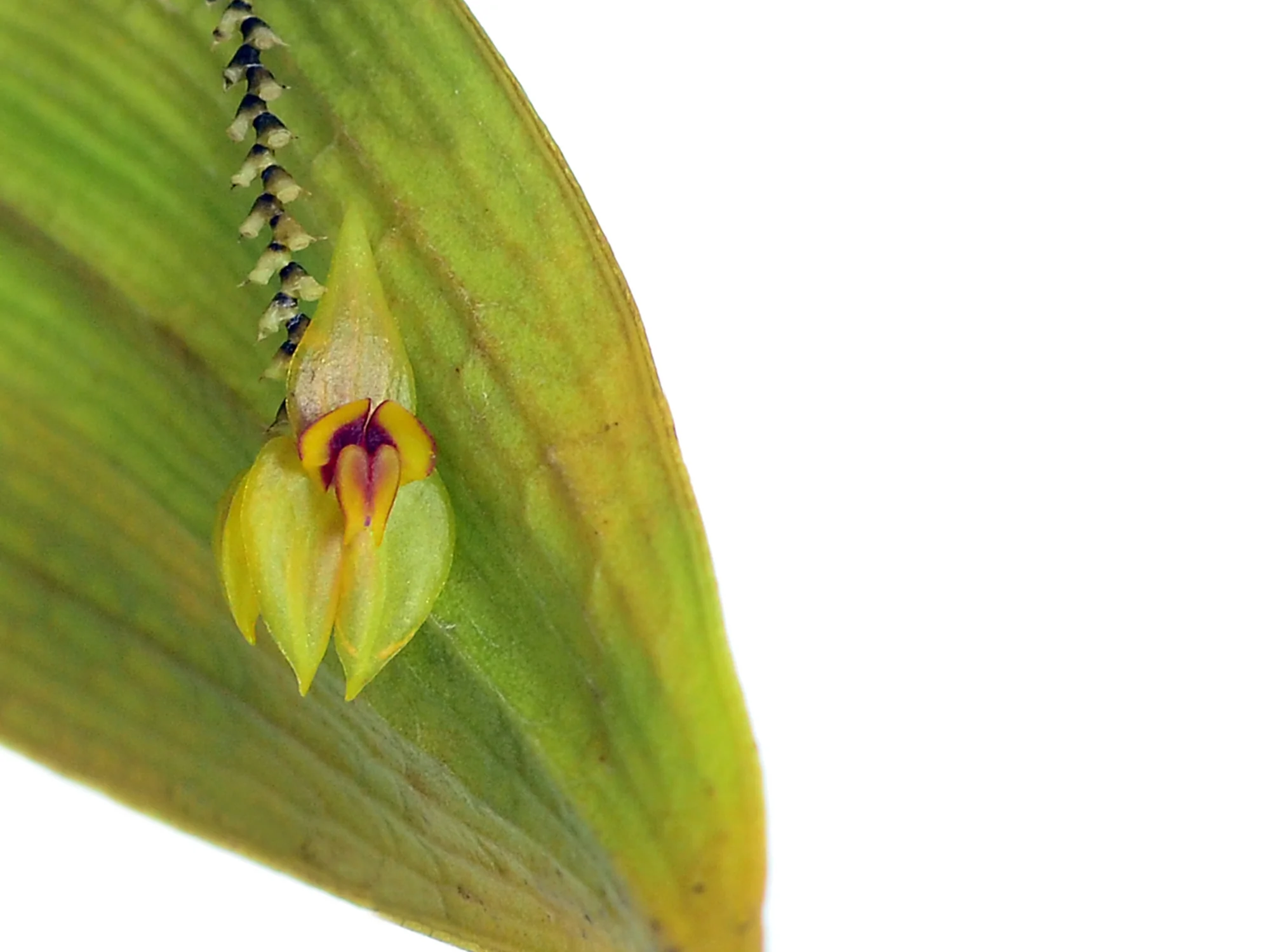
Lepanthes carinata
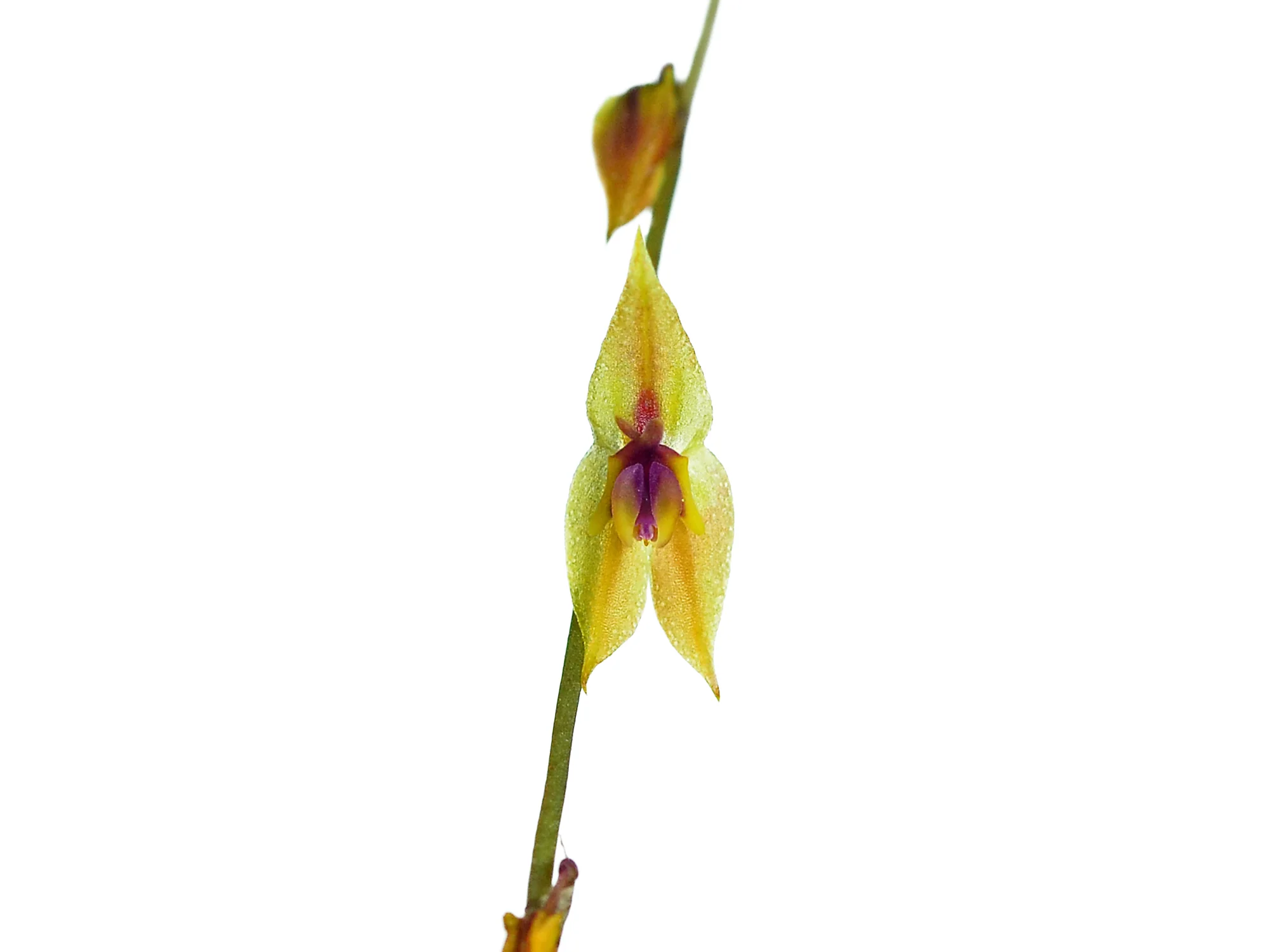
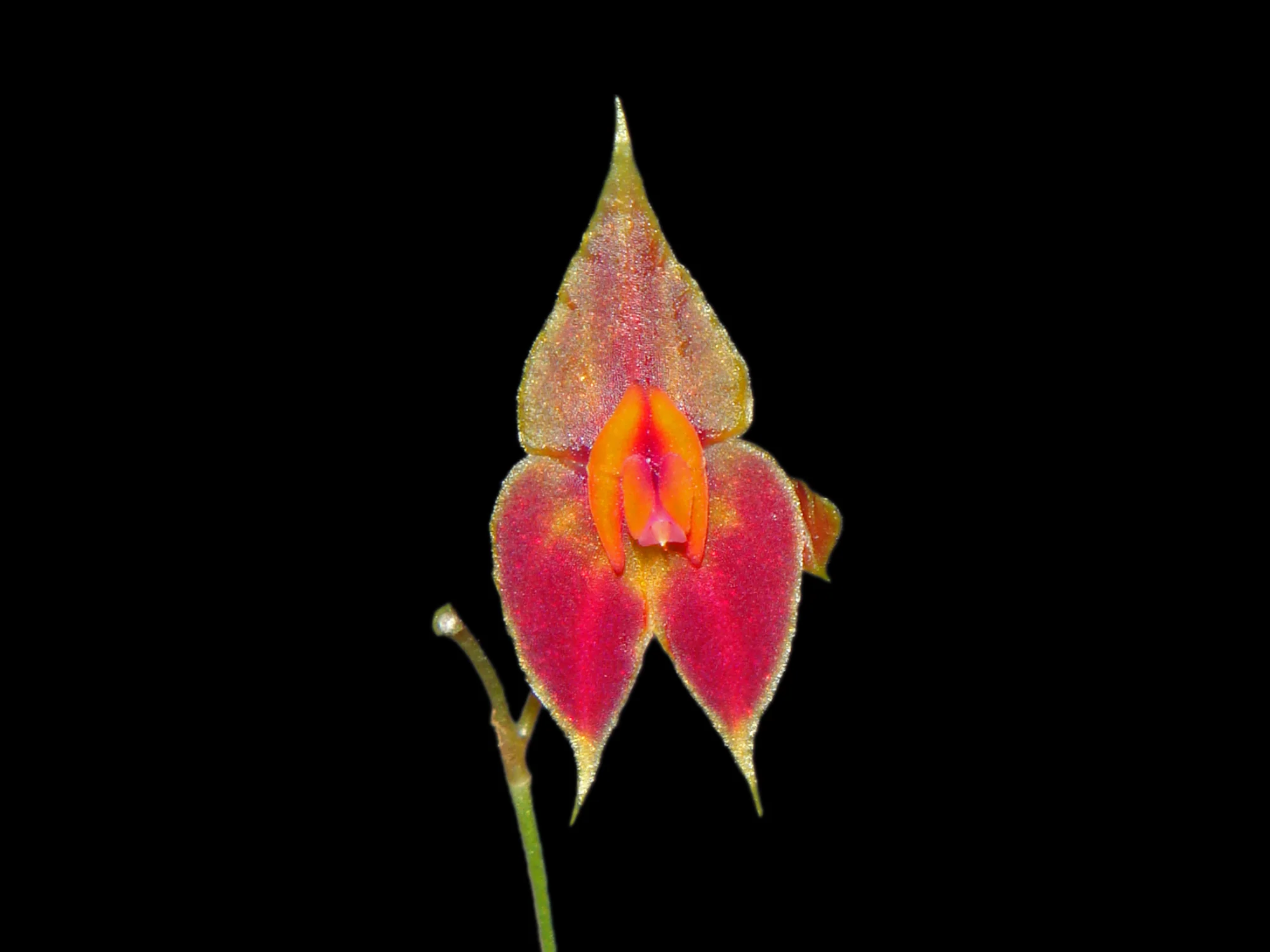
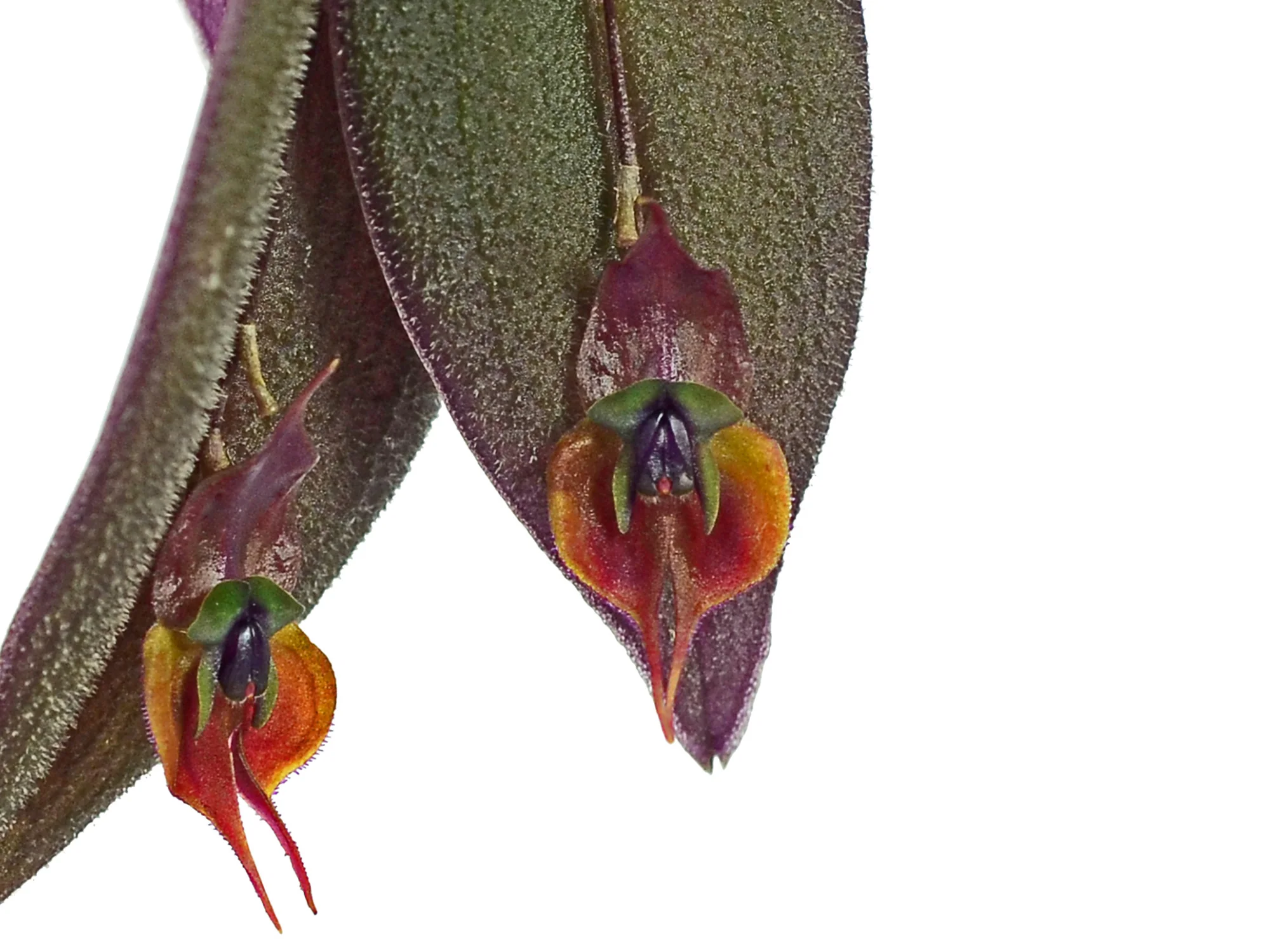
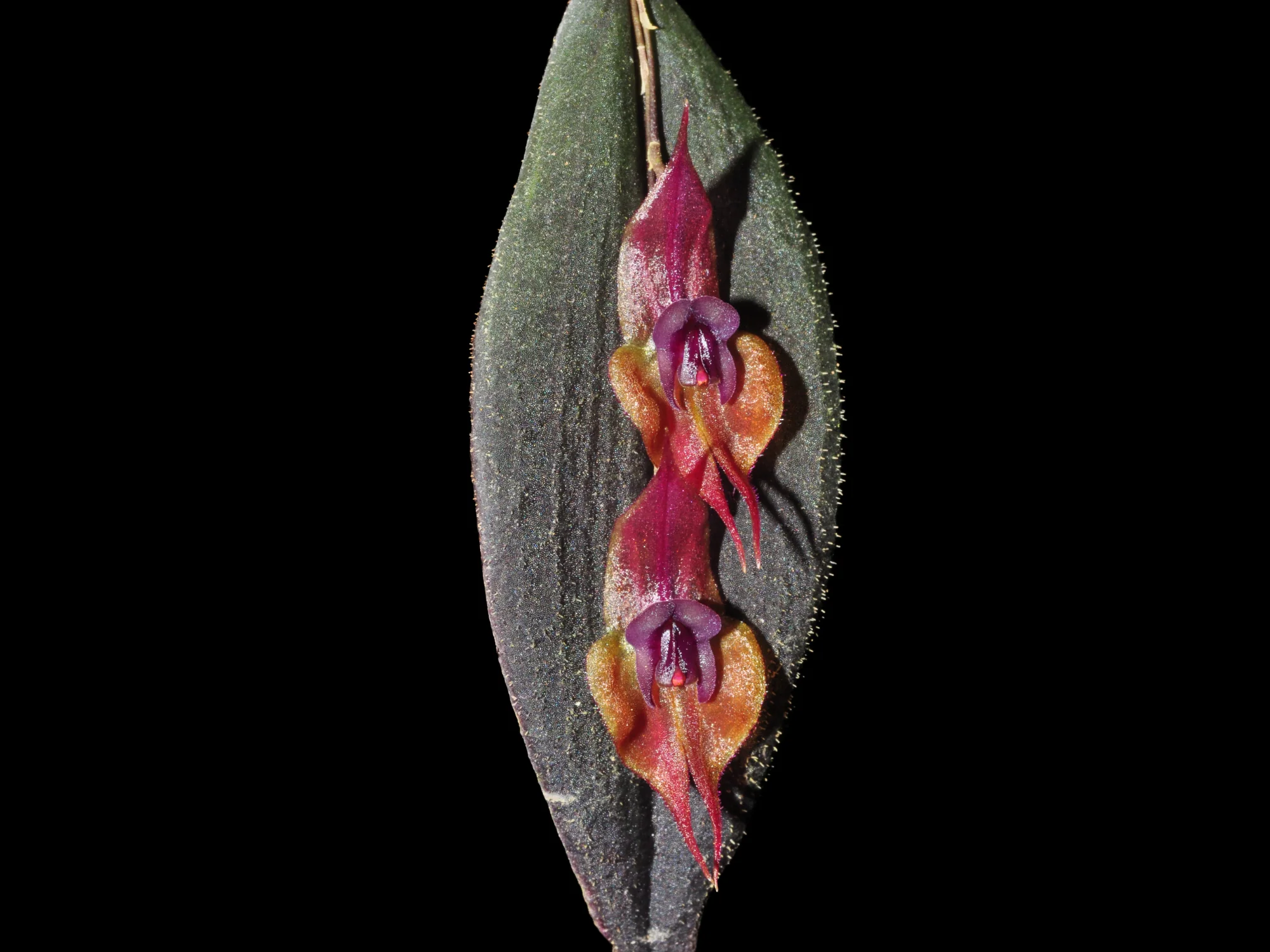
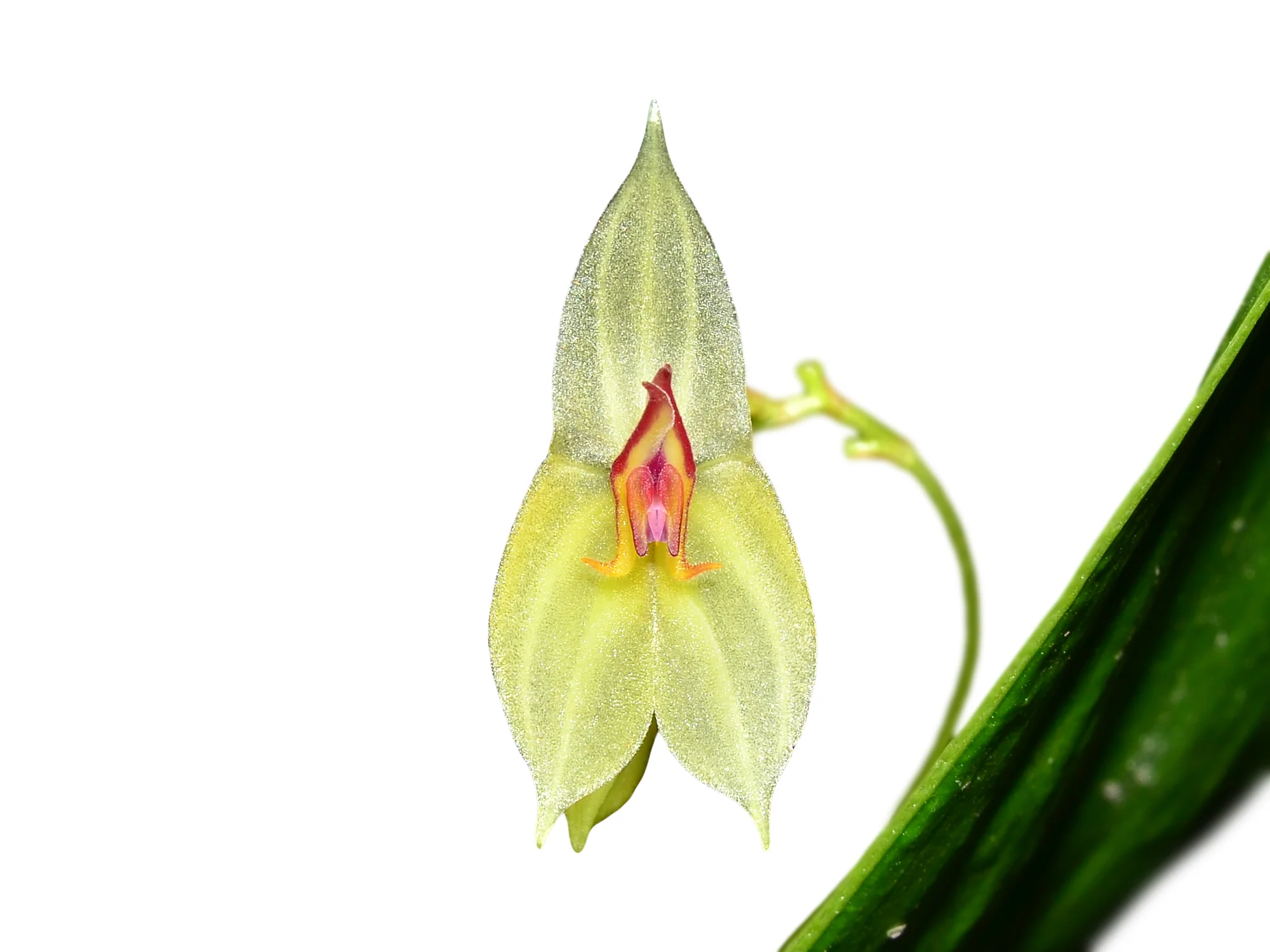
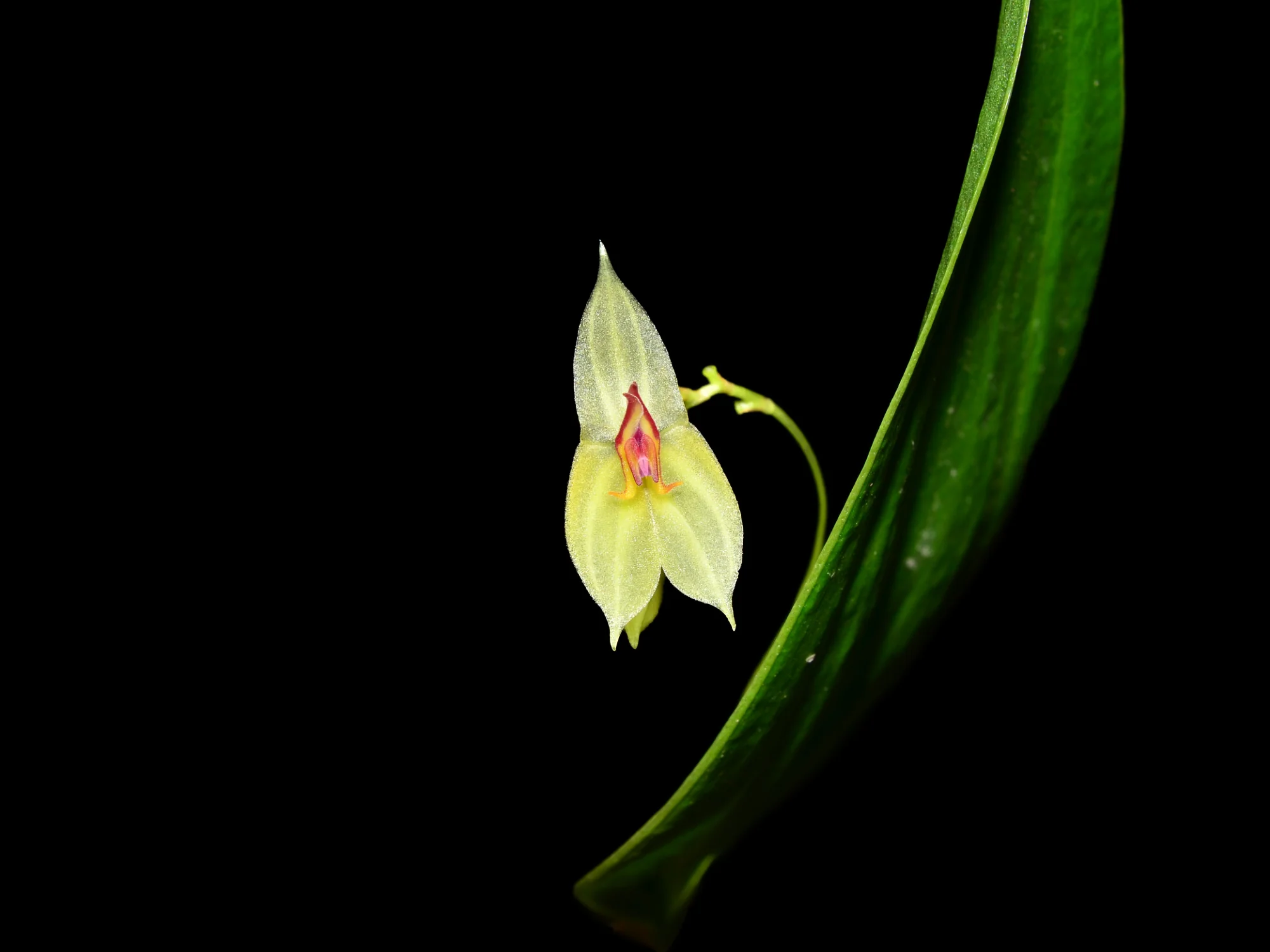
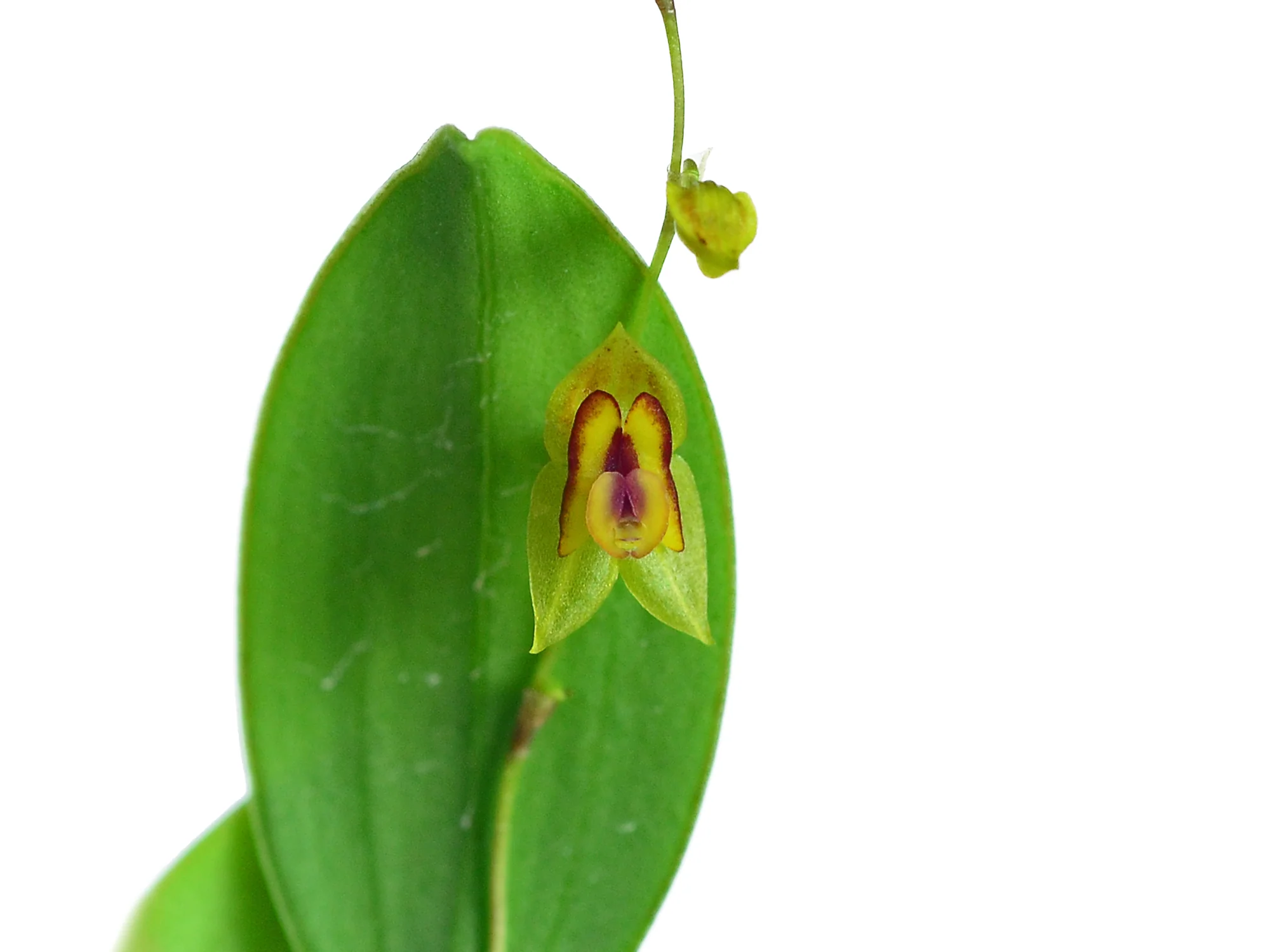
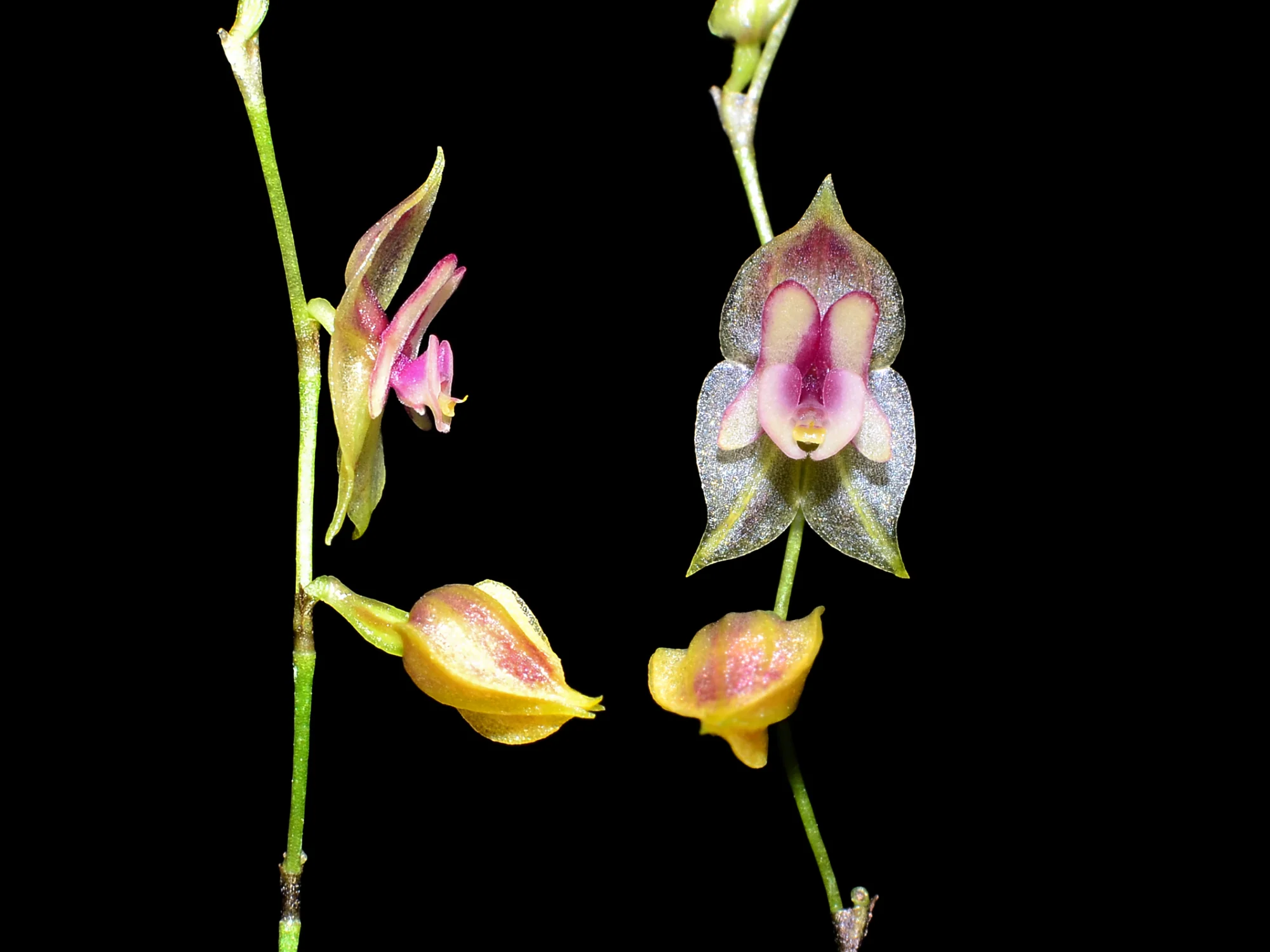
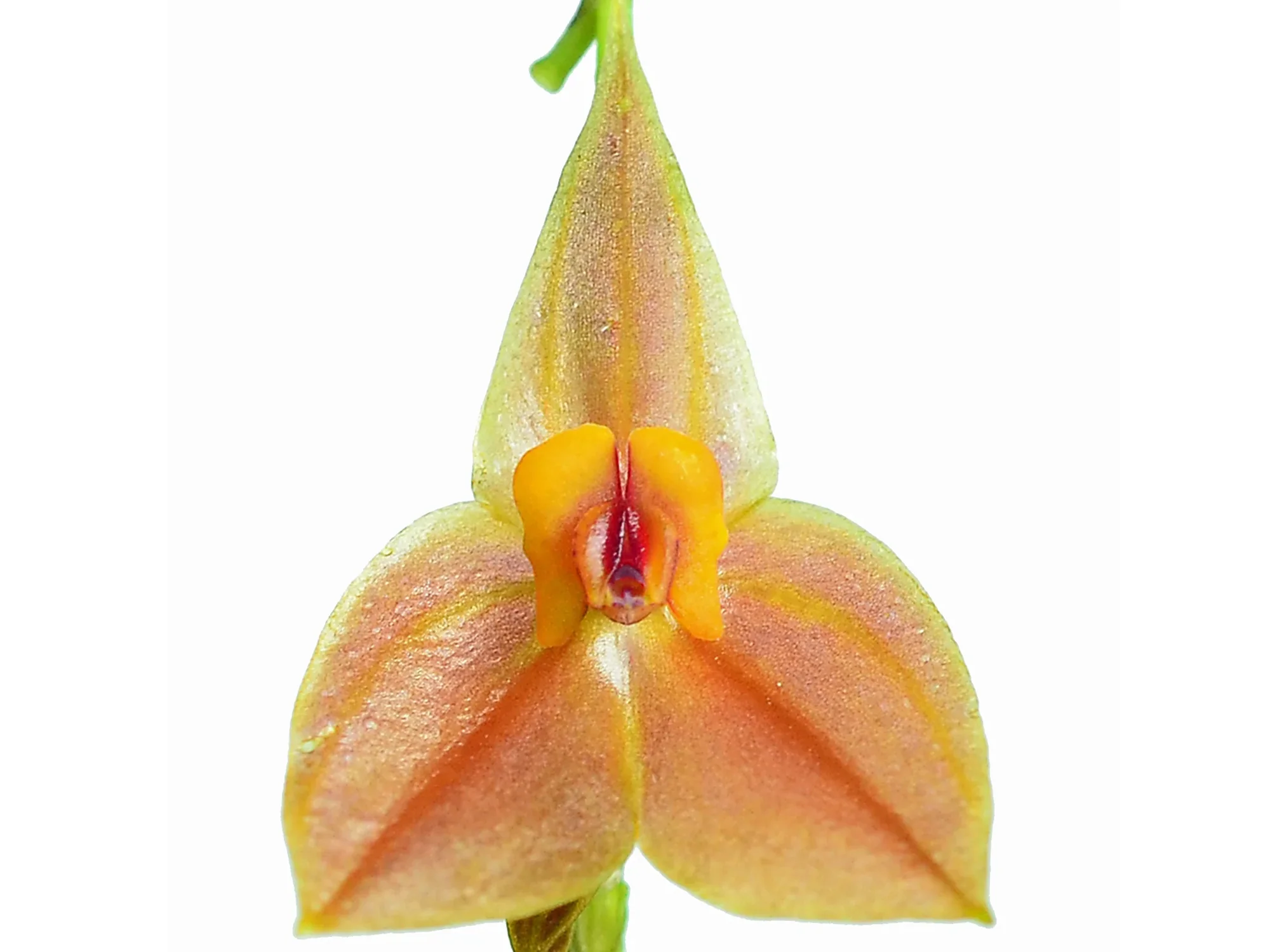
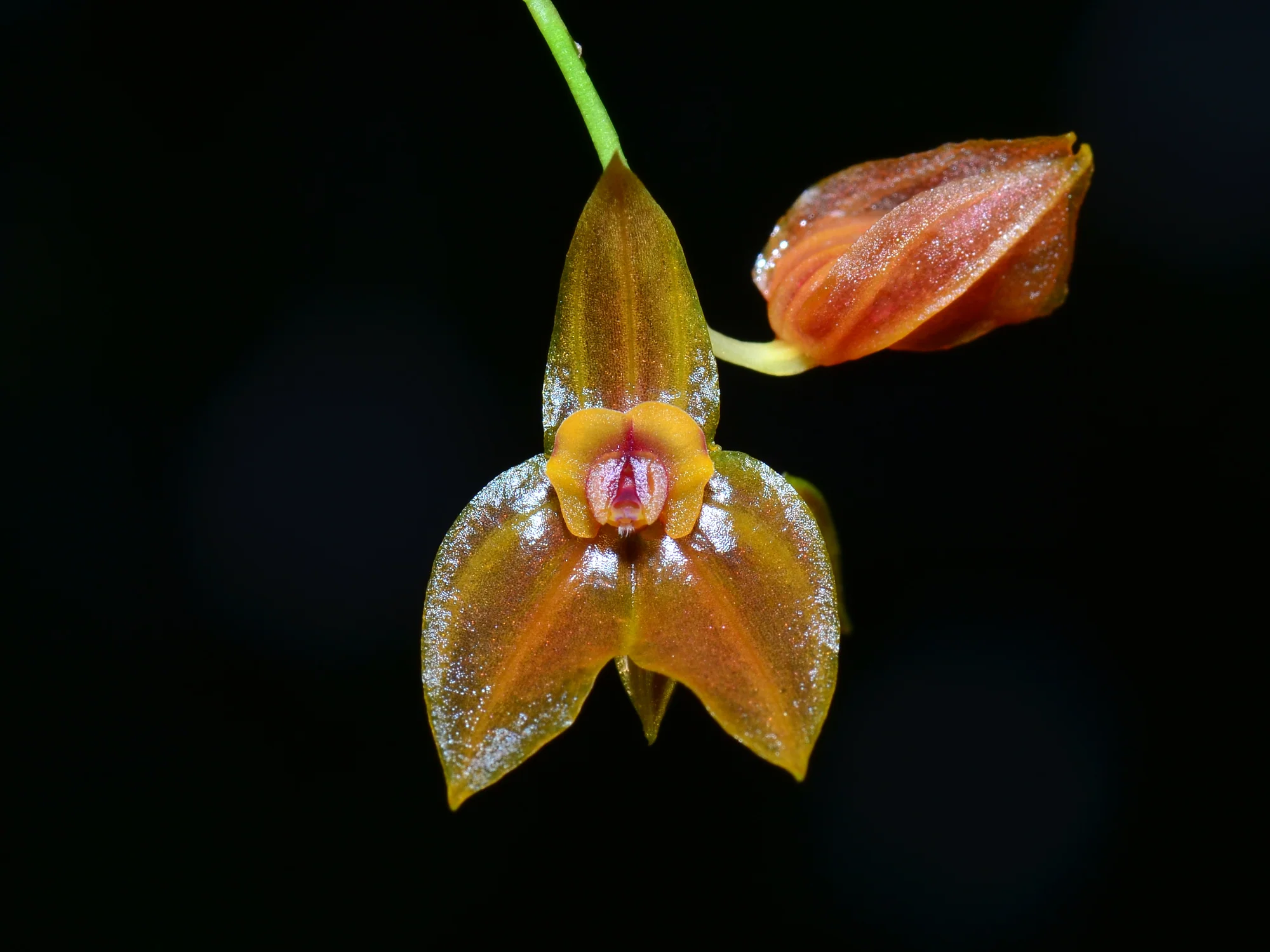
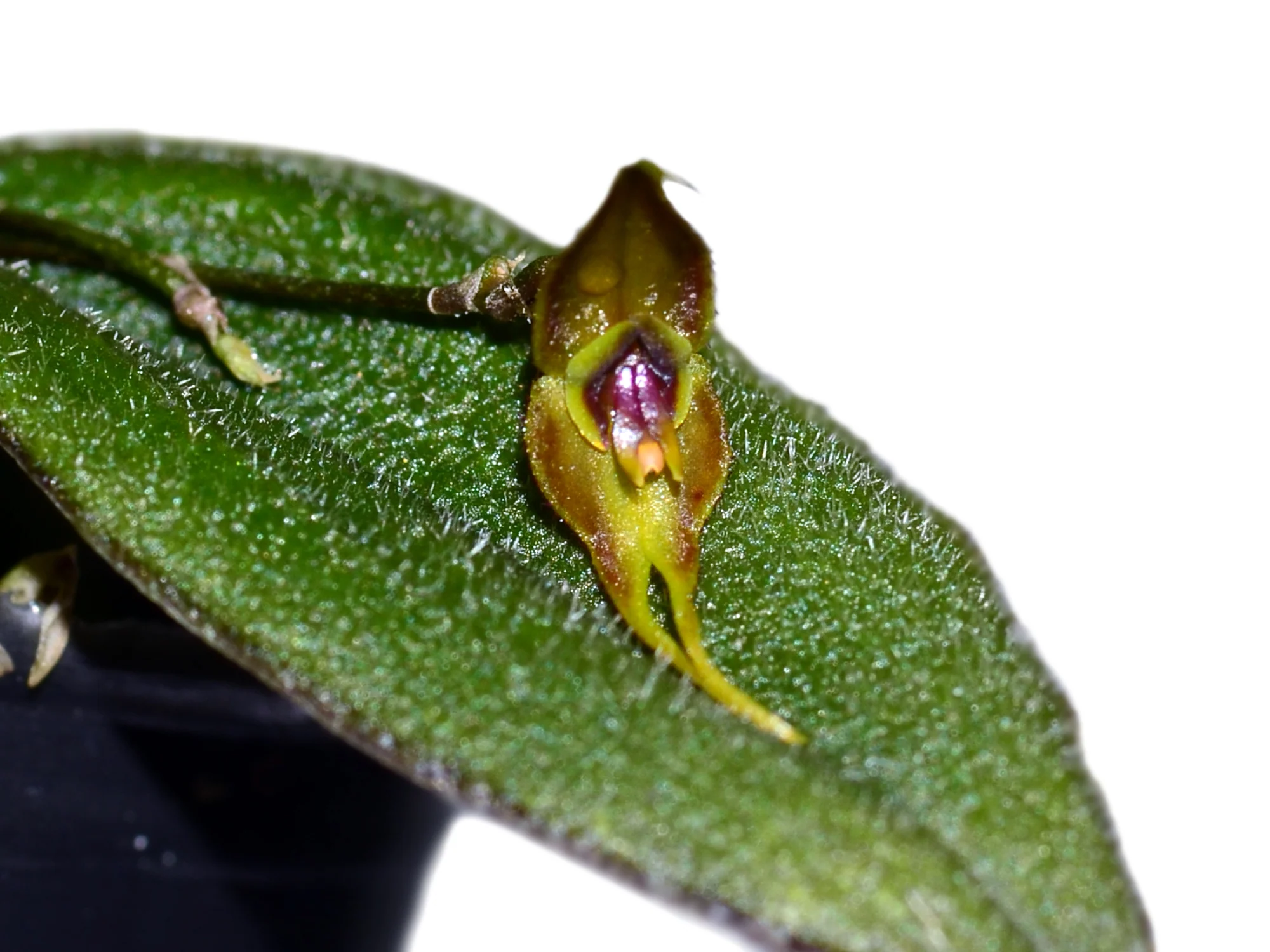
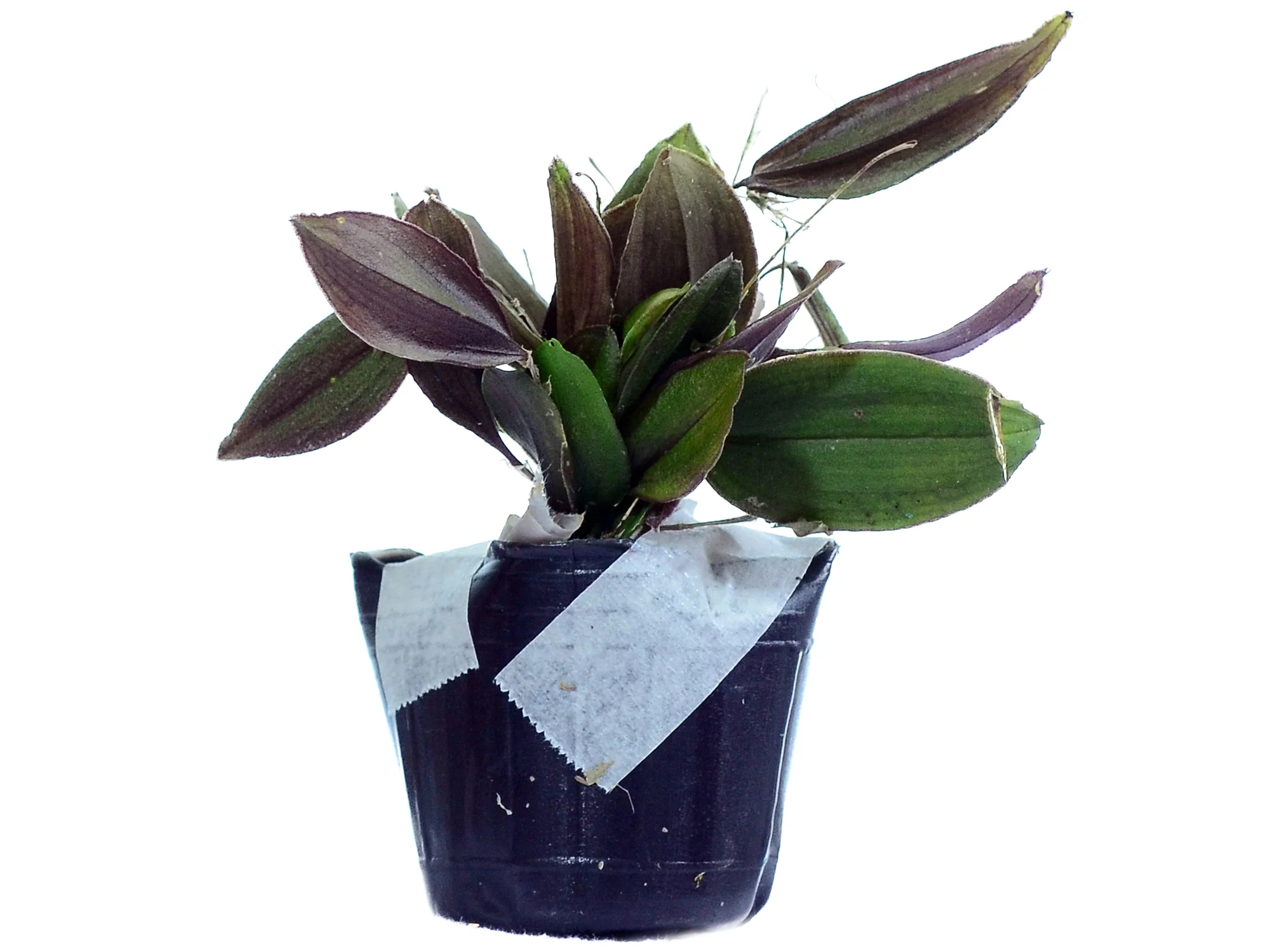
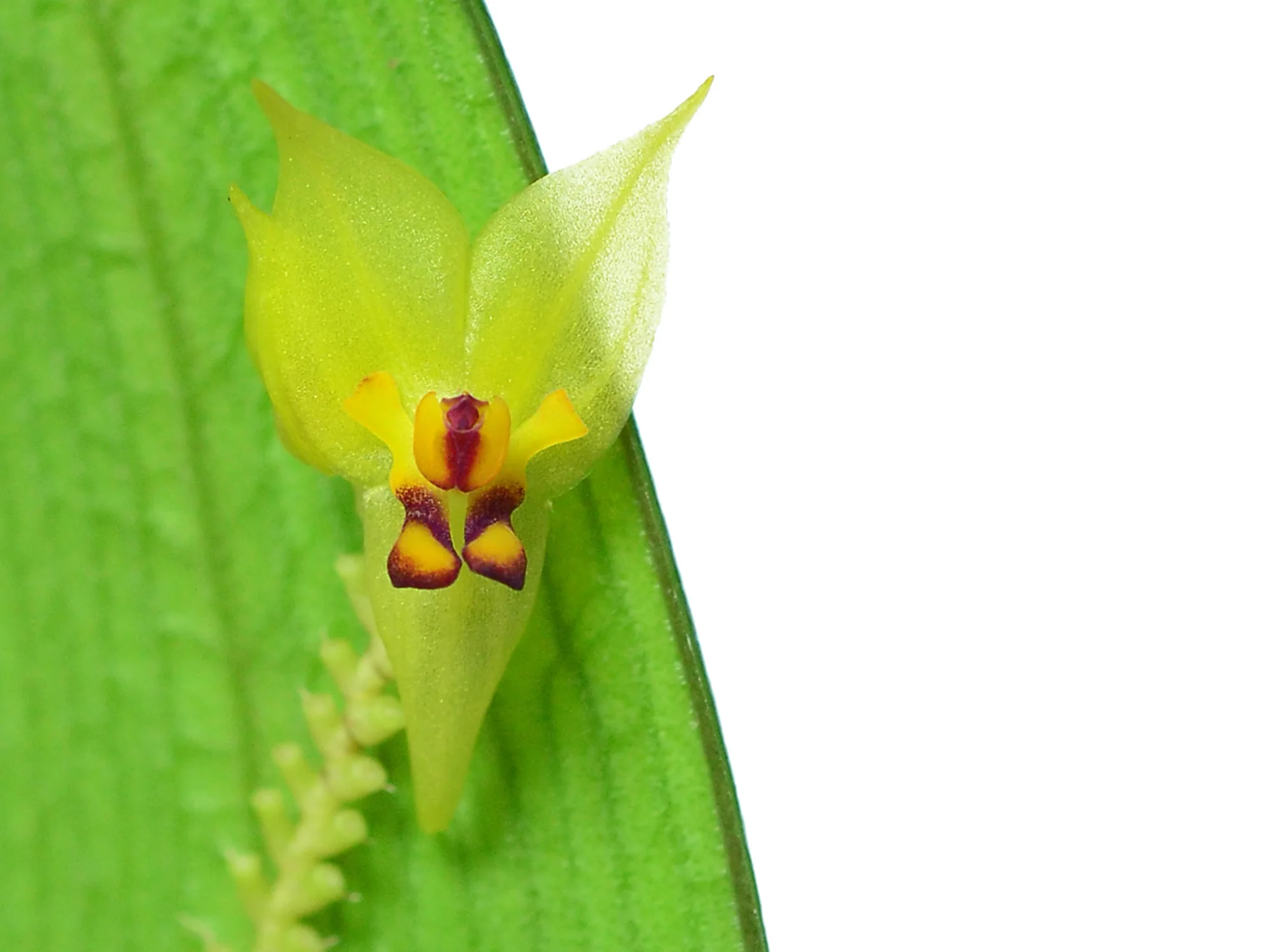
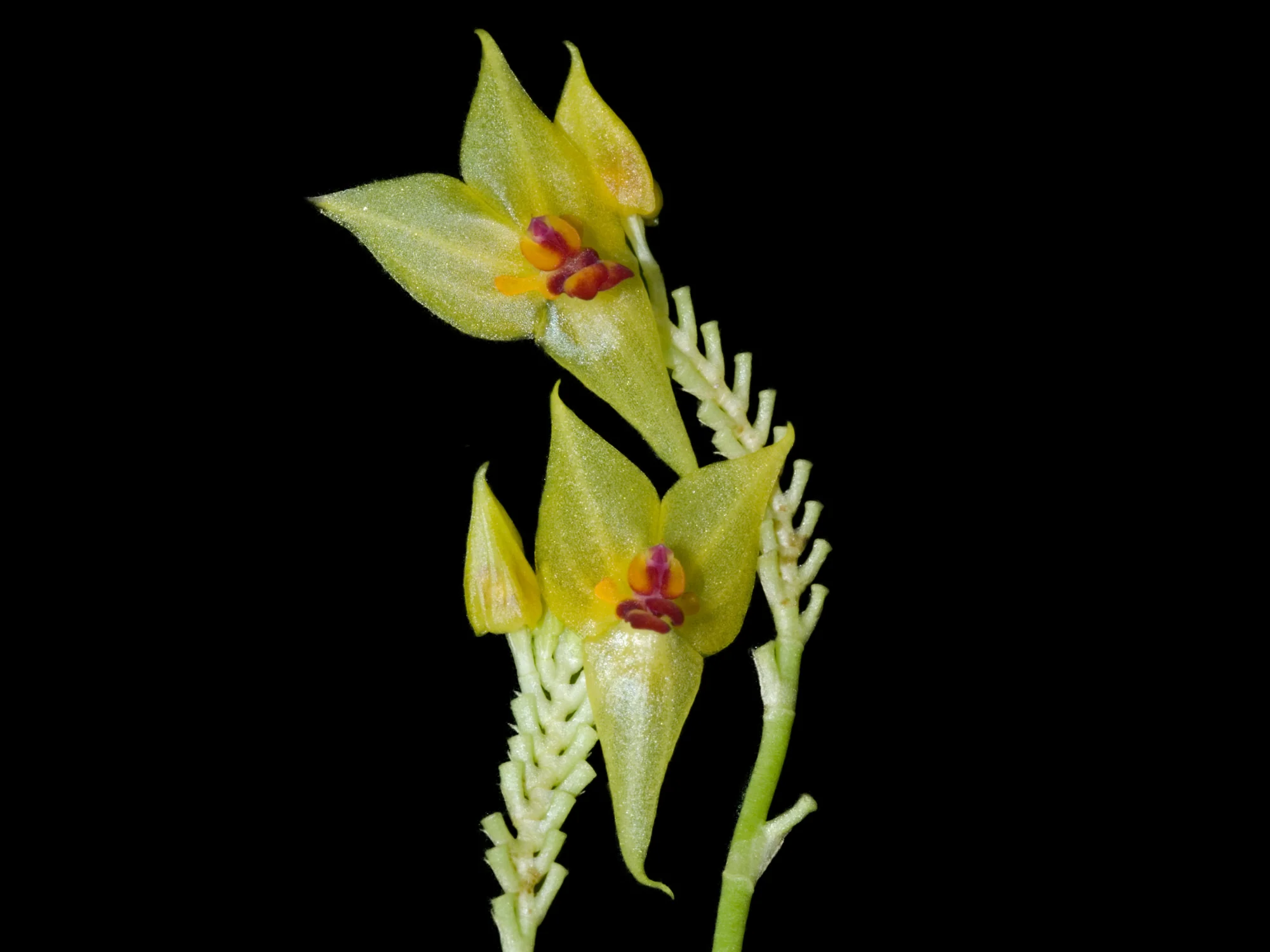
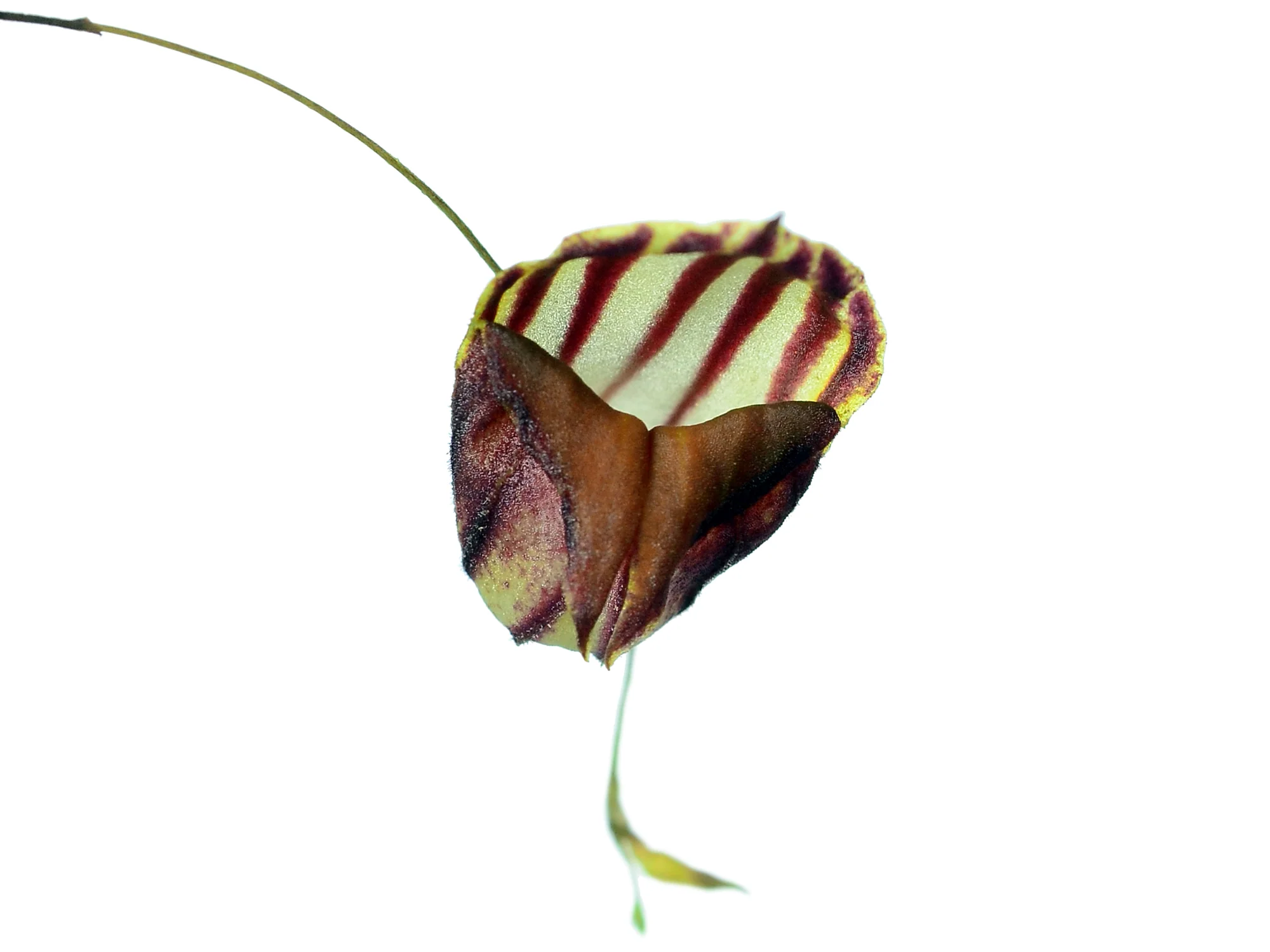
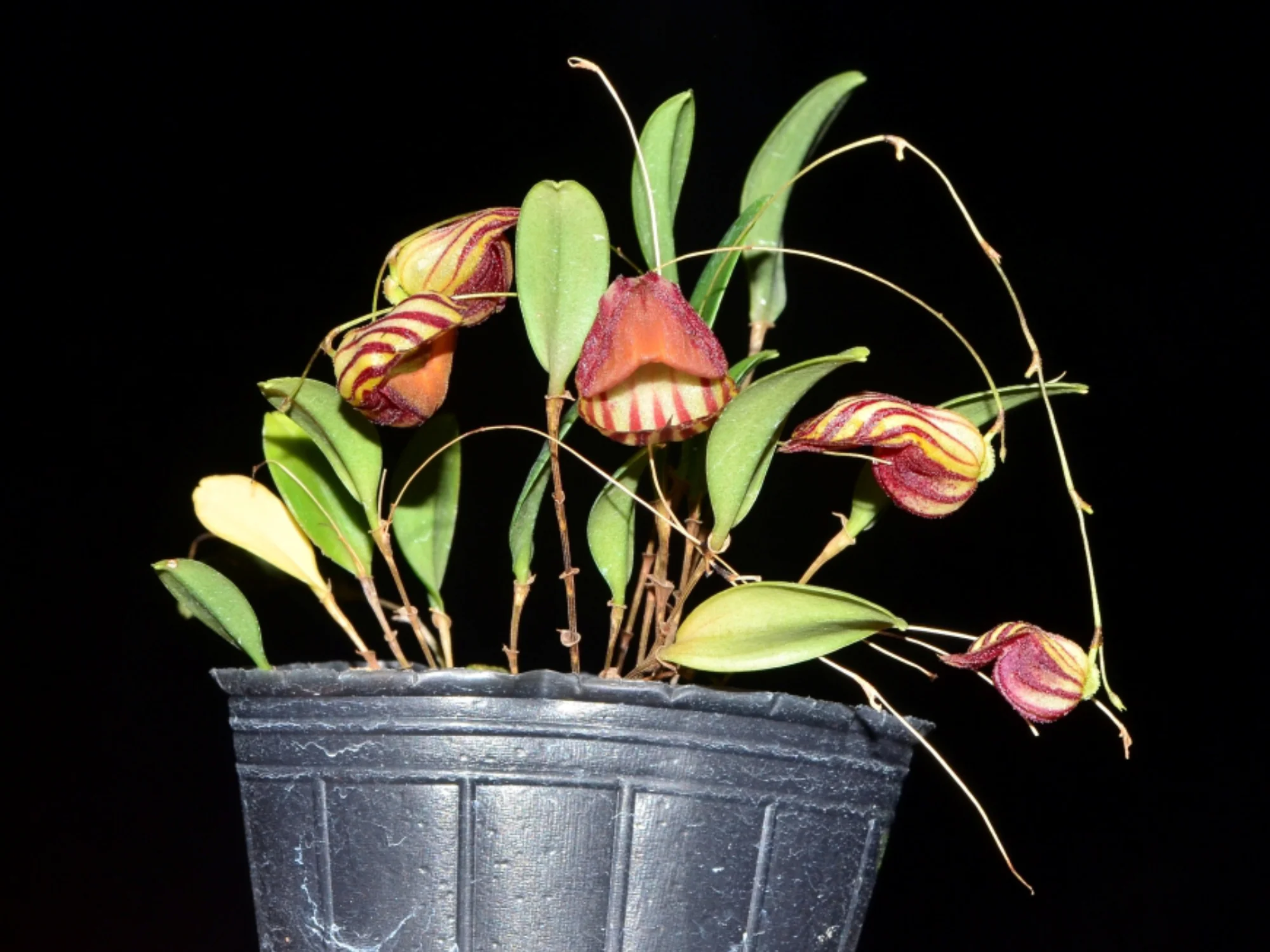
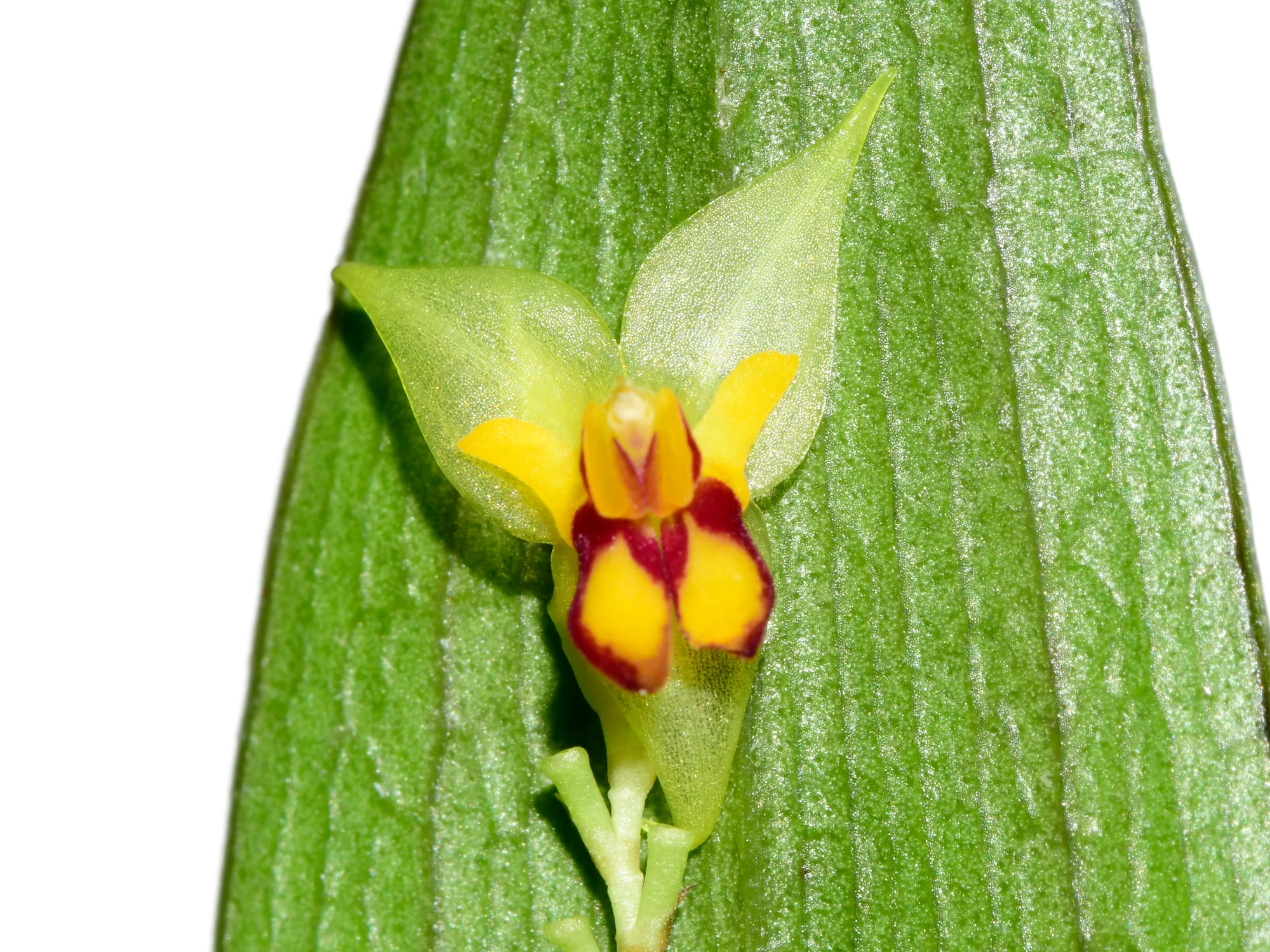
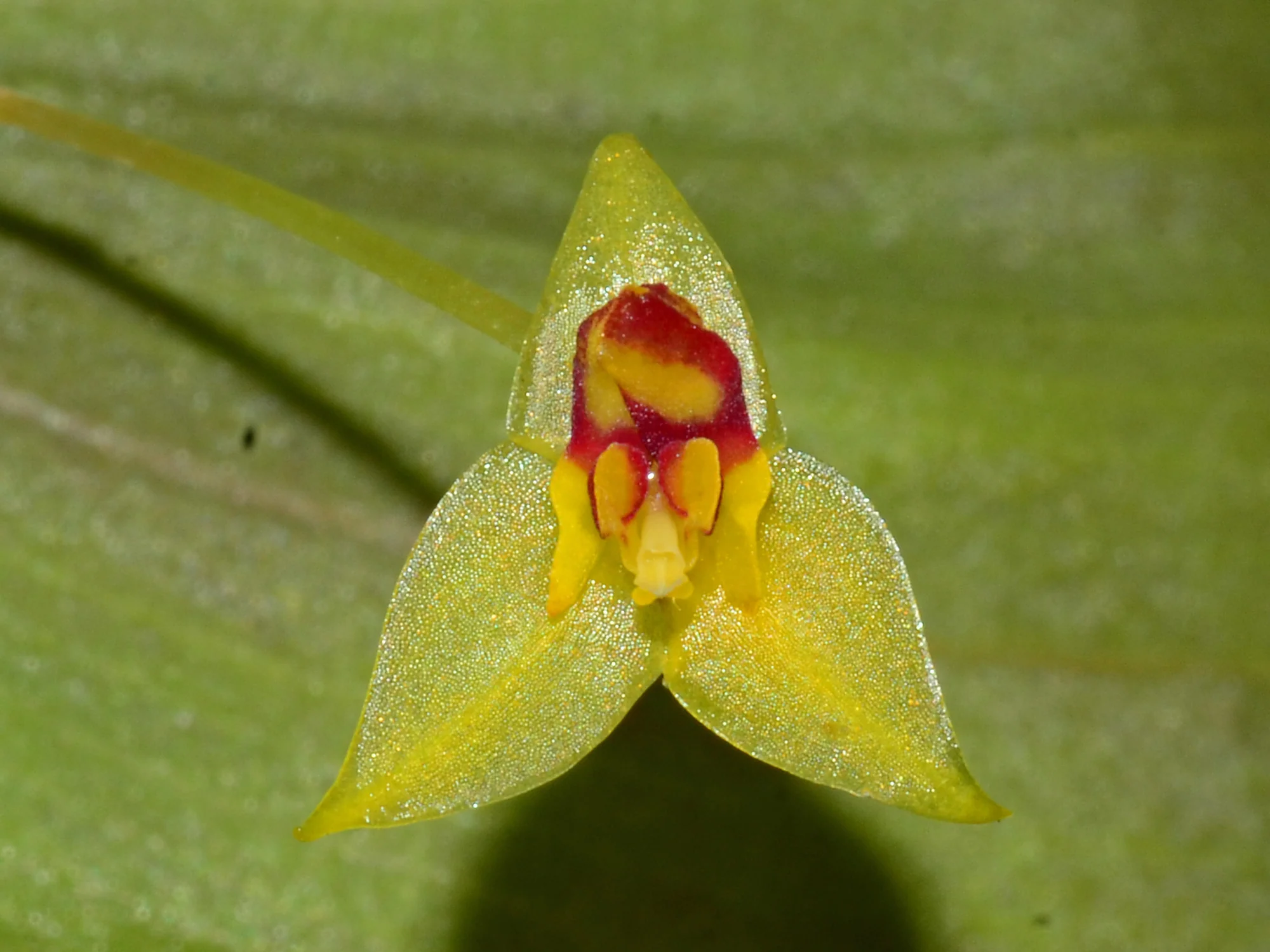
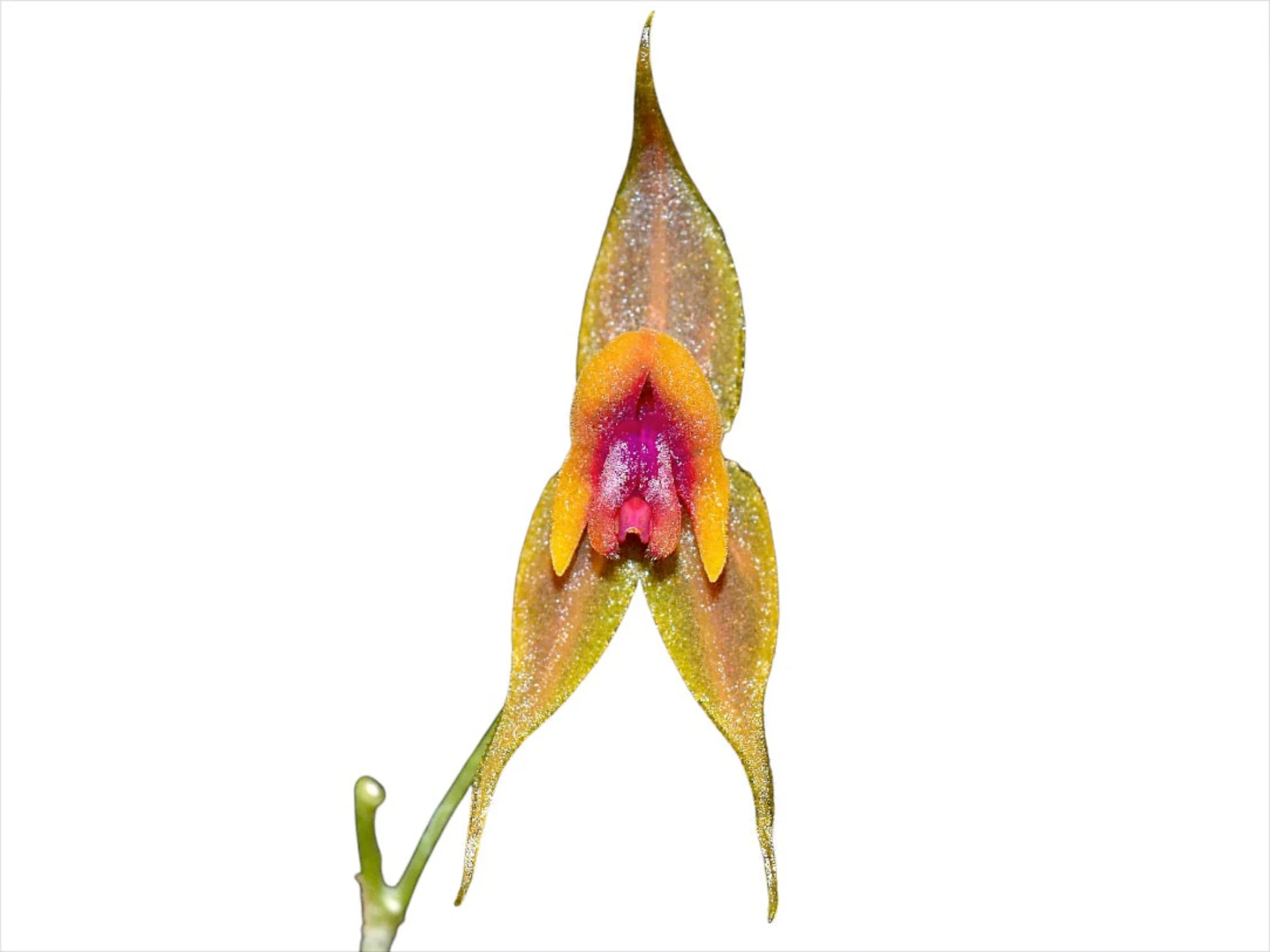
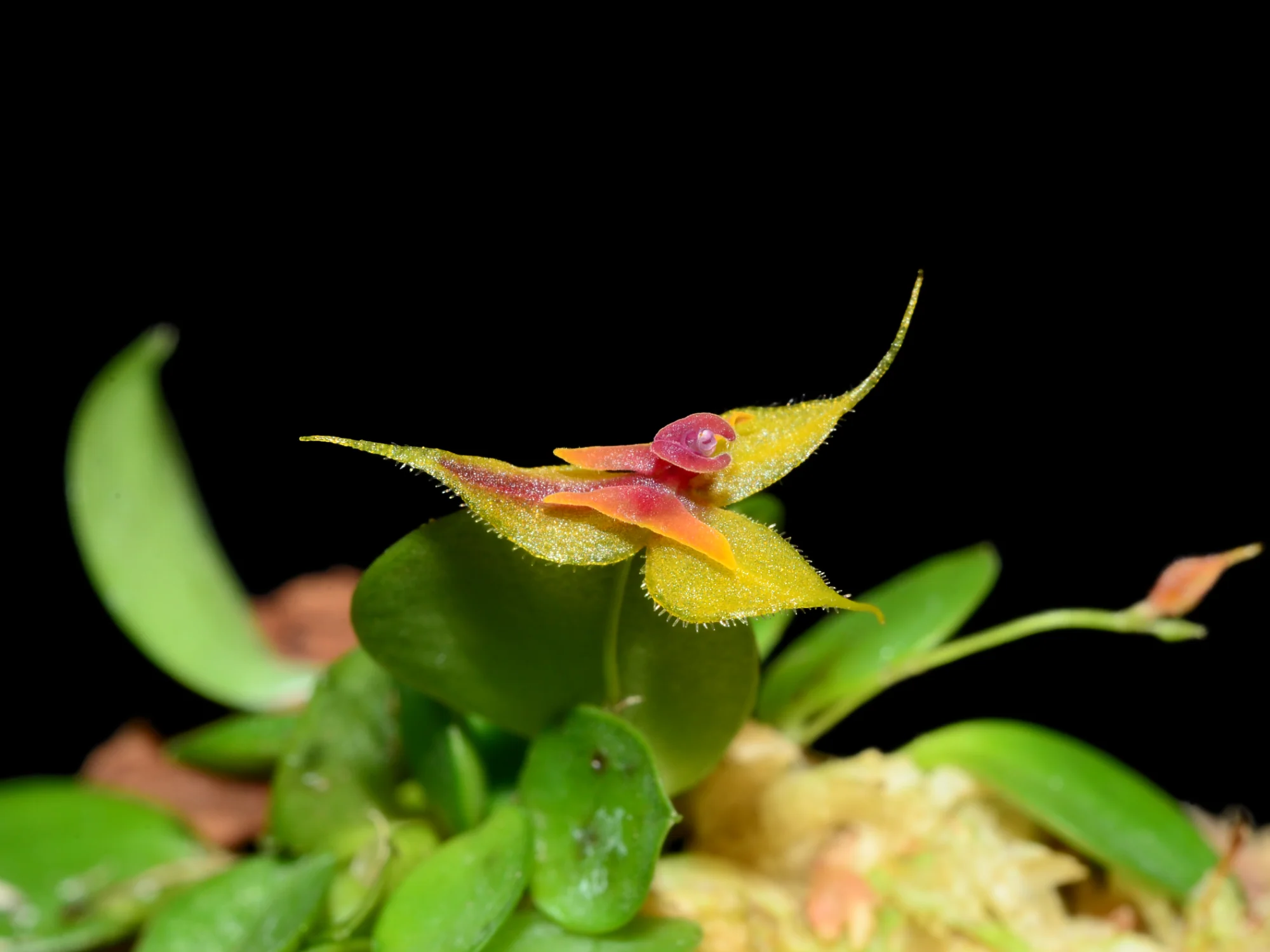
A cool-growing miniature epiphyte native to the cloud forests of Ecuador, distinguished by its large, lance-shaped leaves with strongly keeled, parallel longitudinal veins that give the foliage a deeply channeled, architectural texture. A dense chain of small flowers emerges along the upper leaf margin, each displaying yellow-green sepals and a vivid bilobed lip — a floriferous and structurally unique species in the genus.
- Light: Bright indirect light with 50–70% shade cloth; avoid direct sun, which can stress the distinctive keeled foliage.
- Temperature: 48–65°F (9–18°C); a Cool grower that requires consistently cool temperatures and steady air movement.
- Humidity: 75–90%; high humidity is essential to keep roots and foliage in optimal condition.
- Watering: Keep roots evenly moist; water frequently in small amounts with excellent drainage to prevent root rot.
Additional Notes
Best mounted on cork bark or grown in a small net pot with fine sphagnum moss to maintain root moisture and aeration. A closed terrarium or enclosed glass container makes an excellent environment for this species, though it can also thrive in any humid, well-ventilated setup. Ships bare root, well-established.
A cool-growing miniature epiphyte native to the cloud forests of Ecuador, distinguished by its large, lance-shaped leaves with strongly keeled, parallel longitudinal veins that give the foliage a deeply channeled, architectural texture. A dense chain of small flowers emerges along the upper leaf margin, each displaying yellow-green sepals and a vivid bilobed lip — a floriferous and structurally unique species in the genus.
- Light: Bright indirect light with 50–70% shade cloth; avoid direct sun, which can stress the distinctive keeled foliage.
- Temperature: 48–65°F (9–18°C); a Cool grower that requires consistently cool temperatures and steady air movement.
- Humidity: 75–90%; high humidity is essential to keep roots and foliage in optimal condition.
- Watering: Keep roots evenly moist; water frequently in small amounts with excellent drainage to prevent root rot.
Additional Notes
Best mounted on cork bark or grown in a small net pot with fine sphagnum moss to maintain root moisture and aeration. A closed terrarium or enclosed glass container makes an excellent environment for this species, though it can also thrive in any humid, well-ventilated setup. Ships bare root, well-established.
Description
A cool-growing miniature epiphyte native to the cloud forests of Ecuador, distinguished by its large, lance-shaped leaves with strongly keeled, parallel longitudinal veins that give the foliage a deeply channeled, architectural texture. A dense chain of small flowers emerges along the upper leaf margin, each displaying yellow-green sepals and a vivid bilobed lip — a floriferous and structurally unique species in the genus.
- Light: Bright indirect light with 50–70% shade cloth; avoid direct sun, which can stress the distinctive keeled foliage.
- Temperature: 48–65°F (9–18°C); a Cool grower that requires consistently cool temperatures and steady air movement.
- Humidity: 75–90%; high humidity is essential to keep roots and foliage in optimal condition.
- Watering: Keep roots evenly moist; water frequently in small amounts with excellent drainage to prevent root rot.
Additional Notes
Best mounted on cork bark or grown in a small net pot with fine sphagnum moss to maintain root moisture and aeration. A closed terrarium or enclosed glass container makes an excellent environment for this species, though it can also thrive in any humid, well-ventilated setup. Ships bare root, well-established.