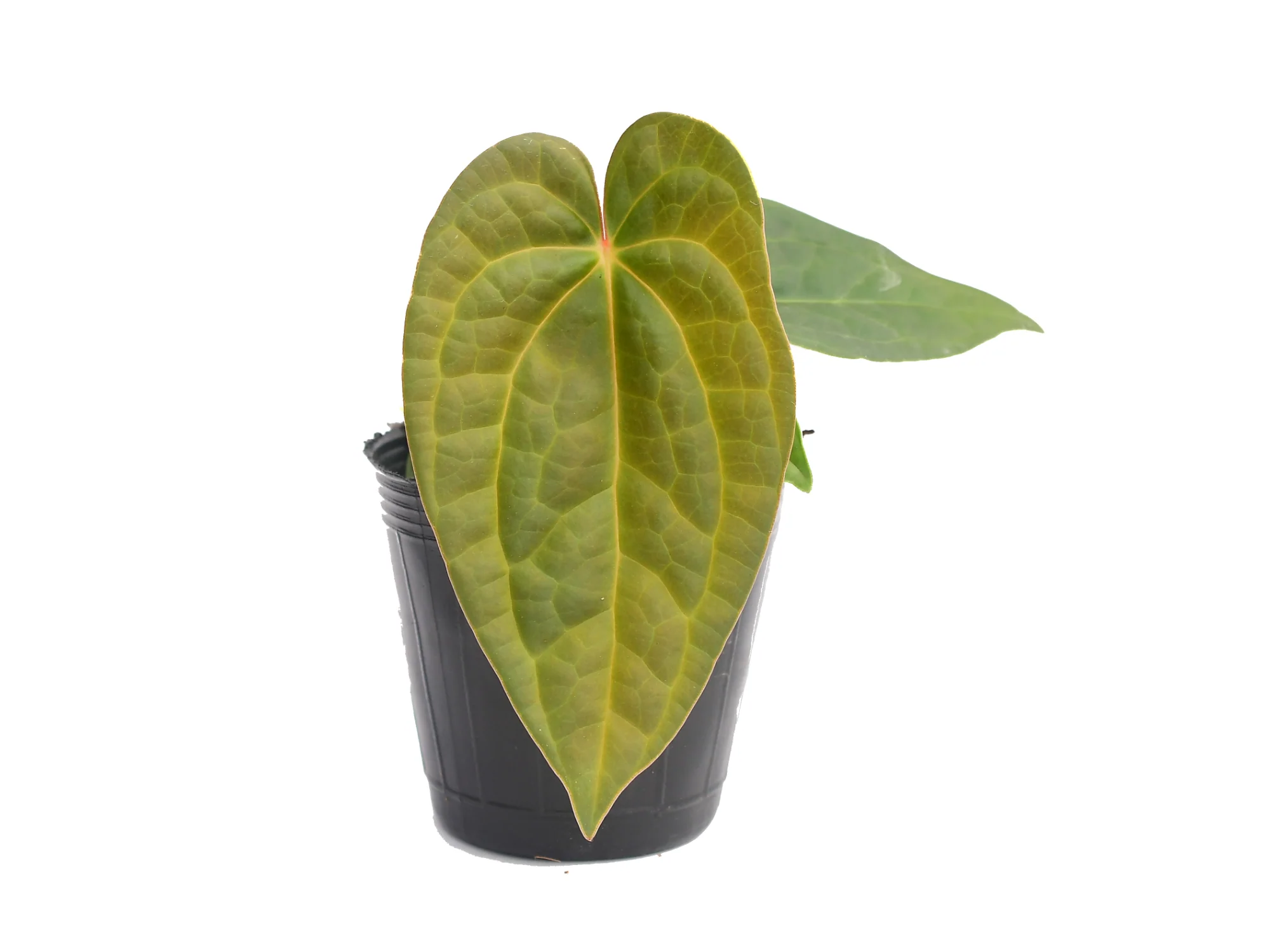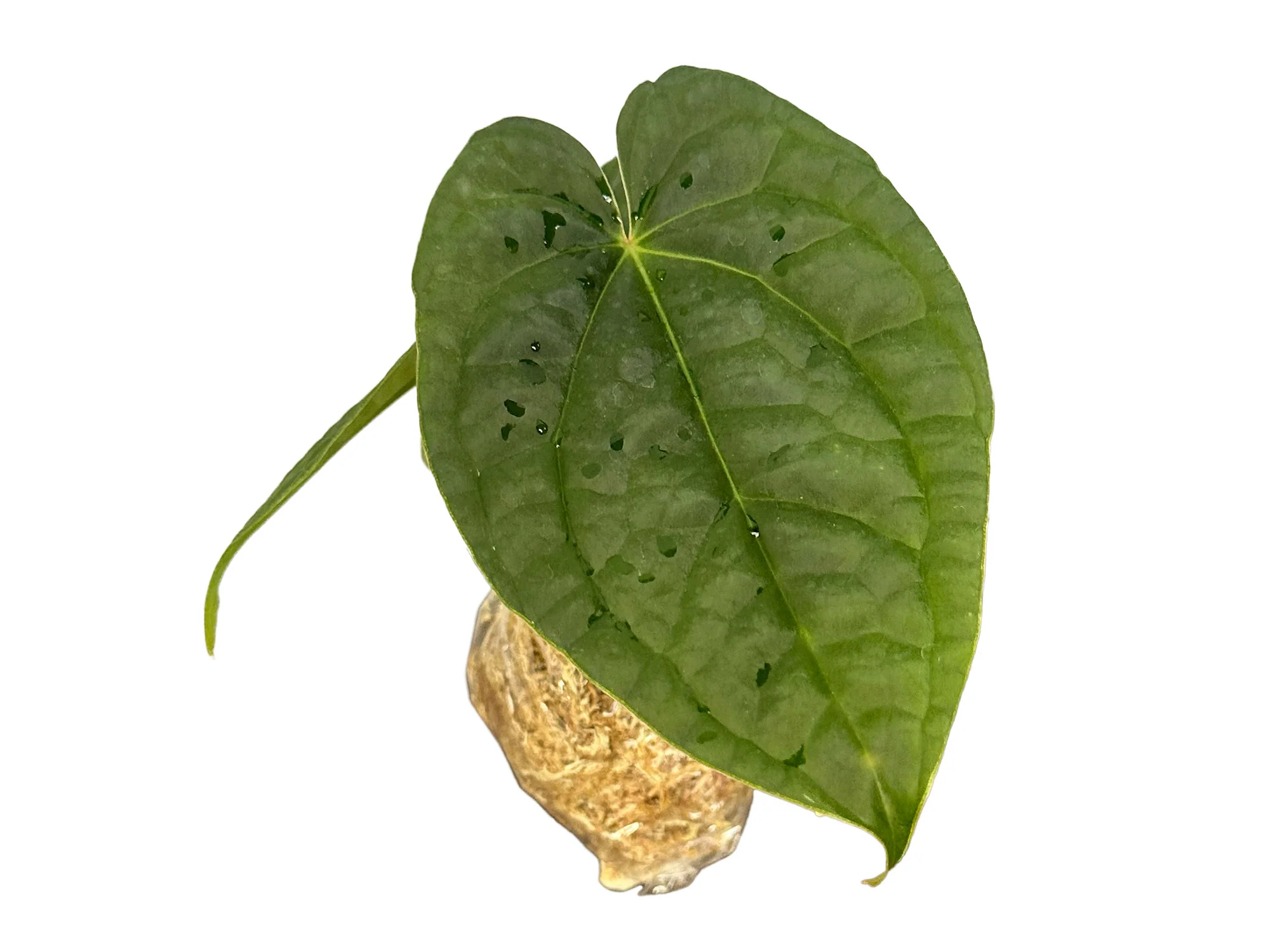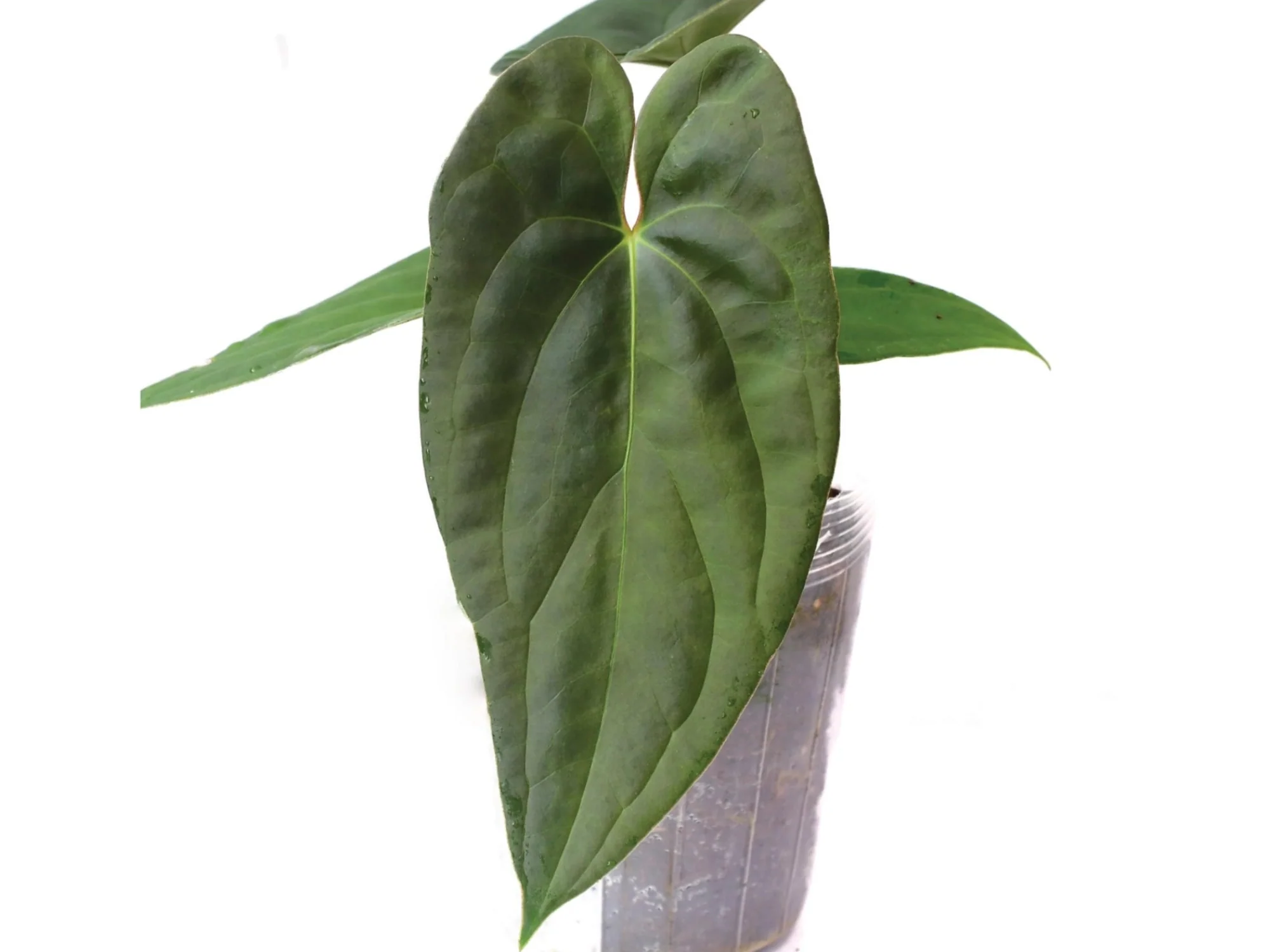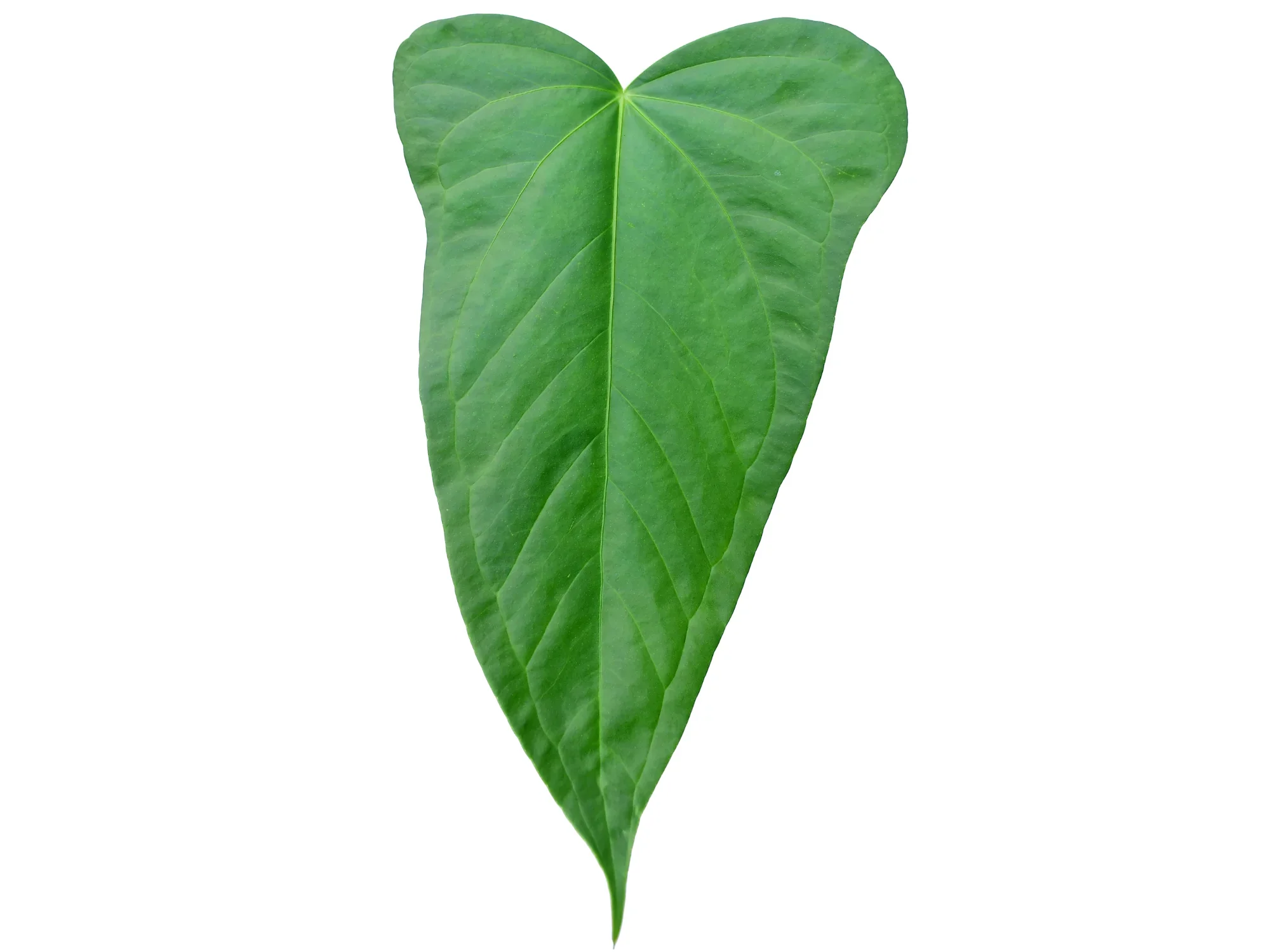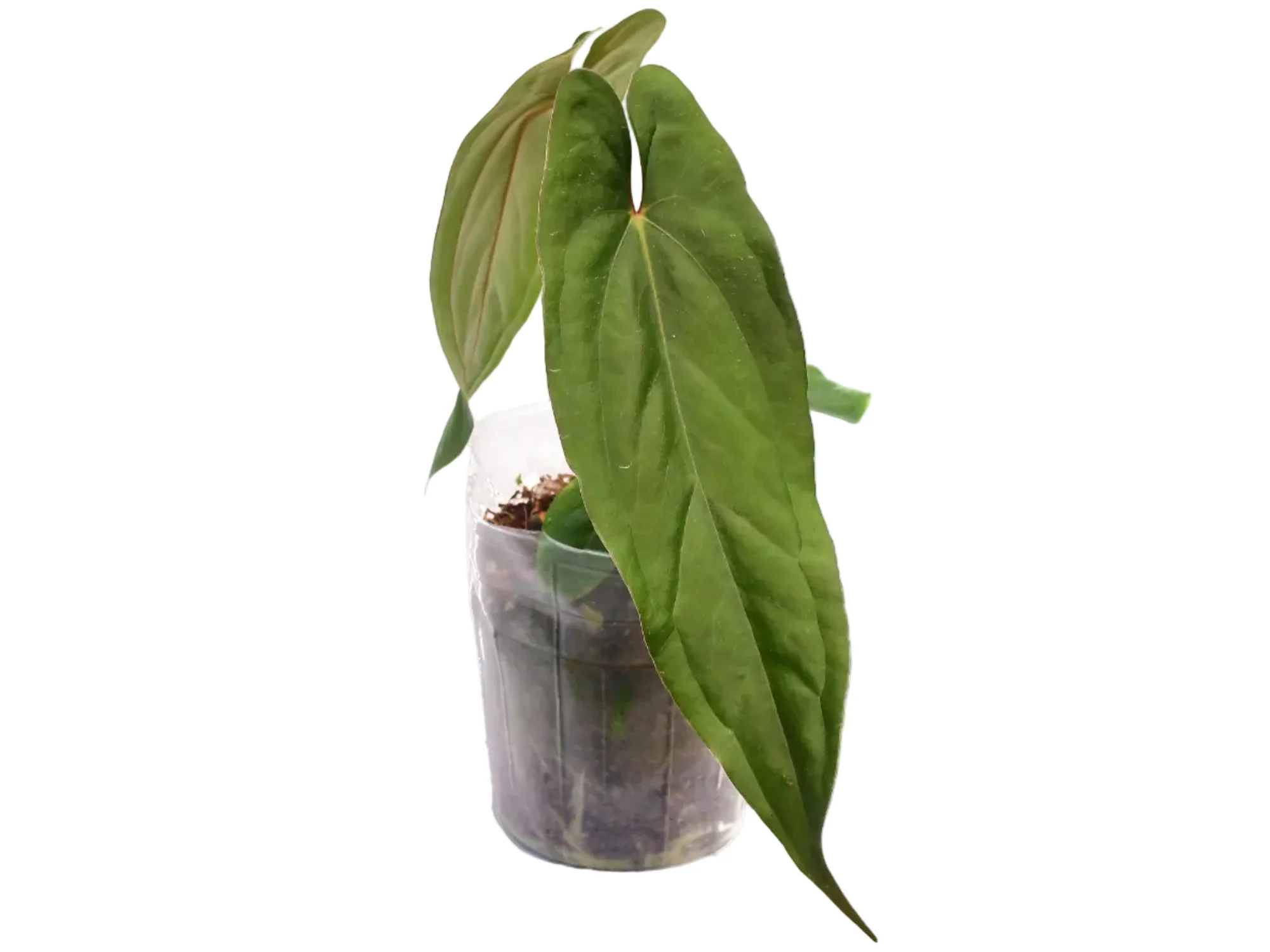
Anthurium Black Wing Butterfly
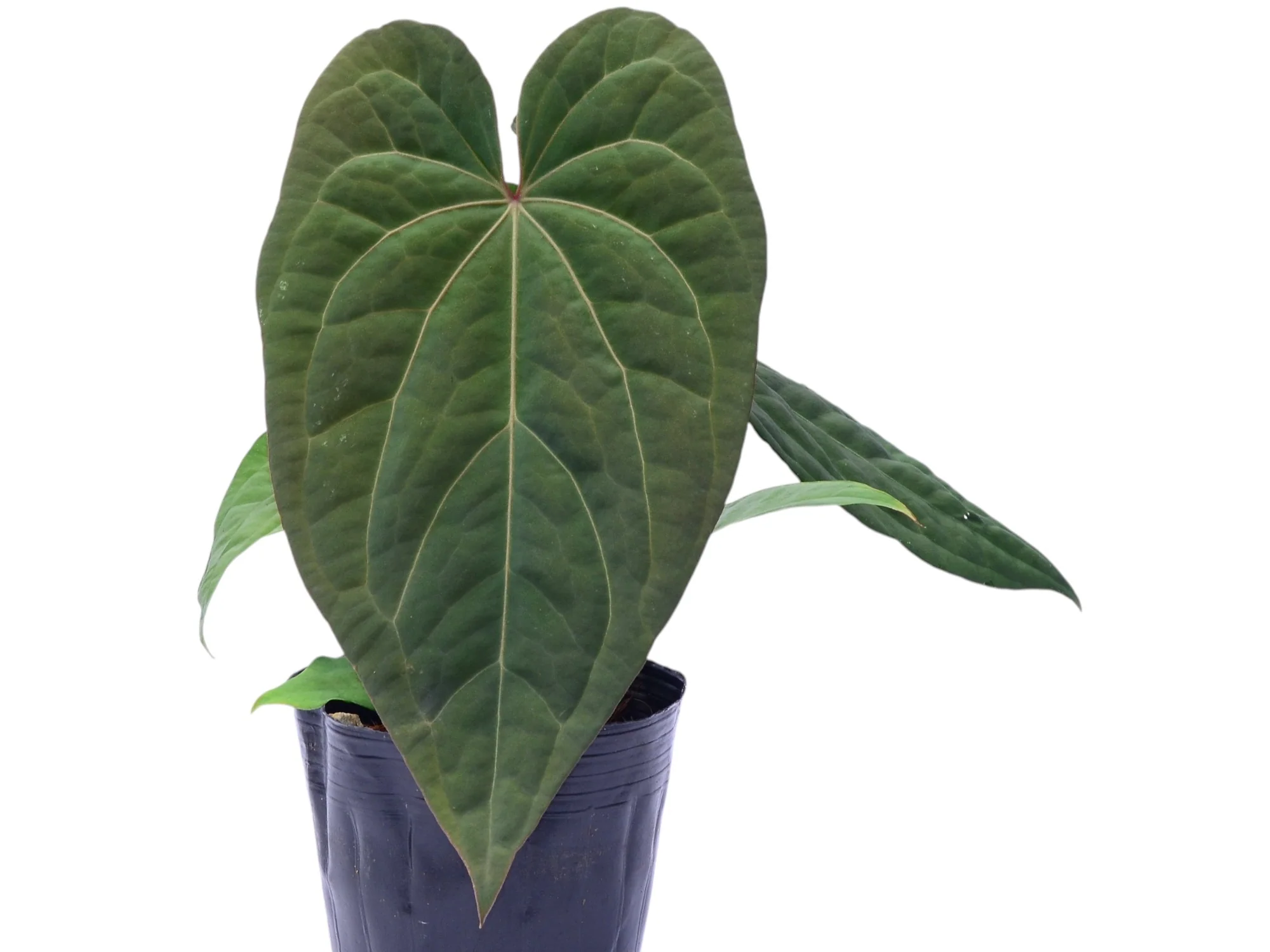
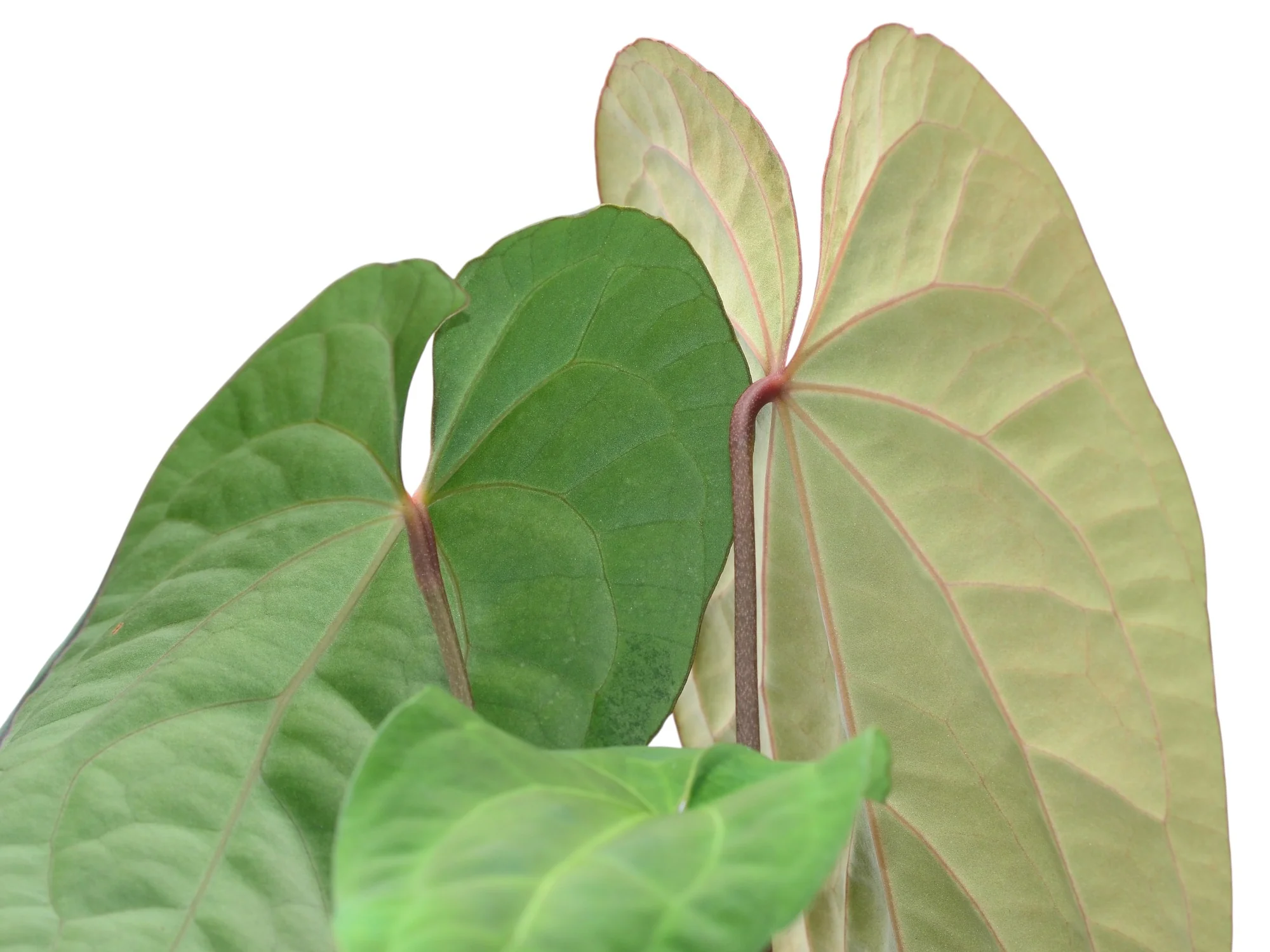
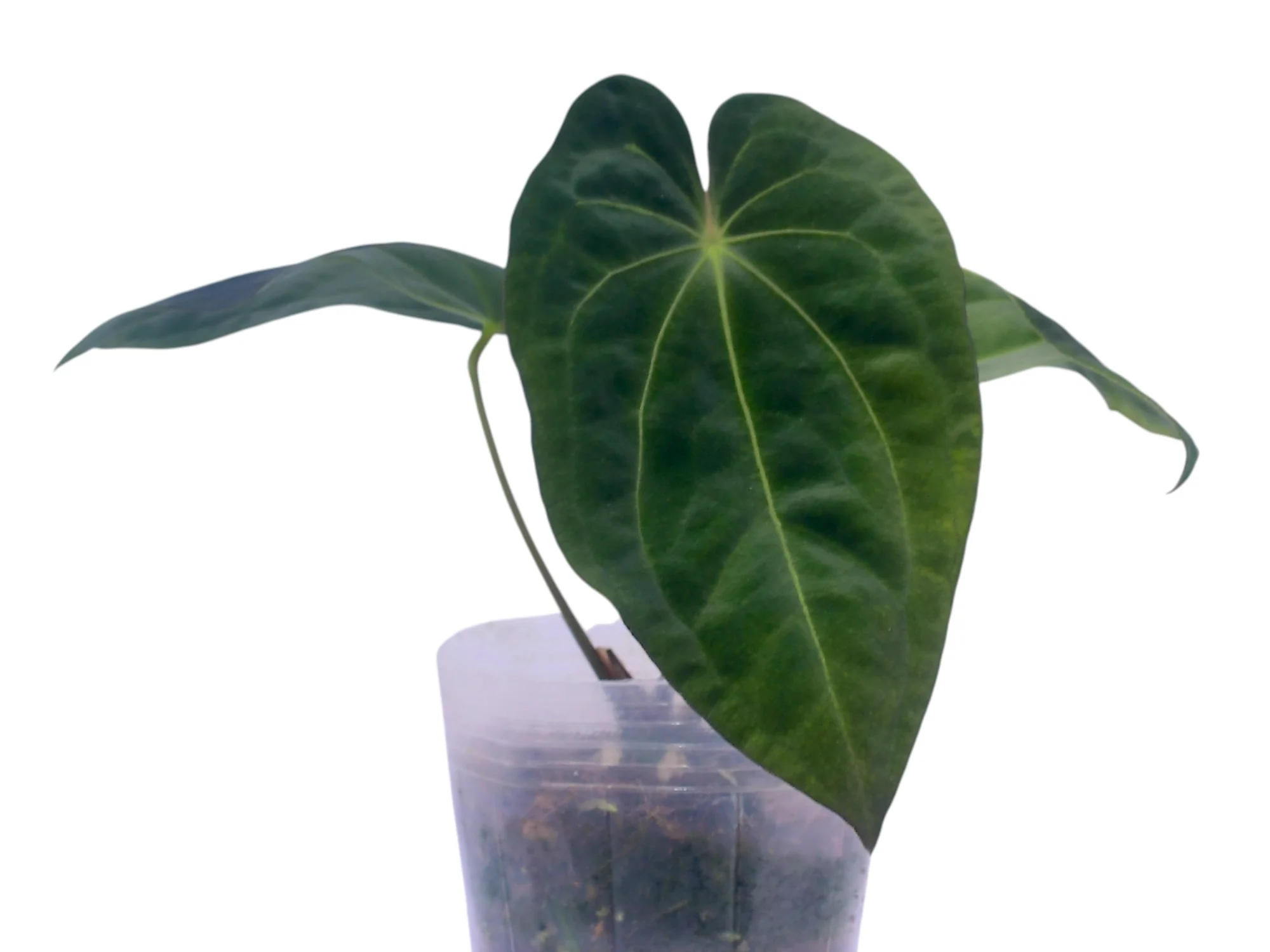
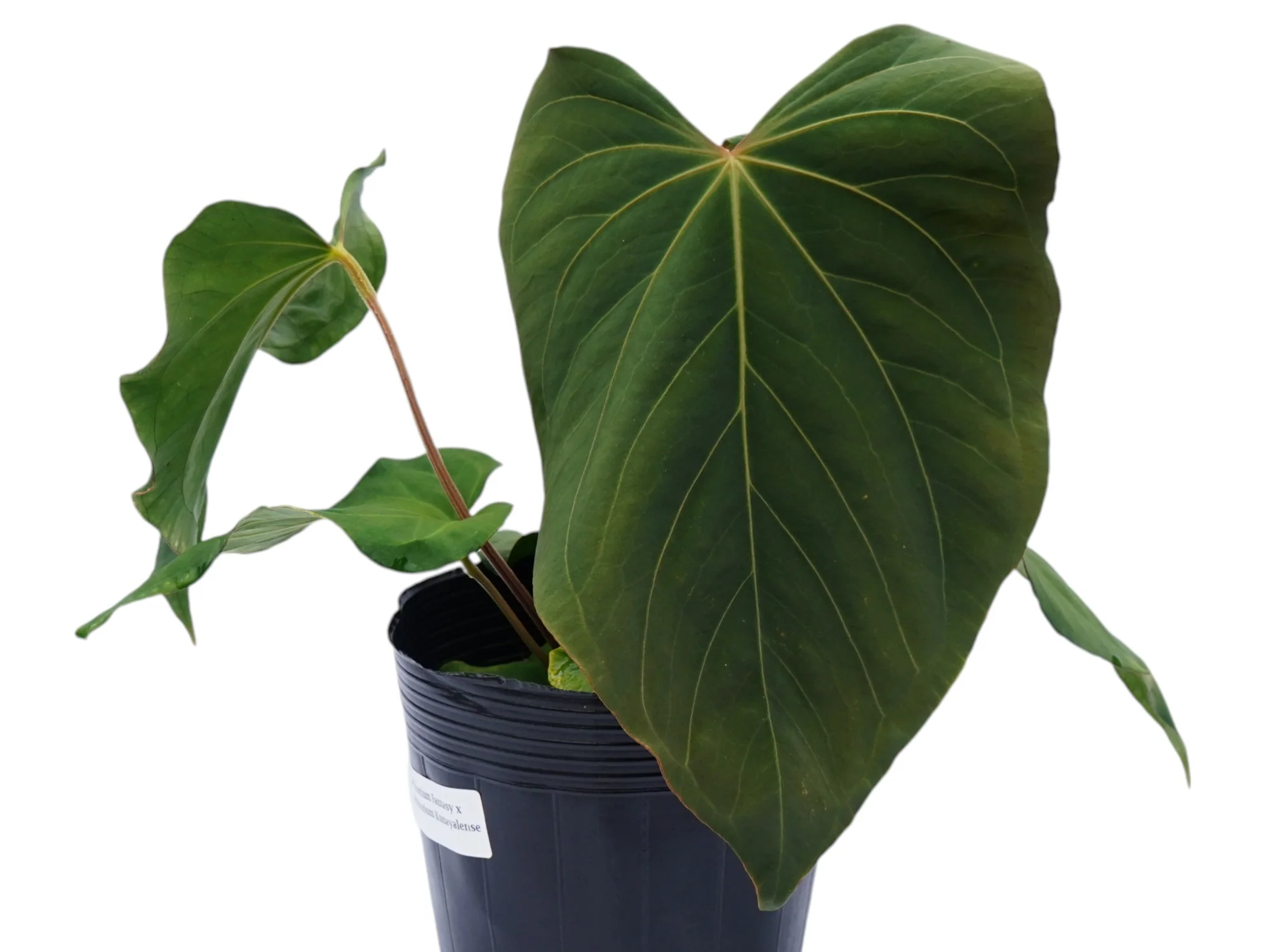
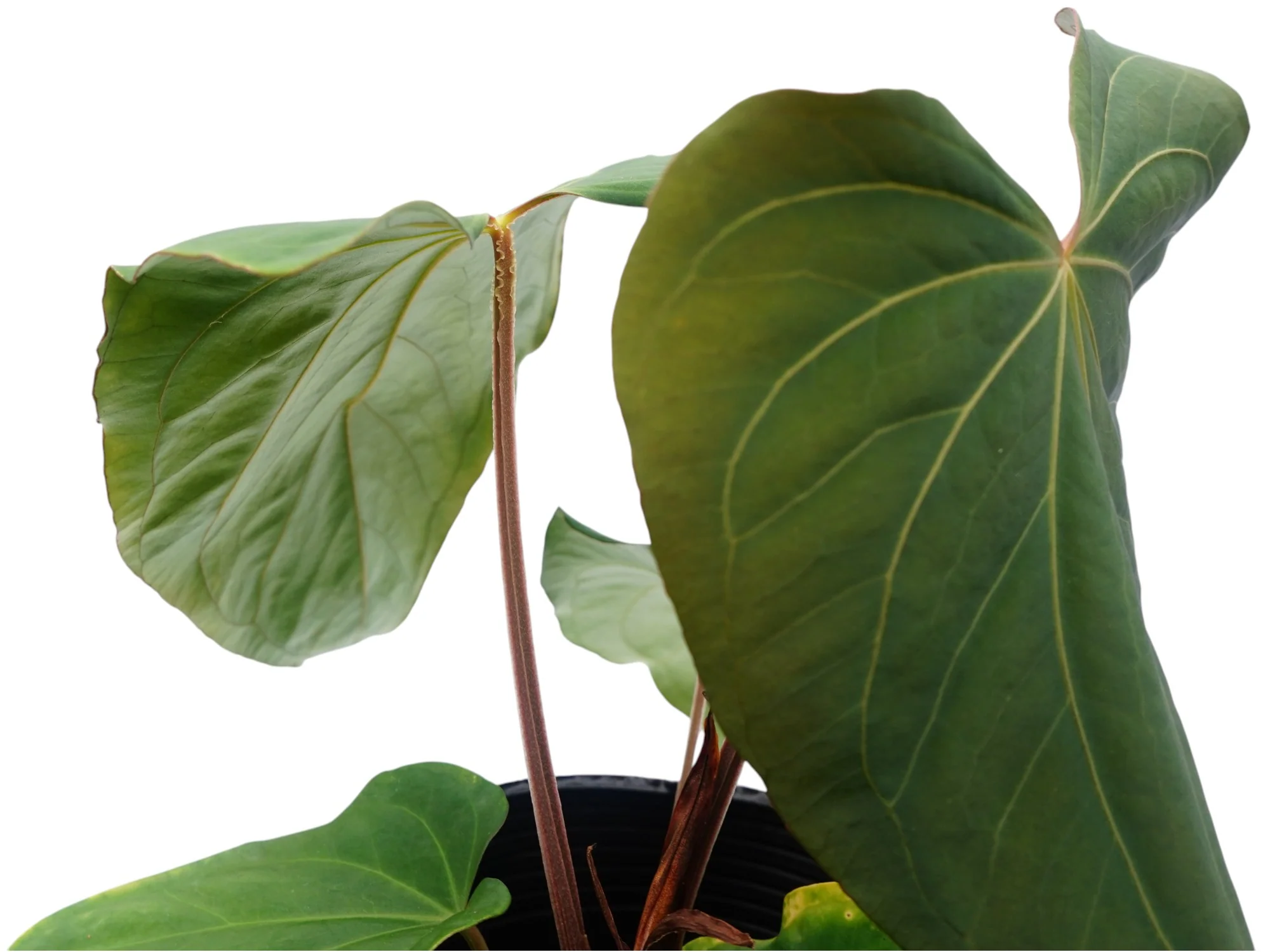
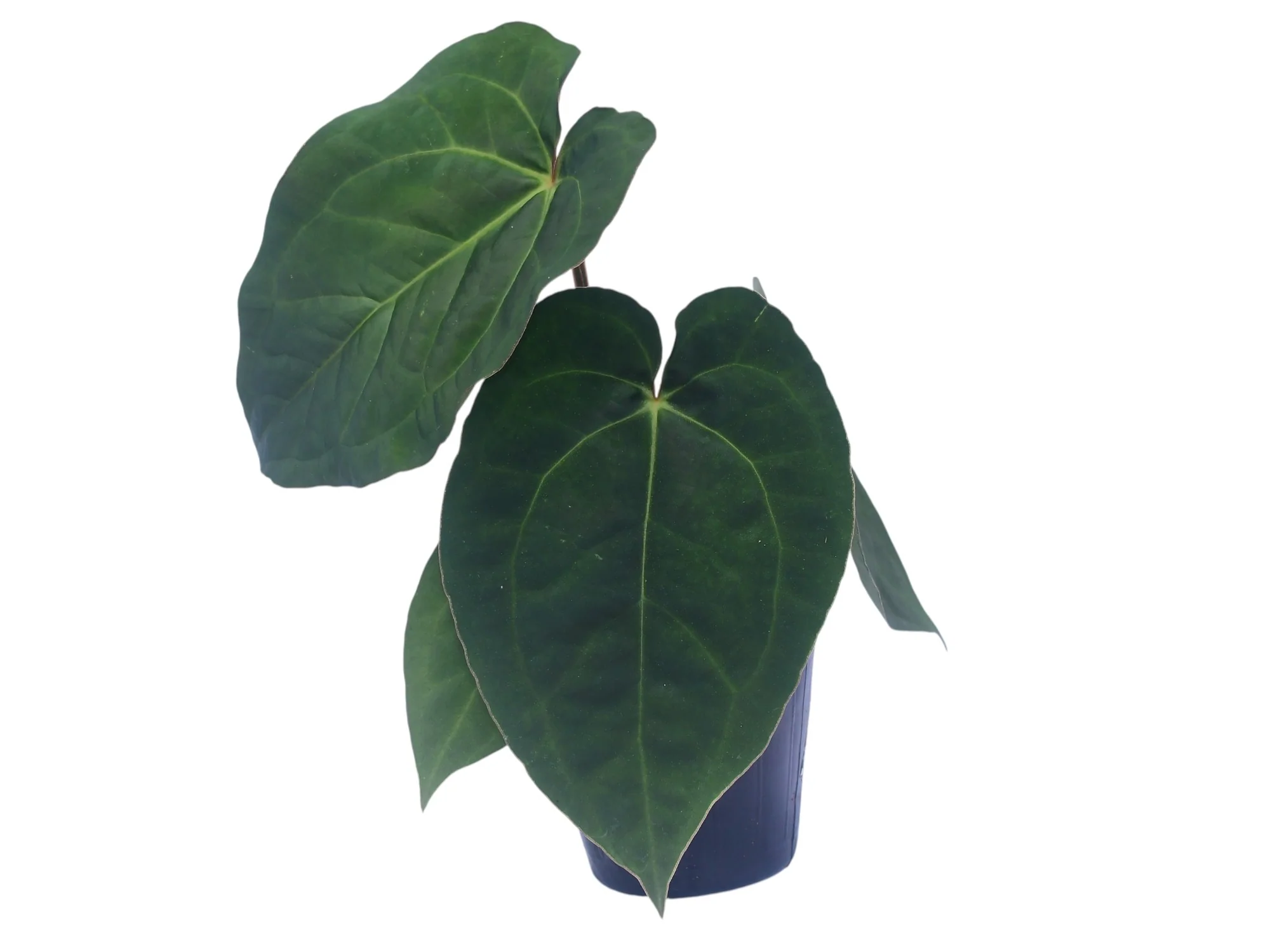
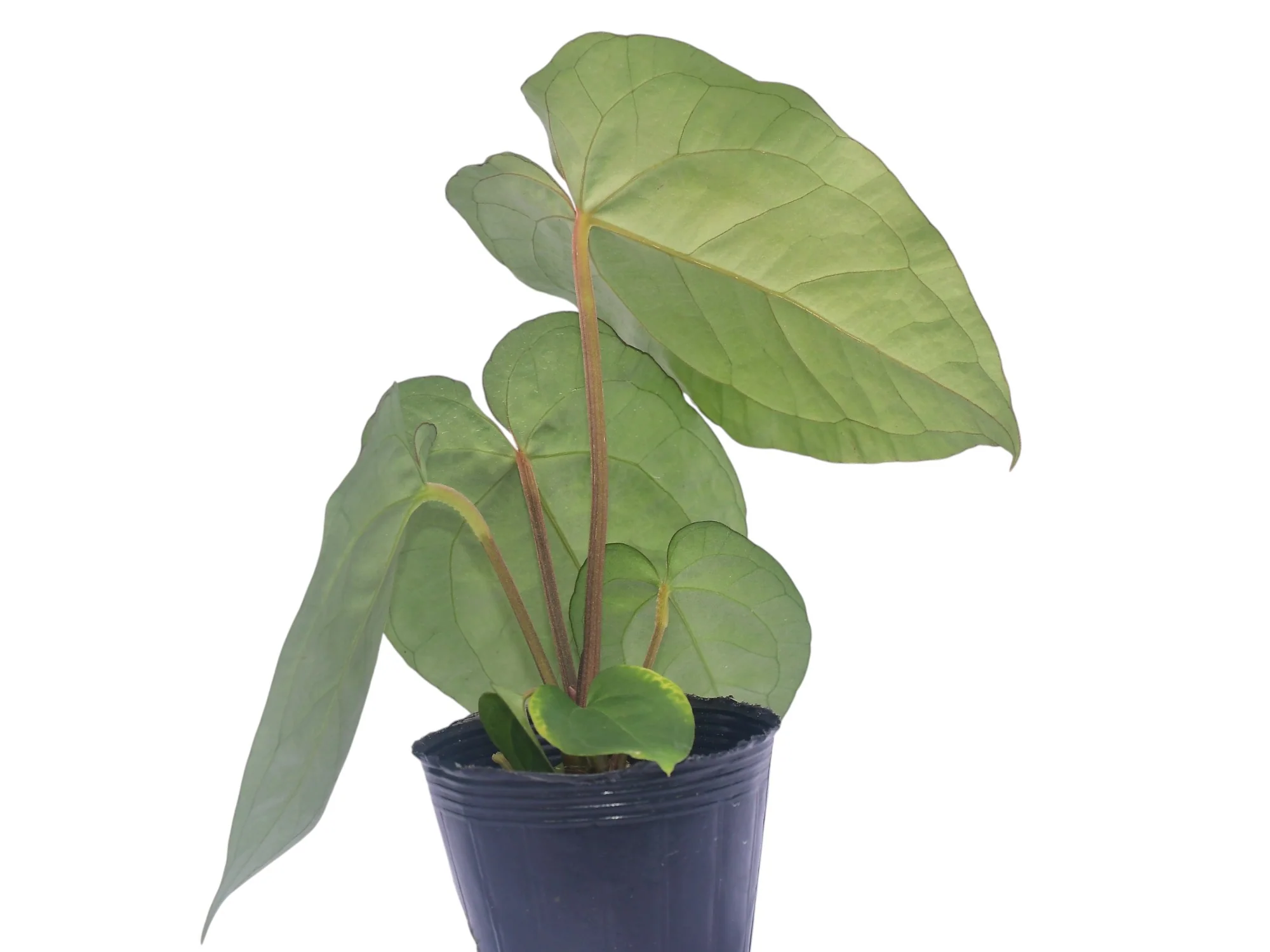
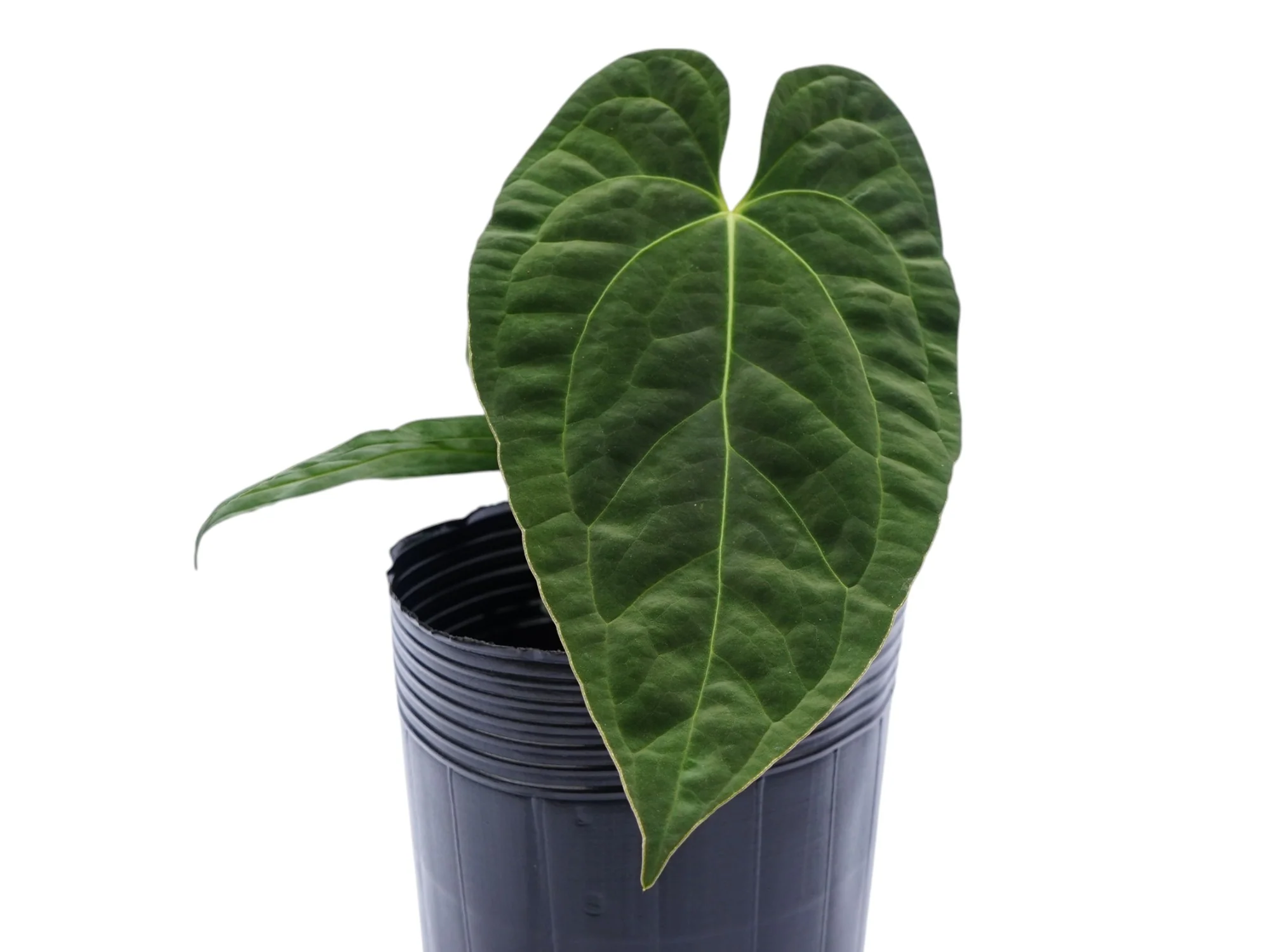
A hybrid of Anth. papillilaminum × Anth. nigrolaminum 'Ecuagenera', two species from the tropical forests of Central America and South America. It produces elongated, narrowly triangular-cordiform leaves with narrow, strongly divergent basal lobes forming a striking wing-like silhouette, a long acuminate apex, a prominent midrib, fine secondary venation, and a semi-velvety surface — combining the dramatic leaf architecture of papillilaminum with the dark ornamental character of nigrolaminum.
- Light: Bright filtered light with up to 60–70% shade cloth; avoid direct sun, which can fade the velvety surface and scorch the elongated leaf.
- Temperature: 65–86°F (18–30°C); a warm tropical grower that performs best with stable temperatures and no cold drafts.
- Humidity: 70–85%; high humidity supports healthy leaf development and preserves the characteristic velvety texture.
- Watering: Water thoroughly when the top layer of substrate begins to dry; avoid waterlogging while ensuring roots do not dry out completely.
Additional Notes
Hybrid Advantage: Hybridization often strengthens plant genetics, producing plants with greater vigor, adaptability, and ornamental qualities — making them excellent additions to tropical plant collections.
Arrival & Establishment Recommendation: Since plants may remain enclosed during shipping for several days, it is recommended to plant them promptly upon arrival in a well-draining aroid substrate and provide an initial thorough watering. This helps the roots rehydrate and supports the plant as it begins its recovery and acclimation process.
A hybrid of Anth. papillilaminum × Anth. nigrolaminum 'Ecuagenera', two species from the tropical forests of Central America and South America. It produces elongated, narrowly triangular-cordiform leaves with narrow, strongly divergent basal lobes forming a striking wing-like silhouette, a long acuminate apex, a prominent midrib, fine secondary venation, and a semi-velvety surface — combining the dramatic leaf architecture of papillilaminum with the dark ornamental character of nigrolaminum.
- Light: Bright filtered light with up to 60–70% shade cloth; avoid direct sun, which can fade the velvety surface and scorch the elongated leaf.
- Temperature: 65–86°F (18–30°C); a warm tropical grower that performs best with stable temperatures and no cold drafts.
- Humidity: 70–85%; high humidity supports healthy leaf development and preserves the characteristic velvety texture.
- Watering: Water thoroughly when the top layer of substrate begins to dry; avoid waterlogging while ensuring roots do not dry out completely.
Additional Notes
Hybrid Advantage: Hybridization often strengthens plant genetics, producing plants with greater vigor, adaptability, and ornamental qualities — making them excellent additions to tropical plant collections.
Arrival & Establishment Recommendation: Since plants may remain enclosed during shipping for several days, it is recommended to plant them promptly upon arrival in a well-draining aroid substrate and provide an initial thorough watering. This helps the roots rehydrate and supports the plant as it begins its recovery and acclimation process.
Original: $36.00
-65%$36.00
$12.60Description
A hybrid of Anth. papillilaminum × Anth. nigrolaminum 'Ecuagenera', two species from the tropical forests of Central America and South America. It produces elongated, narrowly triangular-cordiform leaves with narrow, strongly divergent basal lobes forming a striking wing-like silhouette, a long acuminate apex, a prominent midrib, fine secondary venation, and a semi-velvety surface — combining the dramatic leaf architecture of papillilaminum with the dark ornamental character of nigrolaminum.
- Light: Bright filtered light with up to 60–70% shade cloth; avoid direct sun, which can fade the velvety surface and scorch the elongated leaf.
- Temperature: 65–86°F (18–30°C); a warm tropical grower that performs best with stable temperatures and no cold drafts.
- Humidity: 70–85%; high humidity supports healthy leaf development and preserves the characteristic velvety texture.
- Watering: Water thoroughly when the top layer of substrate begins to dry; avoid waterlogging while ensuring roots do not dry out completely.
Additional Notes
Hybrid Advantage: Hybridization often strengthens plant genetics, producing plants with greater vigor, adaptability, and ornamental qualities — making them excellent additions to tropical plant collections.
Arrival & Establishment Recommendation: Since plants may remain enclosed during shipping for several days, it is recommended to plant them promptly upon arrival in a well-draining aroid substrate and provide an initial thorough watering. This helps the roots rehydrate and supports the plant as it begins its recovery and acclimation process.